This is a researched travel plan, not an account of a trip already taken. I have not visited Tomonoura or Fukuyama. These are places I would like to go, researched as carefully as if I were about to book. Prices and opening information were checked in September 2026, but please confirm the latest details on each official website before travelling.
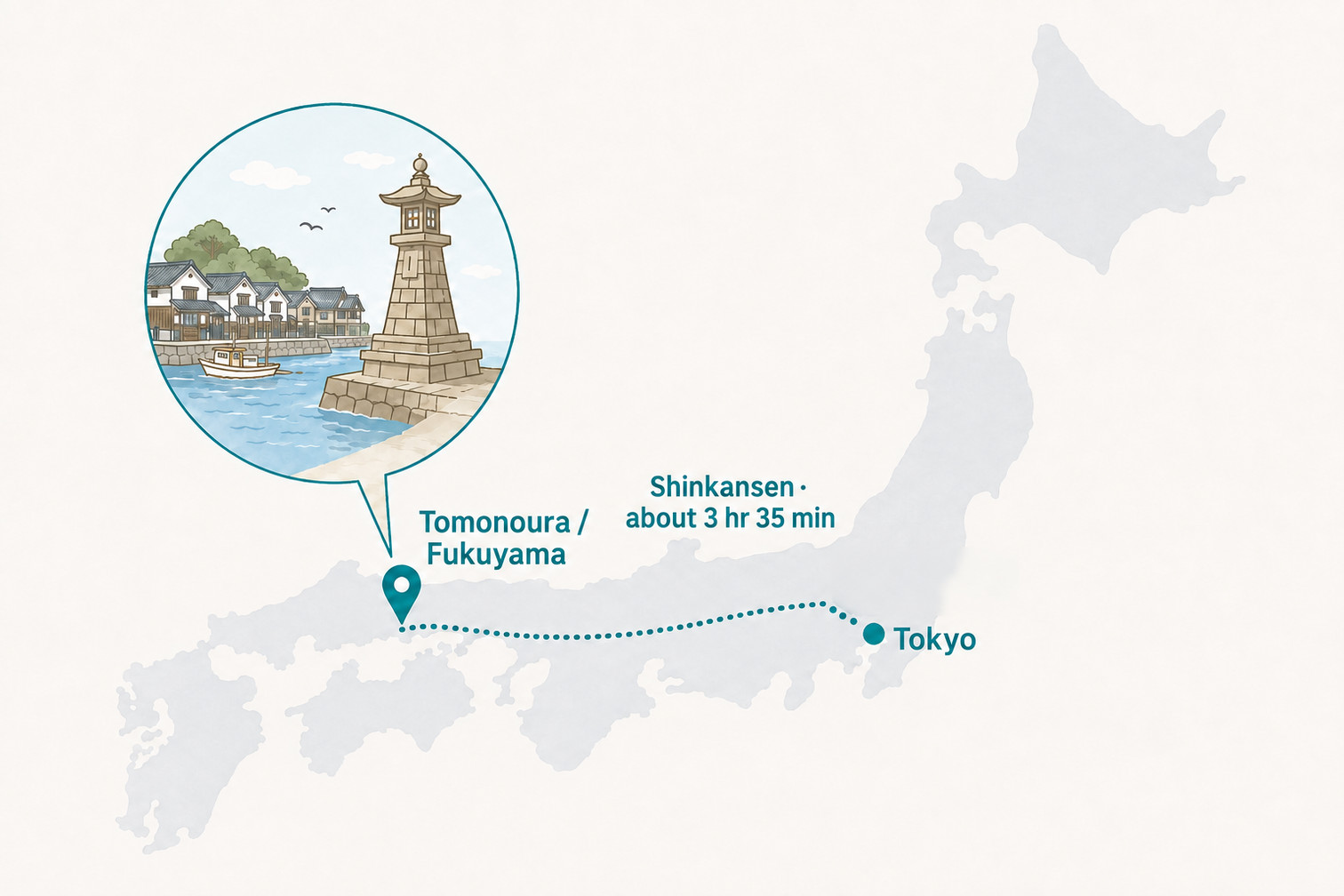
The plan at a glance
- Length: two days, one night, travelling from Tokyo by Shinkansen
- Destination: Tomonoura in Fukuyama, Hiroshima Prefecture, plus the area around Fukuyama Station
- Day 1: Tokyo → Fukuyama → bus to Tomonoura → a walk around the town, including the Joyato lantern, Taichoro and the Ota Residence → an overnight stay at a Tomonoura hot spring inn
- Day 2: an early walk by the harbour → back to Fukuyama Station → Fukuyama Castle → home
- Best time to go: late April through Golden Week, Japan's holiday period in late April and early May, for the sea bream net fishing event described below
- Estimated cost: roughly ¥70,000–¥80,000 per person, with two people sharing a room and dinner and breakfast included
- The conclusion: ¥100,000 should leave money to spare
Why Tomonoura?
Tomonoura, a port town in Fukuyama, Hiroshima Prefecture, is one of those places I have wanted to visit for a while.
I first came across it while researching the question behind this site: where can you travel on a given budget? Looking for less familiar destinations led me to this small town on the Seto Inland Sea, where an Edo-period harbour lantern and landing places are said to survive. It is also known as the town where Hayao Miyazaki spent an extended stay developing the ideas for Ponyo.
The photographs made me want to go immediately. But from the Kanto region, the words “Hiroshima Prefecture” alone make it sound far away, and I kept putting it off. How much time and money would it actually take? I decided to research it as though I were making the trip.
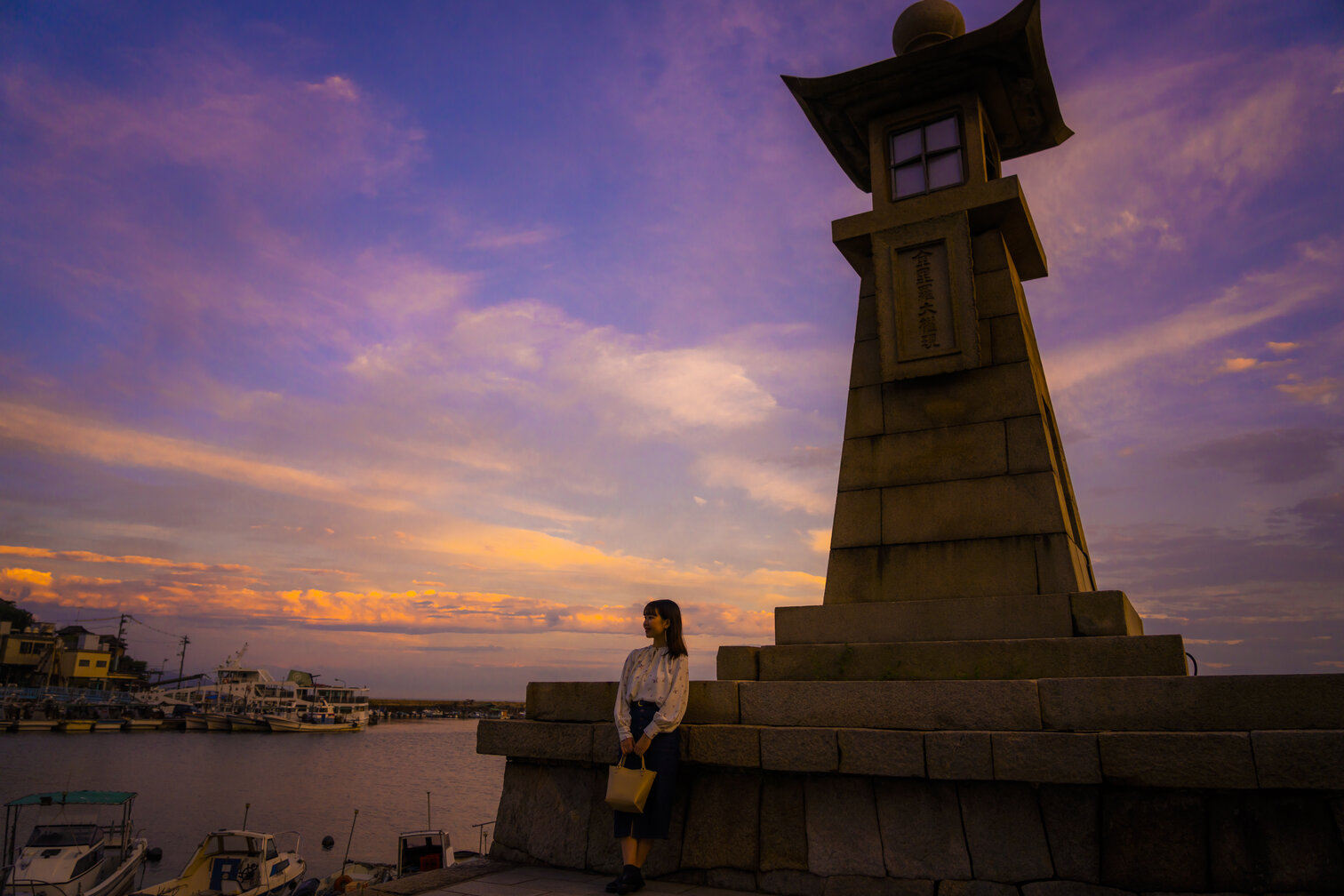
I plan to write more articles like this: places I have not been to yet, but have seriously planned a trip to. If I do get there, I would like to write a follow-up comparing the plan with the reality.
Getting there
There is a direct Shinkansen from Tokyo to Fukuyama. I had not realised the Nozomi stopped there.
- Tokyo → Fukuyama: about 3 hours 35 minutes by Nozomi; ¥18,310 for a reserved seat in the regular season
- Fukuyama Station → Tomonoura: about 30 minutes by Tomotetsu Bus from the station's south exit; ¥580
A half-hour bus ride after stepping off the Shinkansen sounds more straightforward than I expected. Official guidance gives a bus every 20 minutes as a general rule, but gaps can be longer at some times of day, so I would check the timetable for actual departures.
The return-trip rail discount has been discontinued, so buying the tickets at the regular fare comes to ¥36,620 return. Smart EX advance-purchase offers may bring that down a little.
A two-day, one-night itinerary
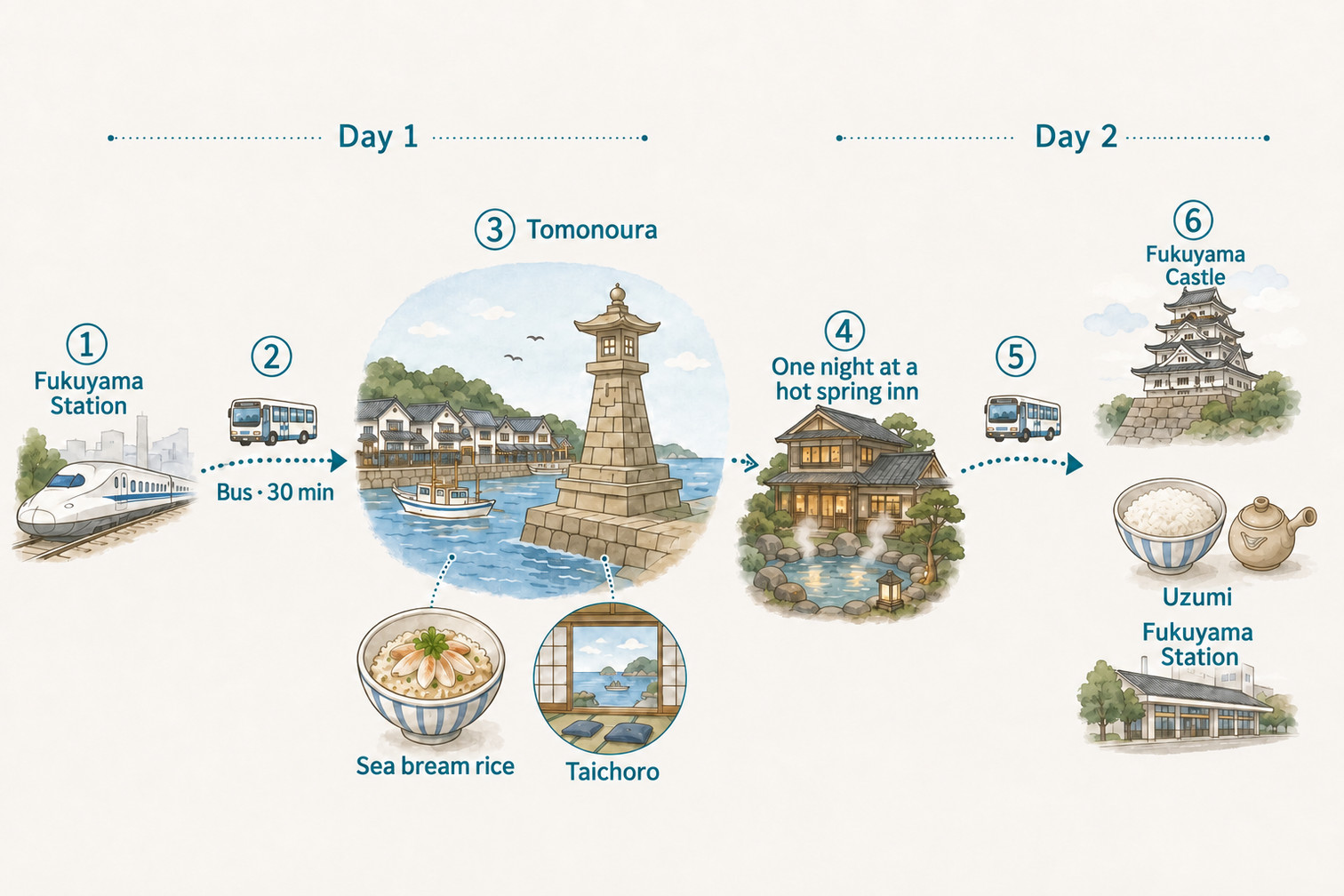
Day 1: arrive in the port town and start with sea bream rice
Taking a Nozomi between 8 and 9 a.m. should mean arriving in Fukuyama before noon. With a bus connection, the plan would put me in Tomonoura at around 12:30 p.m.
Lunch would be in Tomonoura. Sea bream seems to be a local speciality, with several restaurants serving sea bream rice and other sea bream dishes. One that caught my eye during the research was Chitose: its set meal pairs sea bream rice with a choice of sashimi, tempura, simmered fish or salt-grilled fish. Prices may change, so I would check the latest information before visiting. Apparently there can be queues on holidays, too.
The afternoon would be for walking around town. From what I have found, the main sights seem to be fairly close together.
- Joyato lantern: the symbol of the harbour, an original Edo-period lighthouse. Free to view.
- Taichoro at Fukuzenji Temple: a temple with a view across the Seto Inland Sea to Sensuijima from its tatami room. Korean diplomatic envoys are said to have praised it as the finest scenic view in Japan. It was also a venue for negotiations over Sakamoto Ryoma's Irohamaru incident. Admission: ¥300.
- Ota Residence: a merchant house that once produced homeishu, a medicinal liquor, and is designated an Important Cultural Property of Japan. Admission: ¥500.
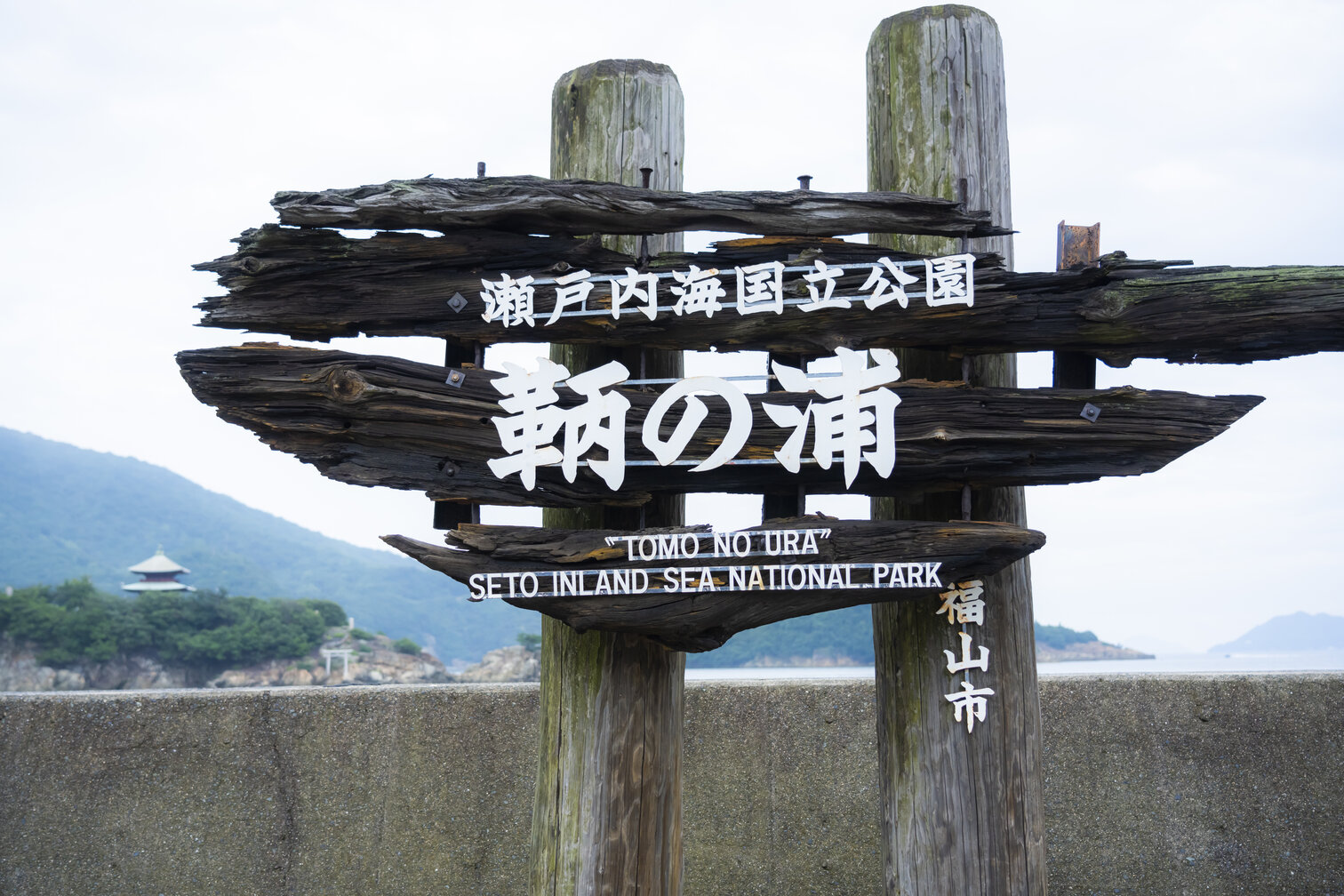
Homeishu is still said to be a local speciality, so that settles my choice of souvenir.
For the night, I would stay at a hot spring inn in Tomonoura. There are several along the coast. Hotel Ofutei, for example, had plans in the ¥30,000 range per person for two people sharing a room, with dinner and breakfast included. Prices vary considerably by season and plan; room-only stays appeared to start at around ¥20,000 per person. I imagine evenings in the port town are quiet, so the plan is to relax at the inn.
Day 2: the harbour in the morning, then a castle by the station
The part I am most looking forward to is a walk by the harbour before breakfast. I imagine the area around the Joyato lantern will be quiet before the day's visitors arrive.
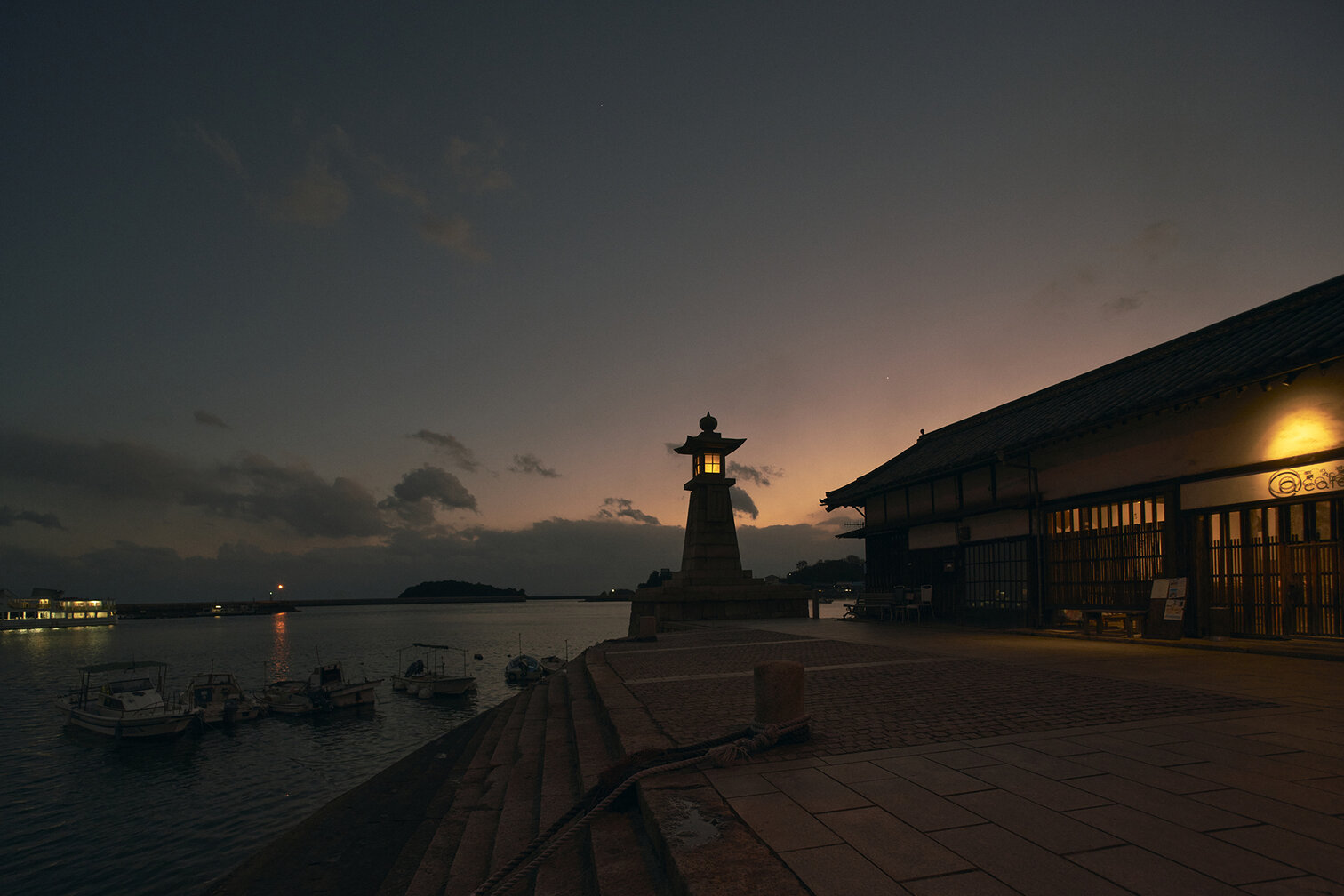
After checking out, I would take the bus back to Fukuyama Station.
For lunch, I would like to try uzumi, a local Fukuyama dish. It is said to have originated during the Edo period, when restrictions on luxury led people to hide ingredients such as shrimp and chicken under their rice. What looks like a plain bowl of white rice reveals the ingredients once you start eating. There seem to be several places serving it near the station, so I would choose one before going.
After lunch, I would head to Fukuyama Castle. The station is apparently known for the view of the castle from its Shinkansen platforms, and the castle is a five-minute walk from the north exit. I would visit the museum in the castle keep, renovated in 2022 for the castle's 400th anniversary, then return to the station for the journey home. Museum admission is ¥500.
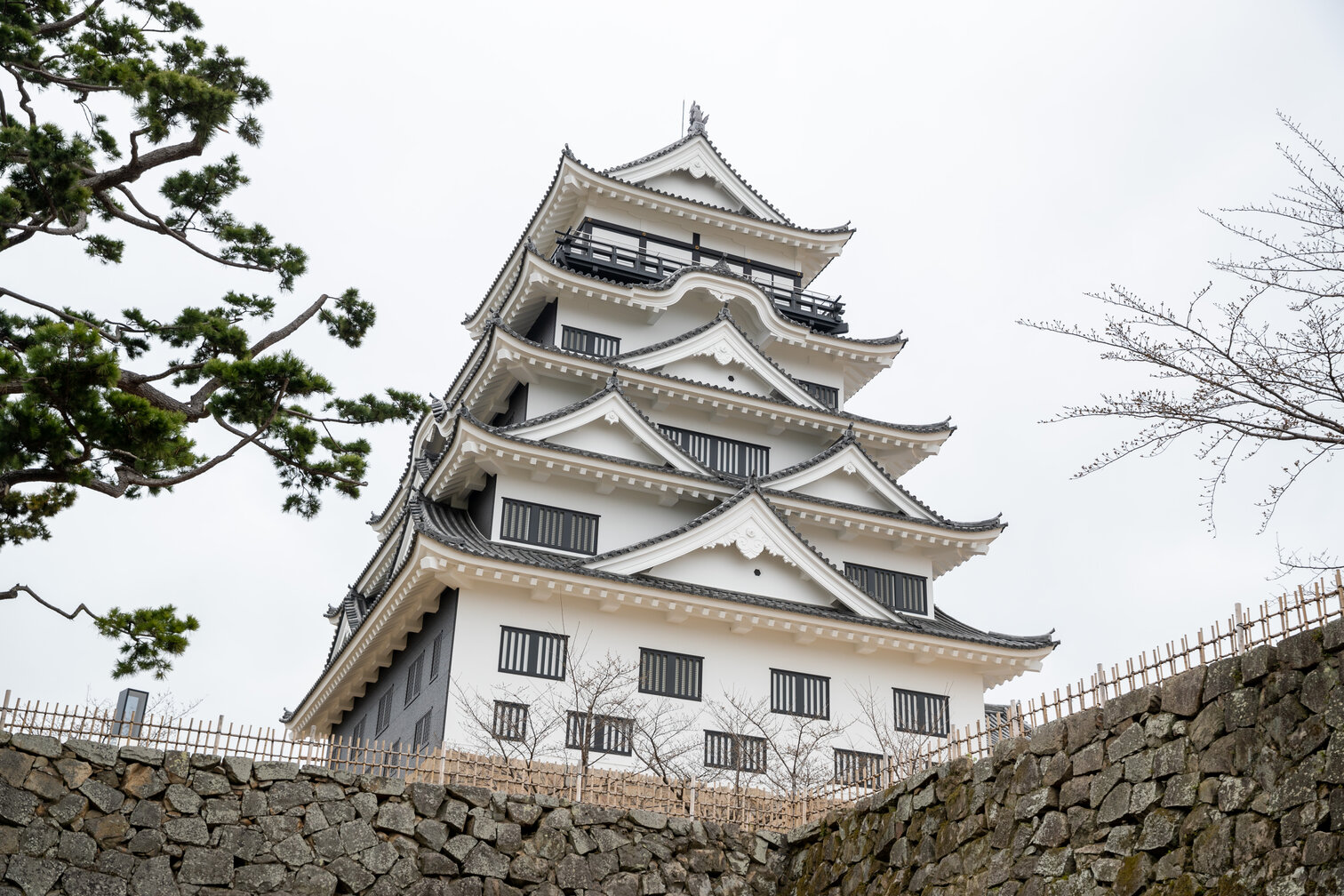
A castle just five minutes from the station seems an ideal final stop before the return Shinkansen.
Estimated cost per person, with two sharing a room
- Shinkansen, Tokyo ⇔ Fukuyama: ¥36,620 return, Nozomi reserved seat in the regular season
- Bus, Fukuyama Station ⇔ Tomonoura: ¥1,160 return
- Accommodation with dinner and breakfast: about ¥30,000; depending on the plan, options fall in the ¥20,000, ¥30,000 or ¥40,000 range
- Admissions: Taichoro ¥300 + Ota Residence ¥500 + Fukuyama Castle ¥500 = ¥1,300
- Lunches, including the sea bream set meal and uzumi, plus incidental expenses: ¥5,000
Total: about ¥74,000
The Shinkansen accounts for about half the total, at roughly ¥37,000 return, but there is still plenty of room within ¥100,000. Staying at a business hotel near Fukuyama Station and visiting Tomonoura for the day could bring the cost down to the ¥50,000 range per person. Conversely, the figures suggest that even upgrading to a room with an open-air bath could still keep the trip within ¥100,000.
These figures were checked against official websites and other sources in September 2026, using regular-season prices. Shinkansen fares vary by season, and accommodation costs depend heavily on the date and plan.
When would I go?
During the research, I learned about Tomonoura's sightseeing sea bream net fishing event, a local early-summer tradition. From a sightseeing boat, visitors can watch a fleet flying colourful fishing flags demonstrate the traditional method of driving sea bream into nets. The event is said to date back to 1923.
In 2026, seven dates were scheduled: April 26 and 29, and May 2–6. Advance adult tickets were ¥3,000, but the May 4 event was cancelled because of bad weather. The 2026 event has finished. The next schedule and ticket prices need to be checked through official information.
If I am going to a town to eat sea bream rice, the chance to see how the fish are caught makes this the time I would choose. Even adding a sightseeing ticket should leave plenty of room in the ¥100,000 budget.
What I still do not know
I had previously been unable to confirm the details of the Tomonoura historical-sites coupon. It currently costs ¥1,900 for an adult and includes a return bus ticket between Fukuyama Station and Tomo Port, plus admission to four places: Taichoro, the Irohamaru Exhibition Hall, the Ota Residence and the Tomonoura Museum of History and Folklore. It is valid for seven days from the date of purchase.
There is also a municipal ferry between Tomonoura and Sensuijima. The crossing takes about five minutes, with return fares of ¥240 for adults and ¥120 for children. Neither the coupon nor the ferry is included in this model itinerary.
Since this is a researched plan, I also want to be clear about what I will not know until I go.
- I do not yet know how many options there are for dinner in Tomonoura outside the inns.
That is something I would like to cover in a follow-up after an actual visit.
Would the budget work?
About three and a half hours each way from Tokyo, then a ¥580 bus ride. An Edo-period harbour, a night at a hot spring inn, and roughly ¥70,000–¥80,000 per person.
I had put it off because “Hiroshima is far away”, but setting out the numbers makes both the journey and the budget seem quite manageable. Just planning it almost feels like being halfway there.
If I make the trip, I will write about how it compares with the plan.
Photos courtesy of the Hiroshima Tourism Association. Illustrations are artist's impressions.
Estimated cost per person, with two sharing a room
- Shinkansen, Tokyo ⇔ Fukuyama, return: ¥36,620
- Bus, Fukuyama Station ⇔ Tomonoura, return: ¥1,160
- Accommodation with dinner and breakfast: about ¥30,000
- Admissions to Taichoro, the Ota Residence and Fukuyama Castle: ¥1,300
- Lunches and incidental expenses: ¥5,000
- Total: about ¥74,000, comfortably within ¥100,000