This is a researched travel plan. I have not visited Iwakuni, Miyajima or Hiroshima; I have worked out this itinerary as though I were preparing to go. Prices and opening information were checked in September 2026. Please check the relevant official websites for the latest details before travelling.
The plan at a glance
- Budget frame: ¥200,000 for two people, or ¥100,000 per person, for three days and two nights from Tokyo
- Destination: Iwakuni in Yamaguchi Prefecture, then Miyajima and Hiroshima in Hiroshima Prefecture; one night near Kintaikyo Bridge and one near Hiroshima Station
- Day 1: Kintaikyo Bridge and Iwakuni Castle. Day 2: Itsukushima Shrine and Momijidani Park on Miyajima. Day 3: Hiroshima Peace Memorial Park before heading home
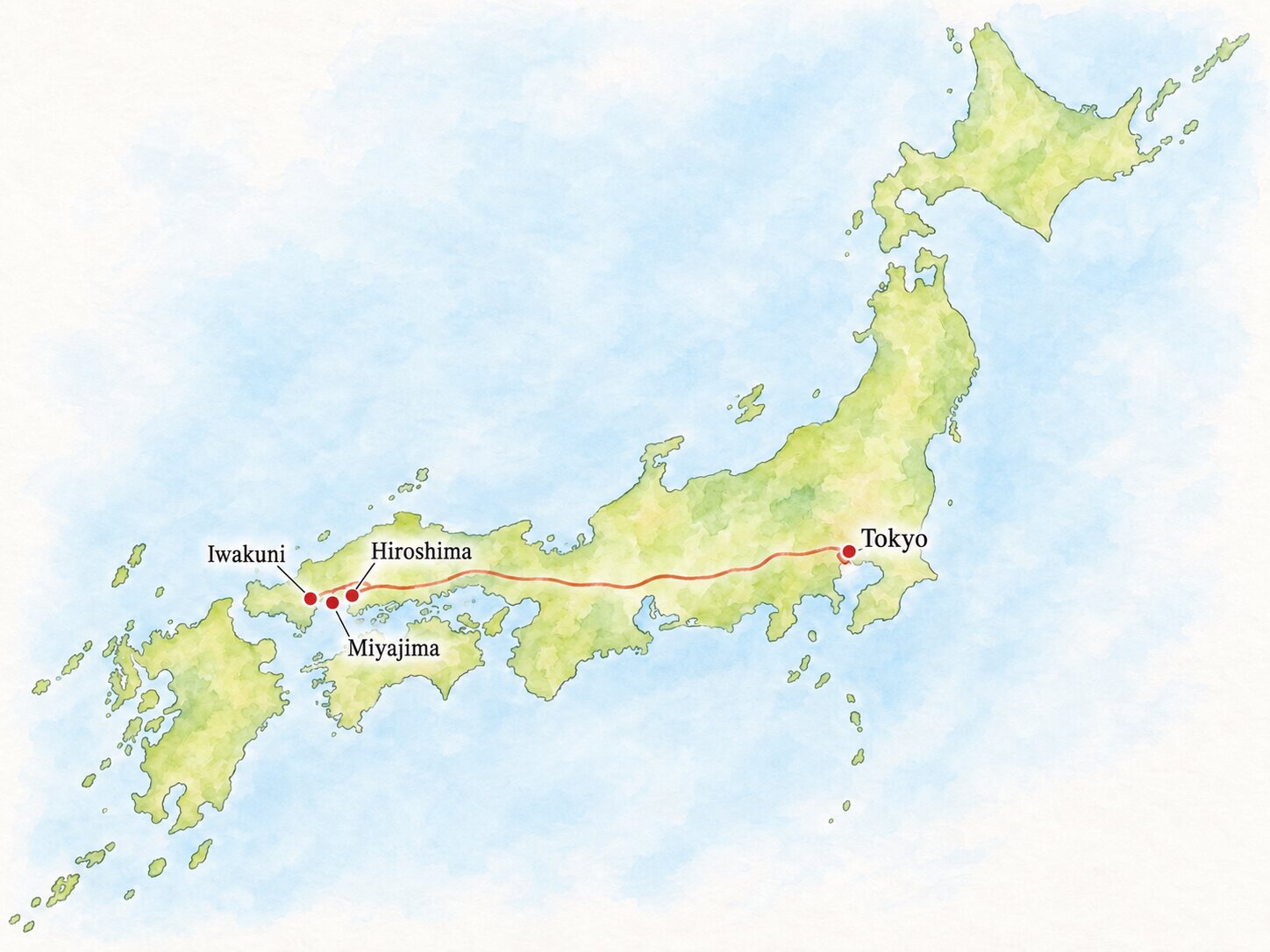
- Iwakuni, Miyajimaguchi and Hiroshima sit in a straight line on the JR Sanyo Main Line. From Iwakuni eastwards, the two rail hops are both direct and take 22 and 28 minutes; that simple sequence is the backbone of the itinerary
- Estimated cost: about ¥155,000 for two, or about ¥77,000 per person. That leaves roughly ¥45,000 within the ¥200,000 budget
- Best time to go: mid- to late November, when the autumn colours in Momijidani Park are at their best
Kintaikyo is not just a daytime stop
Kintaikyo Bridge is one of those places that is instantly recognisable in photographs: five wooden arches spanning the Nishiki River. Yet most of the images I have seen show it in daylight.
At night, the bridge is illuminated until 10 p.m. That is a time of day a bus tour or a day trip from Hiroshima is unlikely to capture.
There is another reason to stay. The ticket office is open from 8 a.m. to 5 p.m., but the bridge itself can be crossed 24 hours a day. Outside ticket-office hours, visitors put the crossing fee into a collection box. The evening illumination is not something you have to admire from a distance; you can walk across the bridge while it is lit.
That is why this plan spends the first night in Iwakuni.
The other main draw is Momijidani Park on Miyajima, a valley behind Itsukushima Shrine where the autumn colours are usually at their best from mid- to late November. Iwakuni to Miyajimaguchi takes 22 minutes on the Sanyo Main Line with no change of train.
Then comes Hiroshima on the third day. Iwakuni, Miyajimaguchi and Hiroshima all lie on the same line, with each neighbouring leg taking only around 20 to 30 minutes. Start at the western end and work back east, and the route almost builds itself. Compared with many of the plans I have researched for Doko10, this one requires remarkably little planning for local connections.
Getting there
Iwakuni has an airport. I still chose the Shinkansen
ANA operates five round trips a day between Haneda and Iwakuni Kintaikyo Airport, with a flight time of about 1 hour 35 minutes. A direct bus from the airport to Kintaikyo Bridge takes 26 minutes and costs ¥380, so the onward connection is unusually convenient.
Even so, I chose the Shinkansen. The fares make the reason clear.
- Shinkansen: a reserved seat on a Nozomi between Tokyo and Hiroshima costs ¥19,560 one way. Return tickets for two adults come to ¥78,240. Add ¥1,540 for two adults travelling one way from Hiroshima to Iwakuni on the Sanyo Main Line, and the total is ¥79,780
- ANA: for late November, the Haneda ⇔ Iwakuni fare was ¥23,820 per person each way. Return flights for two adults come to ¥95,280. Add ¥1,520 for return bus trips between Iwakuni Kintaikyo Airport and Kintaikyo Bridge for two adults, and the total is ¥96,800
The difference is about ¥17,000. The Sanyo Shinkansen takes 3 hours 49 minutes from Tokyo to Hiroshima, so the time gap is only a little over an hour.
There is another advantage. Flying into Iwakuni makes Iwakuni the starting point. Arriving by Shinkansen at Hiroshima puts Miyajima and central Hiroshima on the same rail corridor as the first stop. The reason this itinerary can cover three places in three days is that the long-distance journey ends at Hiroshima.
The itinerary uses specific trains. Outbound, I would take Nozomi 1 from Tokyo at 6:00 a.m., arriving in Hiroshima at 9:49 a.m. That puts Kintaikyo Bridge within reach before noon. On the way home, Nozomi 100 leaves Hiroshima at 3:03 p.m. and reaches Tokyo at 6:57 p.m., leaving the whole morning of Day 3 for Peace Memorial Park.
Iwakuni, Miyajimaguchi and Hiroshima are on one line
These are the Sanyo Main Line fares and journey times. All three are ordinary local-train journeys with no change.
| Section | Journey time | Adult one-way fare |
|---|---|---|
| Hiroshima → Iwakuni | 49 min | ¥770 |
| Iwakuni → Miyajimaguchi | 22 min | ¥330 |
| Miyajimaguchi → Hiroshima | 28 min | ¥420 |
From Iwakuni Station to Kintaikyo Bridge, Iwakuni Bus route 21 towards Shin-Iwakuni Station takes 20 minutes and costs ¥300. From Shin-Iwakuni, the Shinkansen station, the bus ride is about 10 minutes.
The ferry from Miyajimaguchi to Miyajima takes about 10 minutes. The adult fare is ¥200 each way, and a ¥100 Miyajima Visitor Tax is added on the crossing to the island. The tax is charged once on entry, so a return ferry trip costs ¥500 per person.
Within Hiroshima, the plan uses the Hiroshima Electric Railway. Following the fare revision on February 1, 2025, the network has a flat ¥240 fare. The same fare applies on the city lines and the Miyajima Line. From Hiroshima Station, a single tram takes you to Genbaku Dome-mae.
A three-day, two-night itinerary
The working dates are Wednesday, November 25 to Friday, November 27, 2026: weekdays chosen to reduce crowds while still aiming for the autumn-colour season in Momijidani Park.
Day 1: cross Kintaikyo, visit Iwakuni Castle and return for the illumination
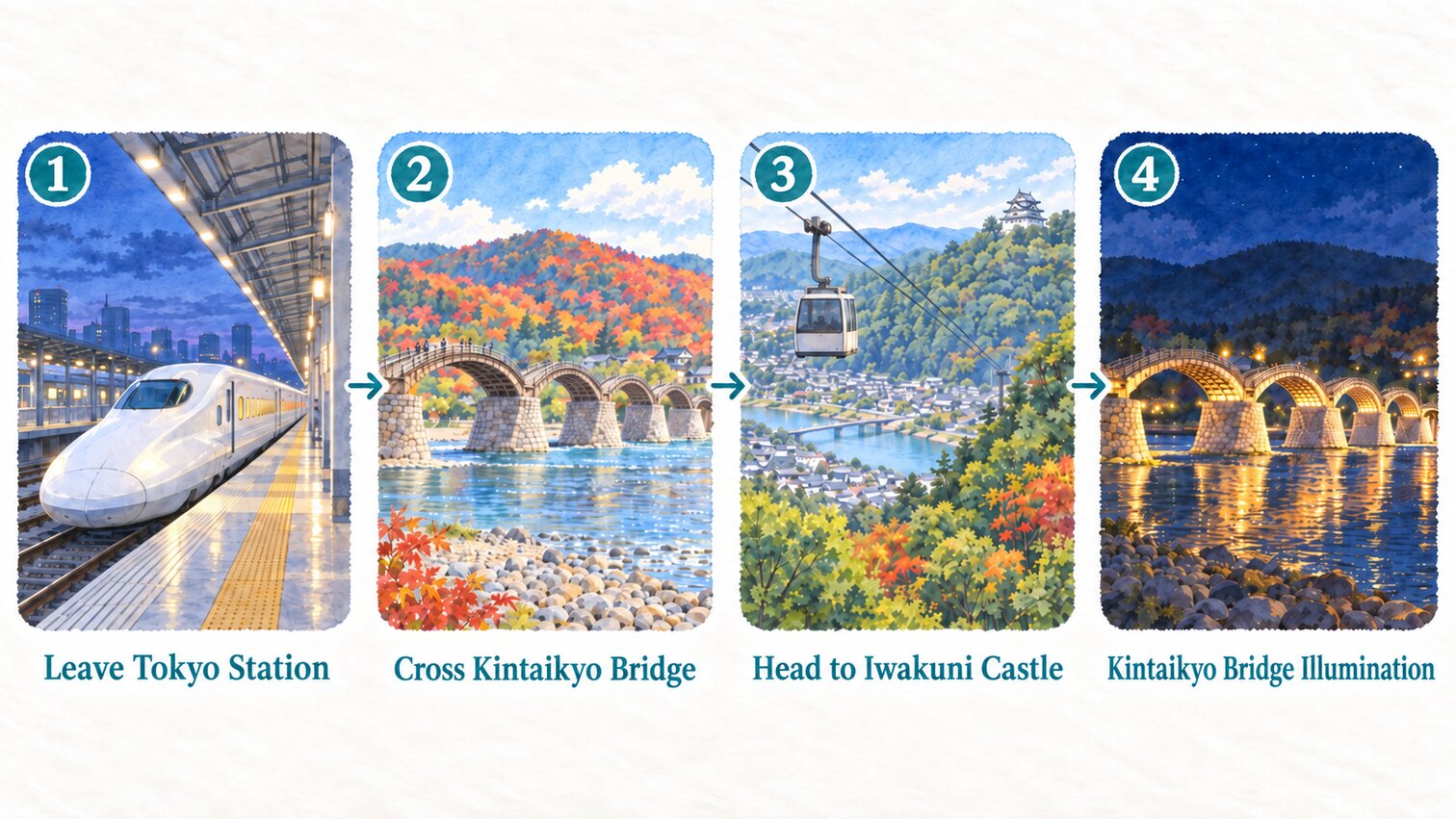
Nozomi 1 leaves Tokyo at 6:00 a.m. and reaches Hiroshima at 9:49 a.m. From there, I would connect to the Sanyo Main Line for Iwakuni, then take the bus to Kintaikyo Bridge, arriving shortly after 11 a.m.
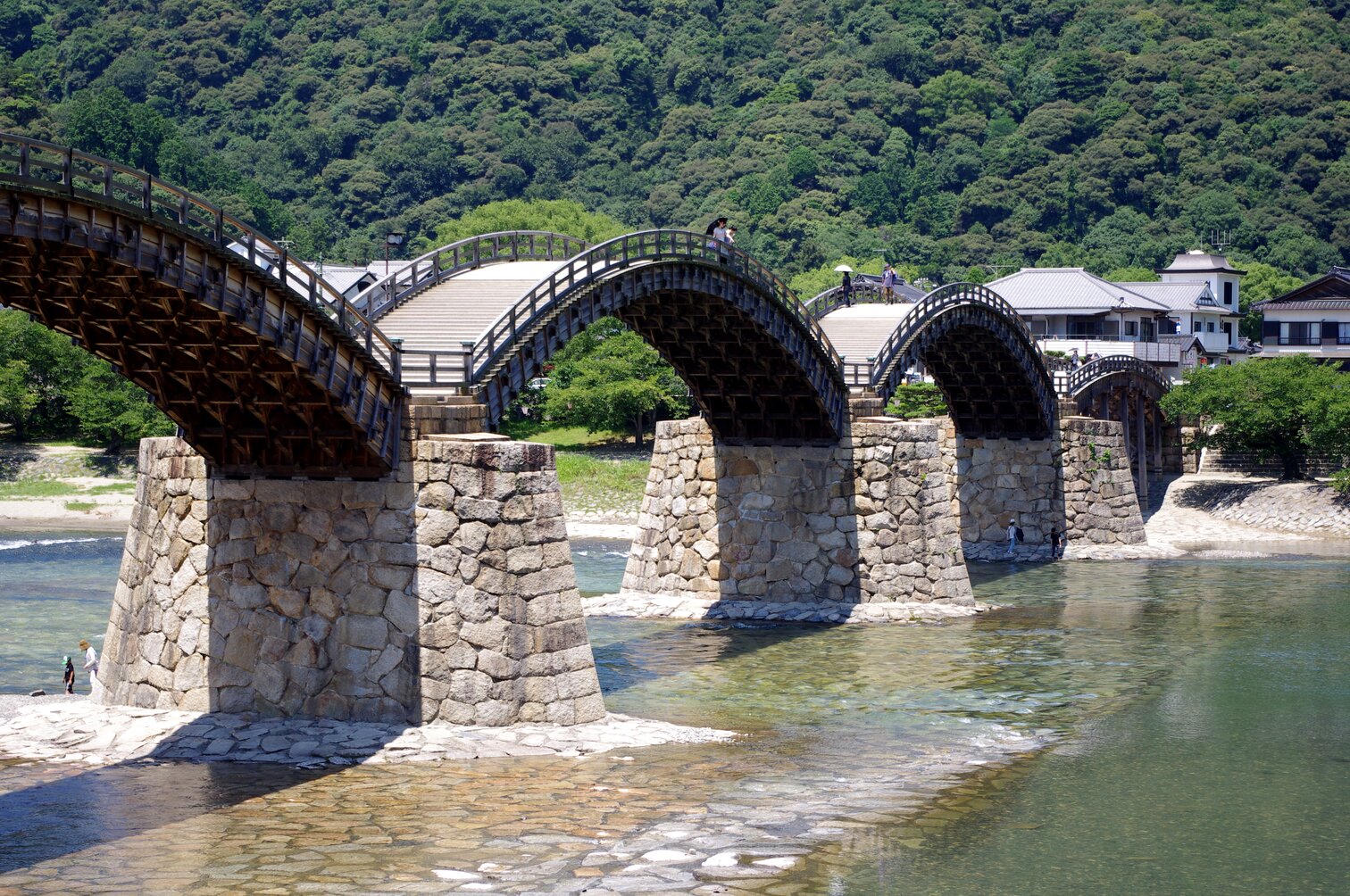
Crossing Kintaikyo costs ¥500 for an adult, but a combined ticket for Kintaikyo Bridge, a return ropeway ride and Iwakuni Castle costs ¥1,550. Bought separately, the three would cost ¥1,750, so the combined ticket saves ¥200. The prices were revised on September 1, 2026.
After crossing the bridge and walking through Kikko Park, you reach the ropeway station on the far side. The ropeway runs from 9 a.m. to 5 p.m., departing at 00, 15, 30 and 45 minutes past each hour, and the ride takes about three minutes. Iwakuni Castle is then about a five-minute walk from the upper station.
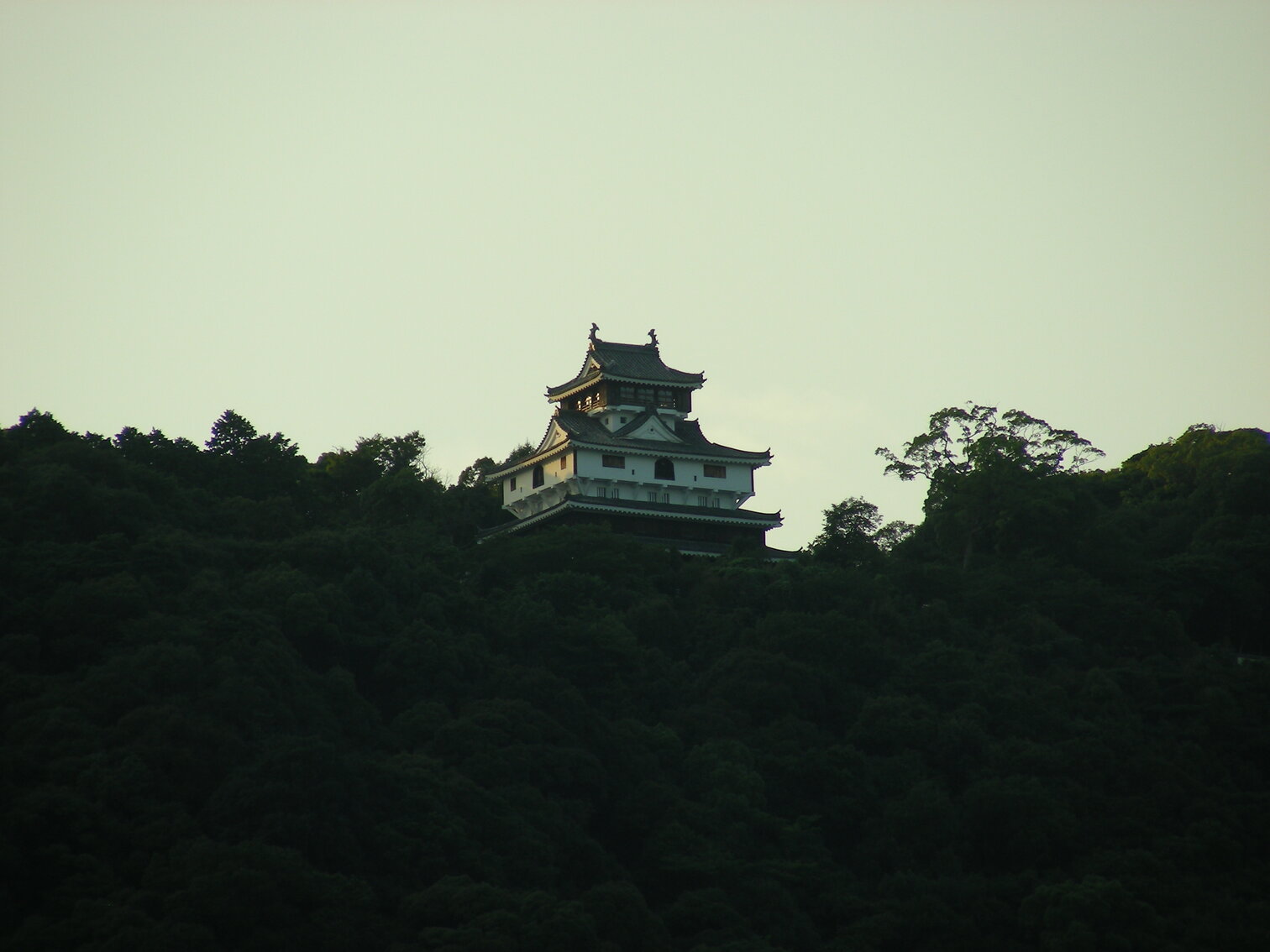
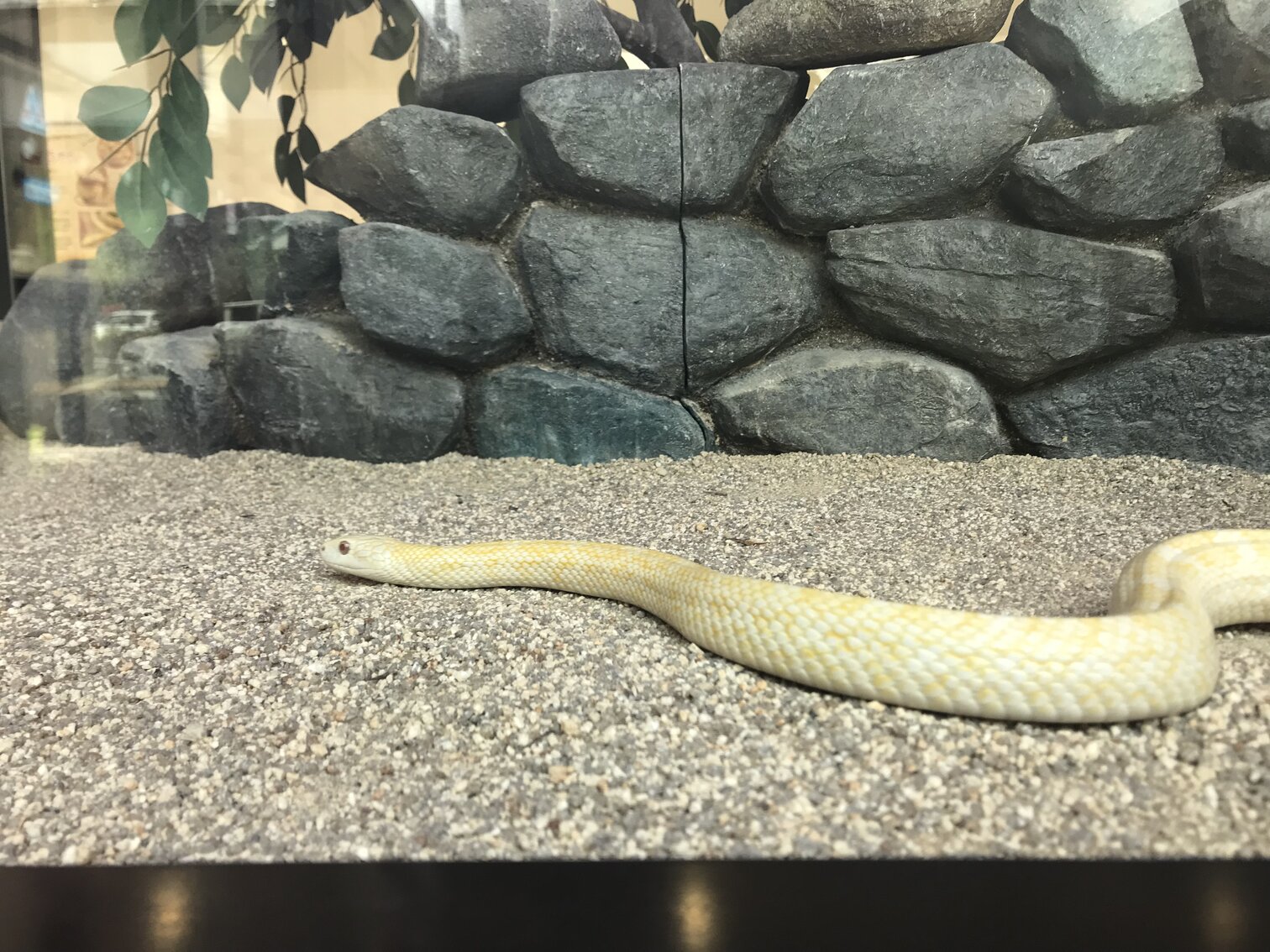
Iwakuni Castle is a mountain castle overlooking the Nishiki River and the old castle town. After coming back down, I would stop at the Iwakuni White Snake Museum, which costs ¥200 and is open from 9 a.m. to 5 p.m. Iwakuni's white snakes are a nationally designated Natural Monument and live only in this area.
For the first night, the plan uses Miharaya, an early-Showa-era ryokan on Kintaikyo-dori that has been in its present building for about 90 years. It is about five or six minutes on foot from the bridge.
Dinner is Iwakuni-zushi. There are 16 places serving the local dish around Kintaikyo, and Hirasei by the bridge is among the best known. However, Hirasei is normally closed on Tuesdays and Wednesdays, and dinner requires a reservation. With this itinerary reaching Iwakuni on a Wednesday, there is little room to rely on an outside restaurant for Iwakuni-zushi that evening. Having it served at the inn is the more dependable plan.
There are several points I would confirm before booking Miharaya: there is no lift, payment on site is cash only, service is in Japanese only, and all rooms are non-smoking. The inn also has a rock bath large enough for two people.
After dinner, I would walk back to Kintaikyo. The illumination continues until 10 p.m. This is exactly when the inn's five- or six-minute walk to the bridge becomes valuable, and it is the strongest reason for spending the night in Iwakuni rather than treating the city as a daytime stop.
Day 2: ferry to Miyajima, walk Momijidani, then continue to Hiroshima
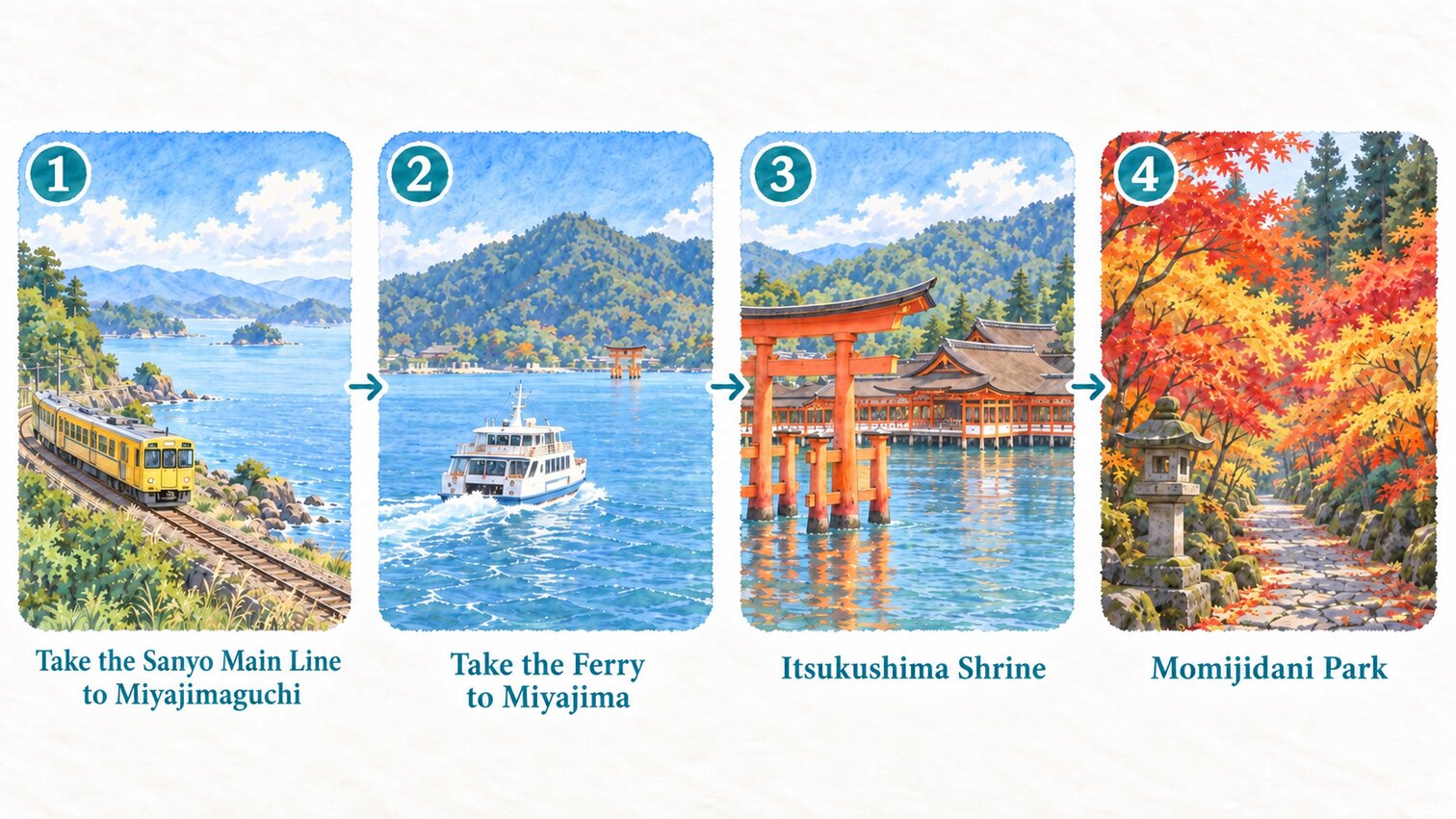
In the morning, I would take the bus back to Iwakuni Station and ride the Sanyo Main Line to Miyajimaguchi. It is a 22-minute, no-change journey. The ferry then takes about 10 minutes to Miyajima.
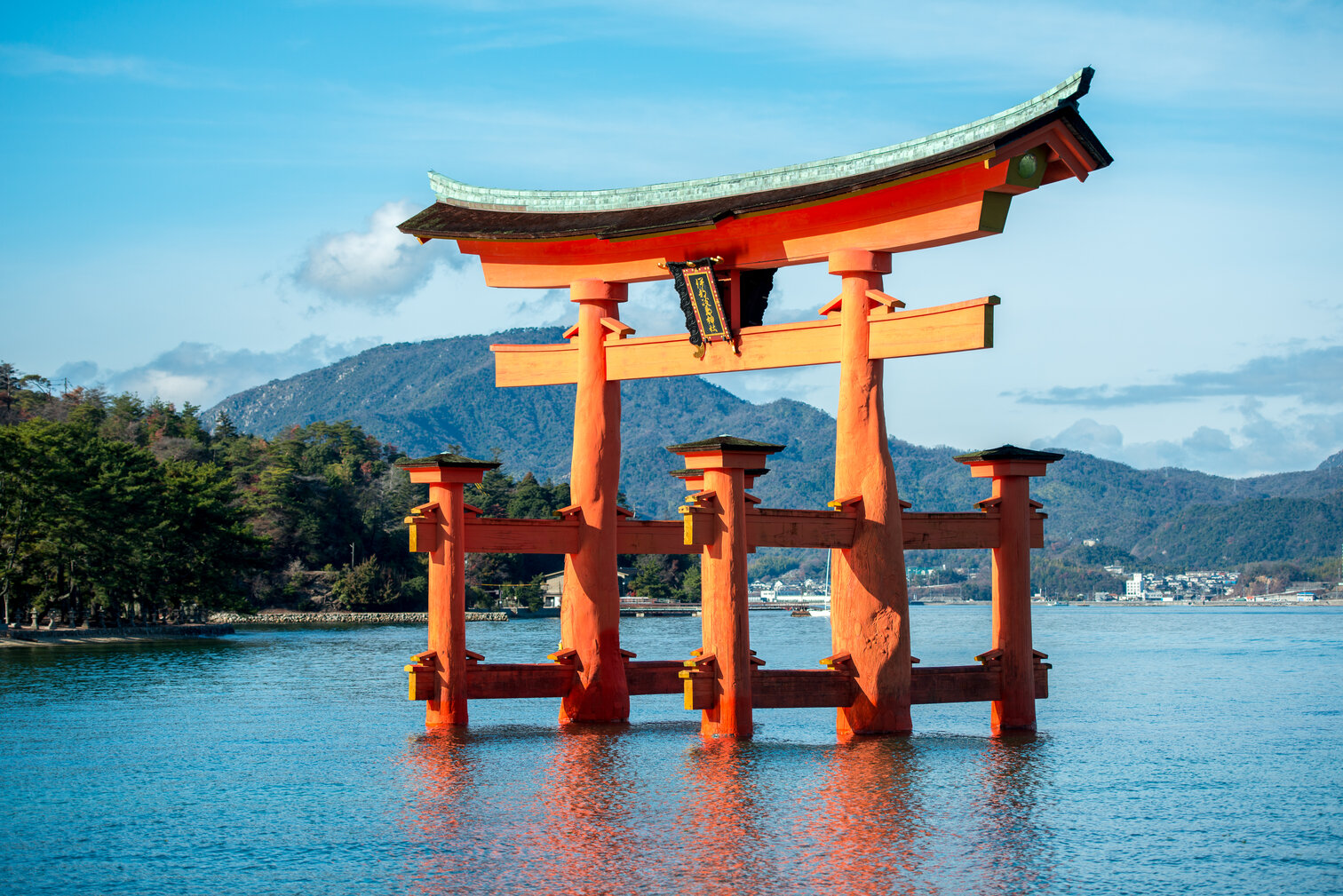
Admission to Itsukushima Shrine is ¥300 for an adult. The opening hours used for this plan are 6:30 a.m. to 5:30 p.m. in November. Because the shrine buildings sit over the water, the scene changes with the tide; I would check the tide table for the day before deciding the order of the visit.
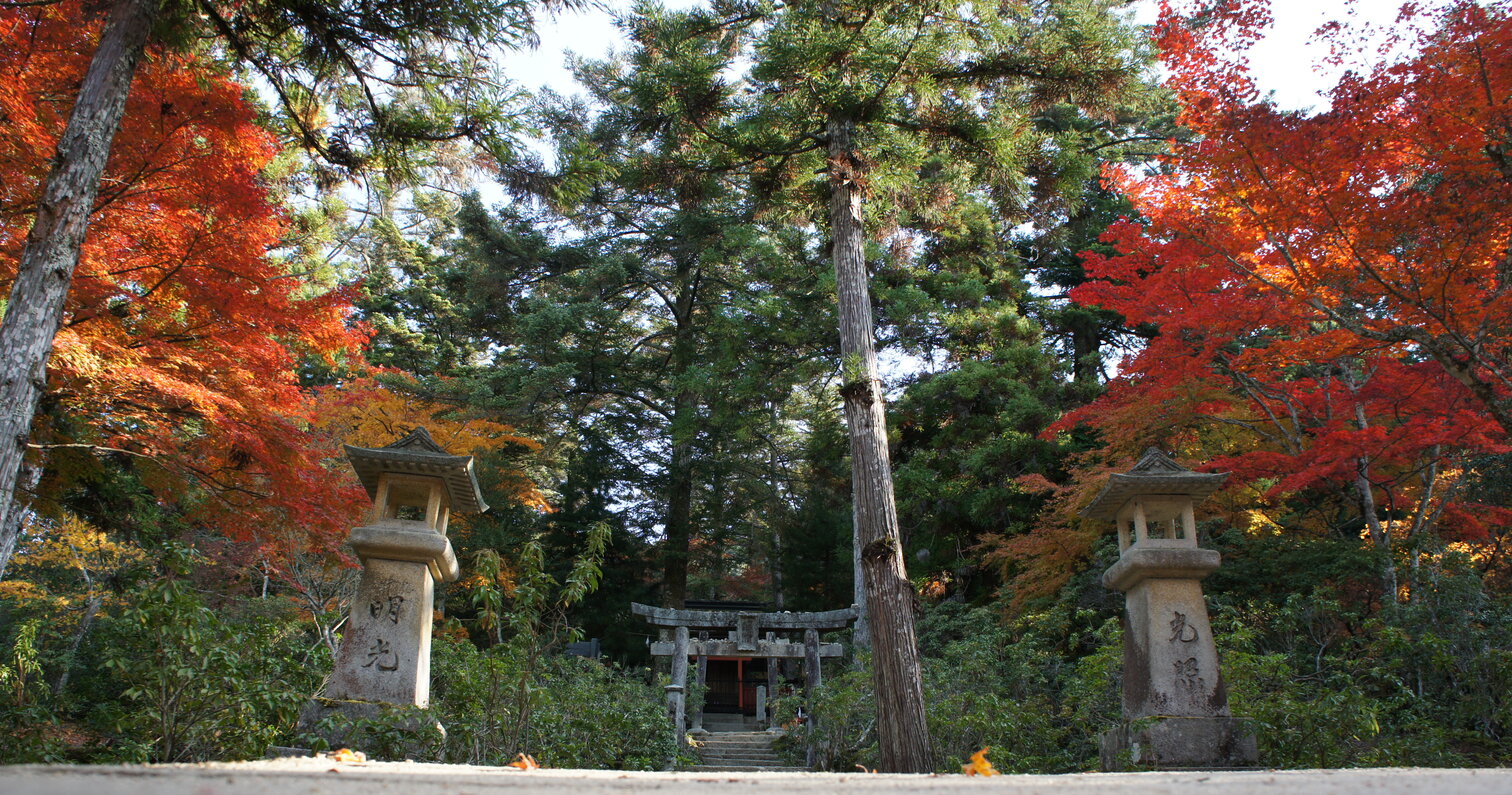
Heading inland from the shrine brings you to Momijidani Park. The valley of maples extends towards the foot of Mount Misen, and admission is free. The usual peak period is mid- to late November, putting these dates near the centre of the season.
In the evening, I would take the ferry back to Miyajimaguchi and continue to Hiroshima on the Sanyo Main Line, a 28-minute ride.
The second night's hotel is Green Rich Hotel Hiroshima Shinkansenguchi, about two minutes on foot from the Shinkansen side of Hiroshima Station. It has a large communal bath with artificial hot spring water, which sounds particularly welcome after a day spent walking around Miyajima.
Dinner would be in central Hiroshima: okonomiyaki, oysters or anago are all possibilities. The third morning is built around the museum's opening time, so this is the night to have a more substantial meal.
Day 3: walk through Peace Memorial Park before heading home
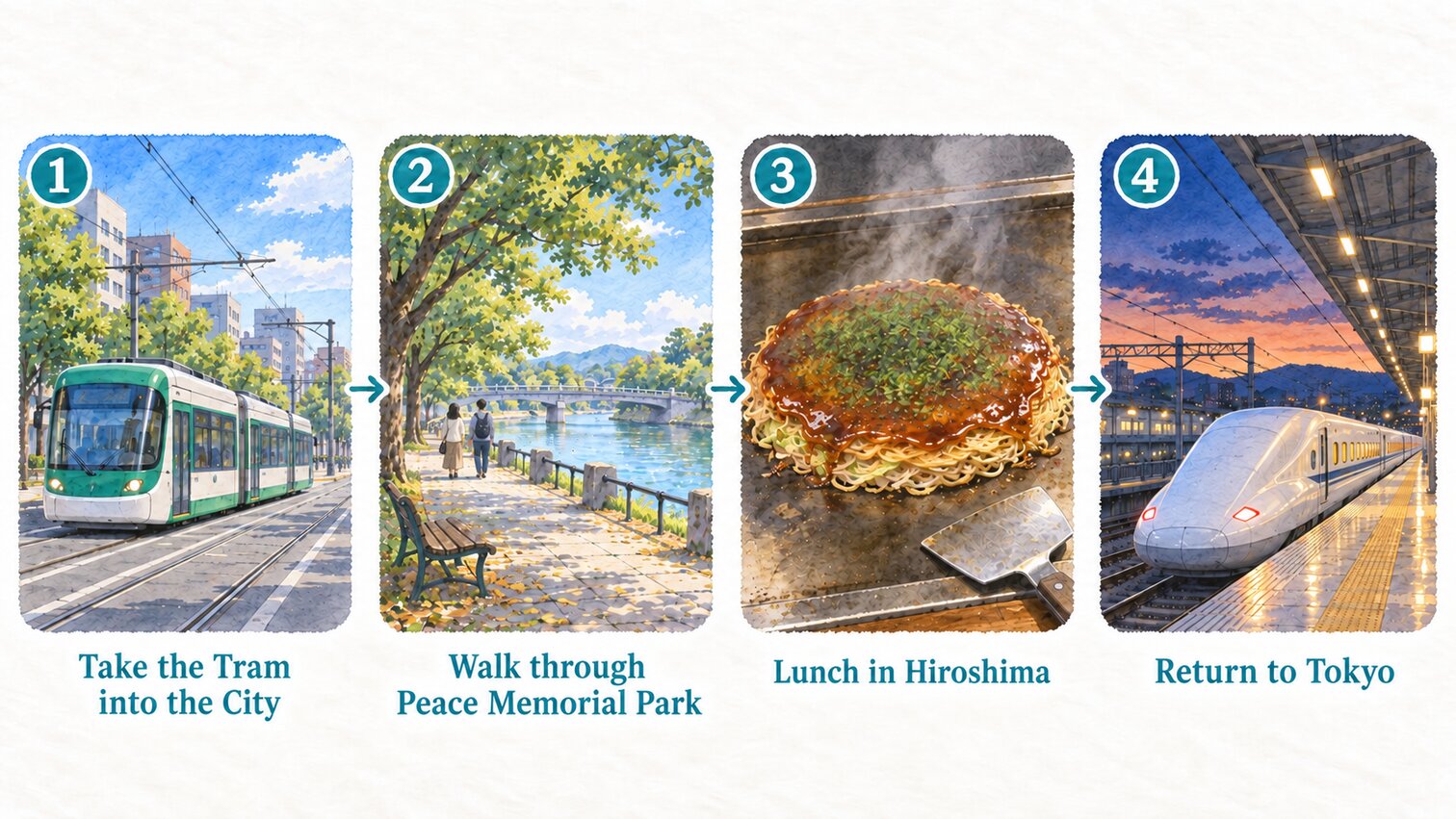
The final day stays entirely within Hiroshima. I would take the Hiroshima Electric Railway to Genbaku Dome-mae: about 15 minutes and ¥240.
In November, the Hiroshima Peace Memorial Museum is open from 7:30 a.m. to 7 p.m. Adult admission is ¥200. Not many attractions open this early. Going in soon after opening should also mean fewer visitors than later in the day, so there is a reason to leave the hotel early.
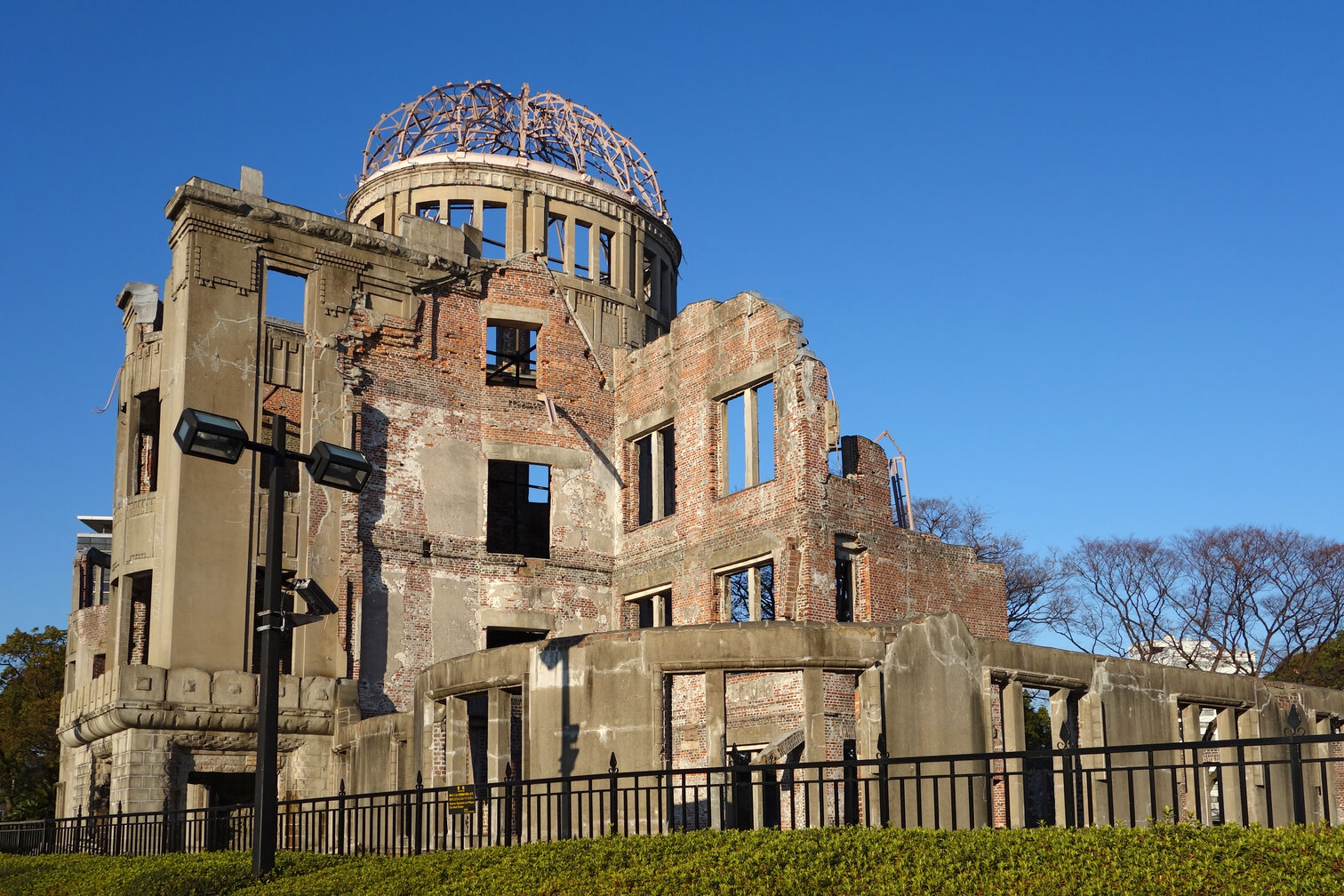
After the museum, I would walk through Peace Memorial Park towards the Atomic Bomb Dome, passing the Cenotaph for the A-bomb Victims, the Children's Peace Monument and the Flame of Peace. The park is designed as a whole, and I would rather follow it in sequence with a map than treat each memorial as a separate stop.
After lunch, I would take the tram back to Hiroshima Station and board the 3:03 p.m. Nozomi 100, arriving in Tokyo at 6:57 p.m.
Estimated cost for two people, with per-person figures
Staying at Miharaya and near Hiroshima Station
- Shinkansen, Nozomi reserved seats, Tokyo ⇔ Hiroshima return: ¥78,240 for two / ¥39,120 per person
- First night, Miharaya, with Iwakuni-zushi dinner and breakfast: ¥28,600 for two / ¥14,300 per person
- Second night, Green Rich Hotel Hiroshima Shinkansenguchi, room only: ¥22,090 for two / ¥11,045 per person
- Local transport, including the Sanyo Main Line, Iwakuni buses, Miyajima ferry and Hiroshima trams: ¥6,200 for two / ¥3,100 per person
- Sightseeing, including the Kintaikyo combined ticket, White Snake Museum, Itsukushima Shrine and Peace Memorial Museum: ¥4,500 for two / ¥2,250 per person
- Food and incidental expenses: ¥15,000 for two / ¥7,500 per person
Total: about ¥155,000 for two, or about ¥77,000 per person
Upgrading the Iwakuni night to a Kintaikyo onsen hotel
If the first night is changed to a twin room with dinner and breakfast at Kintaikyo Onsen Iwakuni Kokusai Kanko Hotel, priced at ¥66,000 for two, the trip comes to about ¥192,000 for two, or about ¥96,000 per person. The hotel stands beside Kintaikyo Bridge, and Dassai sparkling sake is available at its Chinese restaurant. This almost uses the full ¥200,000 budget, although it means giving up the Iwakuni-zushi dinner included at Miharaya.
When I would go: mid- to late November
The timing of this plan is set by the autumn colours in Momijidani Park. Iwakuni City's seasonal flower calendar places the autumn colours around Kintaikyo in the same mid- to late-November window. Having both Iwakuni and Miyajima reach their autumn season at roughly the same time is one of the advantages of this route.
Kintaikyo is not illuminated year-round. The spring illumination runs from mid-March to June 1, and the summer-season illumination from mid-August to mid-January. November falls within the latter period. From June until mid-August, by contrast, there is a gap with no illumination, so the timing matters if the night bridge is a priority.
Spring would put Kintaikyo's cherry blossoms at the centre of the trip. Together with Kikko Park, the area has a substantial number of trees, and the spring illumination period would also be running. It would not, of course, coincide with Miyajima's autumn colours.
What I still do not know
- The exact switch-on time for the Kintaikyo illumination. I confirmed that the lights go off at 10 p.m., but I could not find a published start time. The safest description is simply after sunset. For certainty, the Iwakuni City Tourism Promotion Division can be contacted on 0827-29-5116.
- The Dassai brewery does not fit this public-transport itinerary. Asahi Shuzo's main brewery is in Shuto, Iwakuni. From Iwakuni Station, the Gantoku Line takes 32 minutes, followed by about 15 minutes by taxi. There is no more than one Gantoku Line train an hour, so it does not fit this plan without a car. By car, it is about 40 to 60 minutes from Kintaikyo Bridge.
- There is not enough time to climb Mount Misen. Reaching the summit of Miyajima's Mount Misen by ropeway and on foot takes about three hours for the round trip. It does not fit into Day 2 after Itsukushima Shrine and Momijidani Park while still moving on to Hiroshima. With a third night, this is the clearest place to extend the itinerary.
- The Iwakuni Castle ropeway has inspection closures. About once a month, it stops after 2 p.m. for inspection. A full-day closure is planned from January 13 to February 17, 2027 for its 12-month inspection. That does not affect the November dates here, but if you move the trip to another date, check the ropeway's inspection schedule before you go.
- The hotel prices are date-specific. The estimate uses the regular prices shown on Rakuten Travel for November 25 and 26, 2026. Late November in Hiroshima overlaps with the autumn-leaf season, so prices may rise closer to the date.
- Itsukushima Shrine's closing time needs a final check. I could not retrieve the official website, and secondary sources disagree. A source that gives seasonal hours lists 6:30 a.m.–5:30 p.m. from October 15 to November 30, while another general guide gives 6:30 a.m.–6 p.m. This article uses the former. If an evening shrine visit matters, I would confirm the time before boarding the ferry.
Would the budget work?
The plan starts by staying in Iwakuni for Kintaikyo after dark, then works east along the Sanyo Main Line through Miyajima and Hiroshima. From Iwakuni onward, the two rail hops are direct and both in the 20-minute range. That simple sequence is what makes the itinerary work.
The estimated total is about ¥155,000 for two, or about ¥77,000 per person. That leaves roughly ¥45,000 within the ¥200,000 budget. Spend most of the difference on the first night's hotel, and the alternative Kintaikyo onsen stay brings the trip to about ¥192,000. The route stays the same; only the choice of accommodation changes.
Photos from Wikimedia Commons: 20100724 Iwakuni 5235 (Jakub Hałun / CC BY-SA 4.0); Iwakuni Castle close-up view (Ajax / CC BY-SA 4.0); White snake in Iwakuni White Snake Museum 3 (そらみみ / CC BY-SA 4.0); Itsukushima Gate (JordyMeow / CC BY-SA 3.0); 宮島-紅葉谷 - panoramio (2) (tina_kazusa / CC BY 3.0); Genbaku Dome04-r (Oilstreet / CC BY 2.5). All photographs have only been resized and cropped.


Estimated cost for two people sharing one room / per person
- Shinkansen, Nozomi reserved seats, Tokyo ⇔ Hiroshima return: ¥78,240 / ¥39,120
- First night at Miharaya, with dinner and breakfast: ¥28,600 / ¥14,300
- Second night at Green Rich Hotel Hiroshima Shinkansenguchi, room only: ¥22,090 / ¥11,045
- Local transport, including the Sanyo Main Line, buses, ferry and Hiroshima trams: ¥6,200 / ¥3,100
- Sightseeing: ¥4,500 / ¥2,250
- Food and incidental expenses: ¥15,000 / ¥7,500
- Total: about ¥155,000 for two, or about ¥77,000 per person