This is a desk-researched itinerary. I have never been to Hagi. I did stop in Tsuwano once, for part of a day about 15 years ago, but I did not stay the night and have no photos from it. These are places I would like to go, researched and planned as seriously as if I were actually going. Prices and operating information were checked in September 2026, but please confirm the latest details on each official website before you travel.
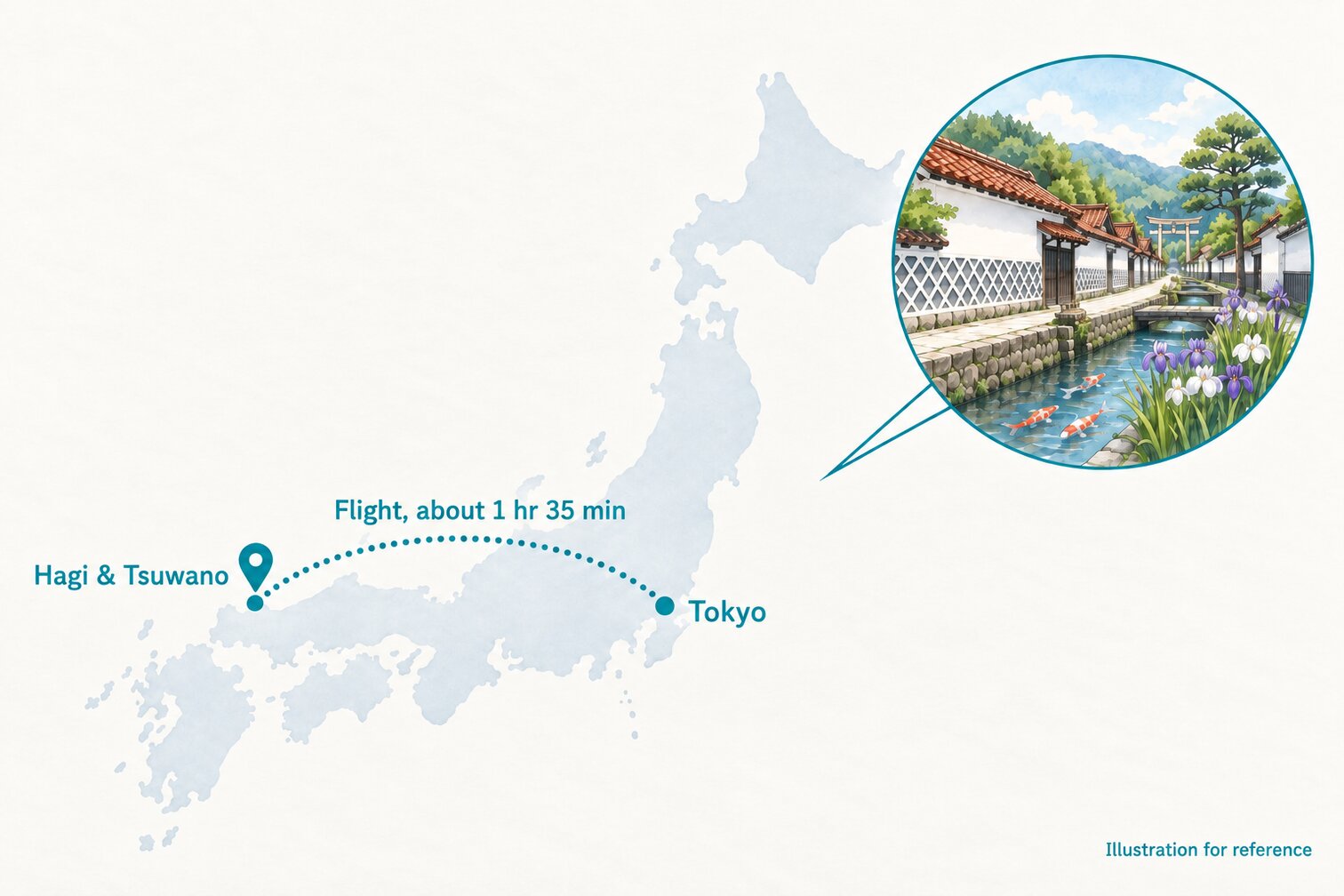
The plan at a glance
- Budget: ¥150,000 for two (about ¥75,000 per person), 3 days and 2 nights, from Tokyo
- Where: Hagi (Hagi, Yamaguchi Prefecture) and Tsuwano (Tsuwano, Shimane Prefecture)
- Day 1: Haneda → Hagi-Iwami Airport → shared taxi to Hagi → the castle town and the Hagi Castle ruins → an inn in the Hagi Onsen hot-spring area
- Day 2: Shoin Shrine and Meirin Gakusha → a local bus over the mountains to Tsuwano → Tonomachi-dori → the only hot-spring inn in Tsuwano
- Day 3: the Mori Ogai Memorial Museum, the chairlift to the castle ruins and uzume-meshi → shared taxi to the airport → Haneda
- Estimated cost: about ¥150,000 for two (about ¥77,000 per person). With flights at about ¥48,000 for two, about ¥149,000. Switch to a business hotel with breakfast and a room-only night and it comes to about ¥105,000–¥110,000 for two
- Bottom line: transport alone costs ¥60,000–¥70,000 for two. The standard estimate, with two nights at hot-spring inns, comes to about ¥150,000; to bring it closer to ¥100,000, you cut back on lodging
Why Hagi and Tsuwano?

I have been working through the question "Where can you go on a given budget?", and Hagi and Tsuwano have been on my mind as a pair for a long time. Both are castle towns, both are hard to reach from Tokyo, and a single local bus route connects the two. On a 2-day, 1-night trip you could only manage one of them, so I had decided that once I set up a 3-day, 2-night budget, this would be the first trip I wrote.
Hagi was the castle town of the Mori clan, and its Edo-period street plan survives intact. In 2015, Shokasonjuku and the Hagi castle town became component parts of the World Heritage site "Sites of Japan's Meiji Industrial Revolution." Tsuwano is a small castle town known as the "Little Kyoto of San'in." Many people will have seen photos of its streets of white earthen walls, with koi swimming in the canals alongside.
To be honest, I have been to Tsuwano once before, about 15 years ago. I was staying in another town, though, and only walked around for a few hours during the day. All I remember is that the streets were lovely. I do not even remember whether there were koi, and I have no photos.
What I found out while researching is that I was there at about the time the koi were most numerous. The koi in the Tonomachi-dori canals have declined over ten years, from more than 500 around 2010 to about 200, less than half, because of koi herpesvirus and predation by animals. The town and people from Tsuwano have reportedly started a project to bring them back. Not remembering something I must have seen became one of the reasons for this trip. This time I am treating it as a first visit and researching from scratch.
Getting there
First, rule out everything except flying. To get from Tokyo to Hagi by Shinkansen, you take the Nozomi to Shin-Yamaguchi Station, about 4 hours 20 minutes and ¥22,060 one way with a reserved seat. From there, the Super Hagi direct bus to Higashi-Hagi Station takes about 1 hour 10 minutes and costs ¥1,600 (a discounted fare valid until the end of March 2027). That adds up to ¥23,660 and about five and a half hours one way. A round trip is ¥47,320 per person, or about ¥95,000 for two. That is far too heavy even for a ¥150,000 budget, so flying is the only option.
- Haneda → Hagi-Iwami Airport: about 1 hour 35 minutes on ANA. Two round trips a day; the morning flight arrives at 10:20 and the evening flight at 17:30
- Return flights leave at 11:00 and 18:15. This plan takes the morning flight out and the evening flight back
- Round-trip fares as a guide: book early and it is ¥24,000–¥29,000 per person (lowest fares found for October 2026 to February 2027 were ¥23,995–¥24,590). For dates closer to departure, ¥32,000–¥39,000; at the last minute or over a long weekend, ¥40,000s to ¥50,000s
Here is the first key point. The airport is called "Hagi-Iwami," but it is in Masuda, Shimane Prefecture. It takes 70 minutes to get to central Hagi and 50 minutes to Tsuwano. For public transport from the airport to Hagi and Tsuwano, the main option is a shared taxi that you book in advance.
- Airport → central Hagi: Hagi Kintetsu Taxi's shared taxi, ¥2,800 per person, about 70 minutes. Within the former Hagi city area, it takes you straight to your accommodation. Book by 17:00 the day before
- Airport ⇔ Tsuwano: KoiKoi Taxi's shared taxi, ¥2,200 per person, about 50 minutes. The taxi to Tsuwano leaves about 10 minutes after the flight arrives; the taxi to the airport leaves Tsuwano about 1 hour 40 minutes before the flight departs. Book by 21:00 the day before
- The budget option: a local bus from the airport to Masuda Station (¥340), then the JR San'in Line to Higashi-Hagi Station (¥990). That totals ¥1,330, but from the 10:20 arrival you reach Higashi-Hagi Station at 13:02, nearly an hour and a half later than by taxi
Between Hagi and Tsuwano, Bocho Kotsu runs a local bus (Higashi-Hagi Ekimae to Tsuwano Bus Center) five times a day in each direction. It takes about 1 hour 45 minutes and costs ¥2,220. It is a long local route through the mountains, but it is what makes it possible to join these two towns into one trip.
Model itinerary: 3 days, 2 nights
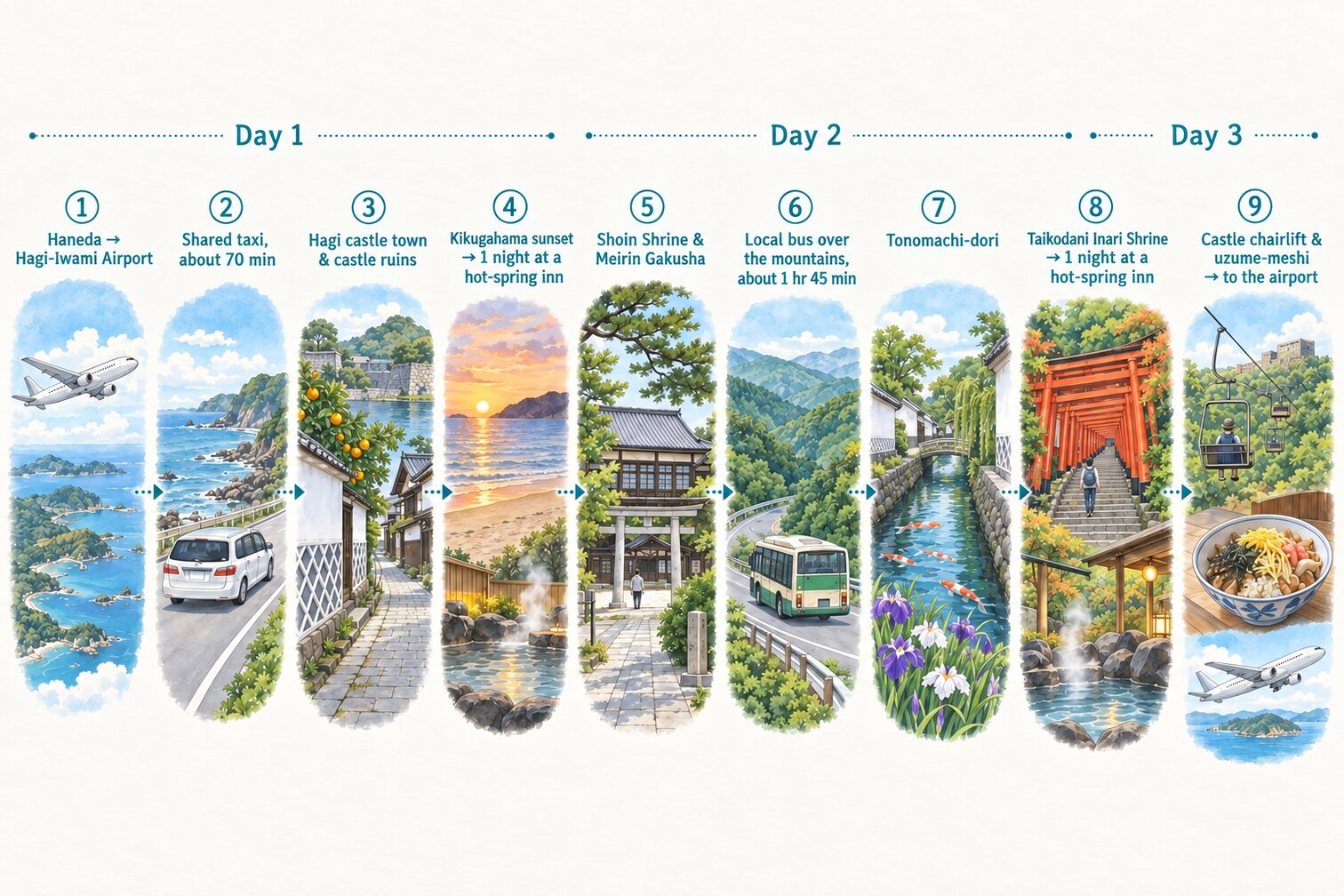
The airport is on the Tsuwano side, so going first to Hagi, the farther town, then returning to the airport via Tsuwano gives you a single loop with no backtracking. I also considered two nights in Hagi with Tsuwano as a day trip, but the bus round trip would double the transport cost, and on the last day you would face 70 minutes from Hagi back to the airport. So I settled on one night in Hagi and one night in Tsuwano.
Day 1: Hagi before noon, the castle town in the afternoon
Leave Haneda in the morning and arrive at Hagi-Iwami Airport at 10:20. On the shared taxi you booked in advance, you should reach your accommodation in Hagi by around 11:40. Within the former Hagi city area the taxi drops you at the door, so you can leave your bags and head straight out into town.
For lunch, have fish at Hagi Shimart, a roadside station (michi-no-eki) near Higashi-Hagi Station. Hagi is a fishing town, known for setsuki aji (horse mackerel that stay in local waters) and kensaki ika (swordtip squid), so a market restaurant seems like the right first meal.
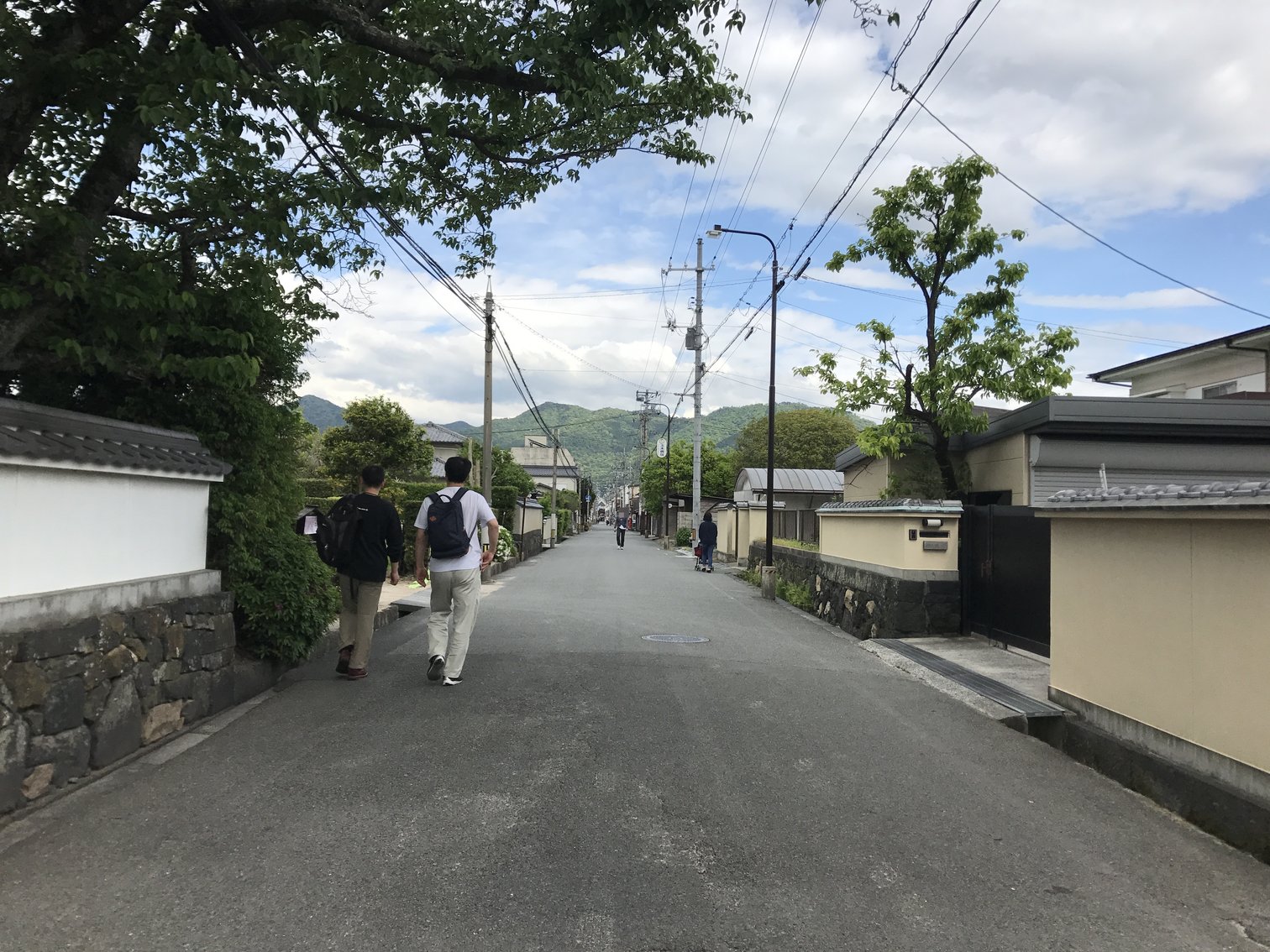
In the afternoon, head into the castle town. The Maaru Bus loop service runs two routes around Hagi, westbound and eastbound, about every 45 minutes, so use it to get around. The heart of the castle town is around Horiuchi and Gofukumachi, where streets lined with earthen walls in namako-kabe style (a lattice pattern of tiles and white plaster) and natsumikan orange trees fall within the World Heritage area. Walk west from there to the Hagi Castle ruins and Shizuki Park. The keep was dismantled in 1874 (Meiji 7), but the stone walls and moat remain. Admission is ¥220 for adults, on a combined ticket with the former Asa Mori family residence row house (Kyu-Asa Mori-ke Hagi Yashiki Nagaya).
In the early evening, go to Kikugahama. It is a sandy beach just north of the castle ruins and has reportedly been selected as one of Japan's "100 Best Sunsets." Hagi is a sunset town too, so this is where day 1 ends.
For the night, stay at a hot-spring inn in the Hagi Onsen area. Rakuten Travel lists about ten places to stay in the area, including Hagi Honjin (a tour of 14 kinds of baths), Hagi Komachi (sunset views over the Sea of Japan) and Resort Hotel Mihagi (within walking distance of the castle town). For this plan I chose Hagi Kanko Hotel, which has an open-air bath looking down over Hagi Bay from partway up Mount Kasayama. There is a free shuttle from Higashi-Hagi Station, and there are plans with dinner and breakfast from ¥15,400 per person per night. Dinner is a course of Hagi fish. The plan assumes a relaxed first evening at the inn.
Day 2: From Shoin Shrine, by bus over the mountains to Tsuwano
In the morning, visit Shoin Shrine. Shokasonjuku, part of the World Heritage site, still stands in the grounds, and there is no charge to see it. From there, take the Maaru Bus to Hagi Meirin Gakusha, a set of wooden school buildings on the site of Meirinkan, the domain school of the Edo period. Building No. 2 houses the World Heritage Visitor Center and Bakumatsu Museum, with admission at ¥300. There is also a combined discount with the Hagi Museum.
Have lunch in Hagi, then take the 13:00 bus from Higashi-Hagi Ekimae to Tsuwano. The bus passes through mountain villages such as Yoshibe, Mitani and Tokusa, and arrives at Tsuwano Station at 14:45. Take the 11:45 bus instead (arriving at 13:30) and you get 1 hour 15 minutes more in Tsuwano, but a shorter morning in Hagi. Decide based on how much of Hagi you want to walk.
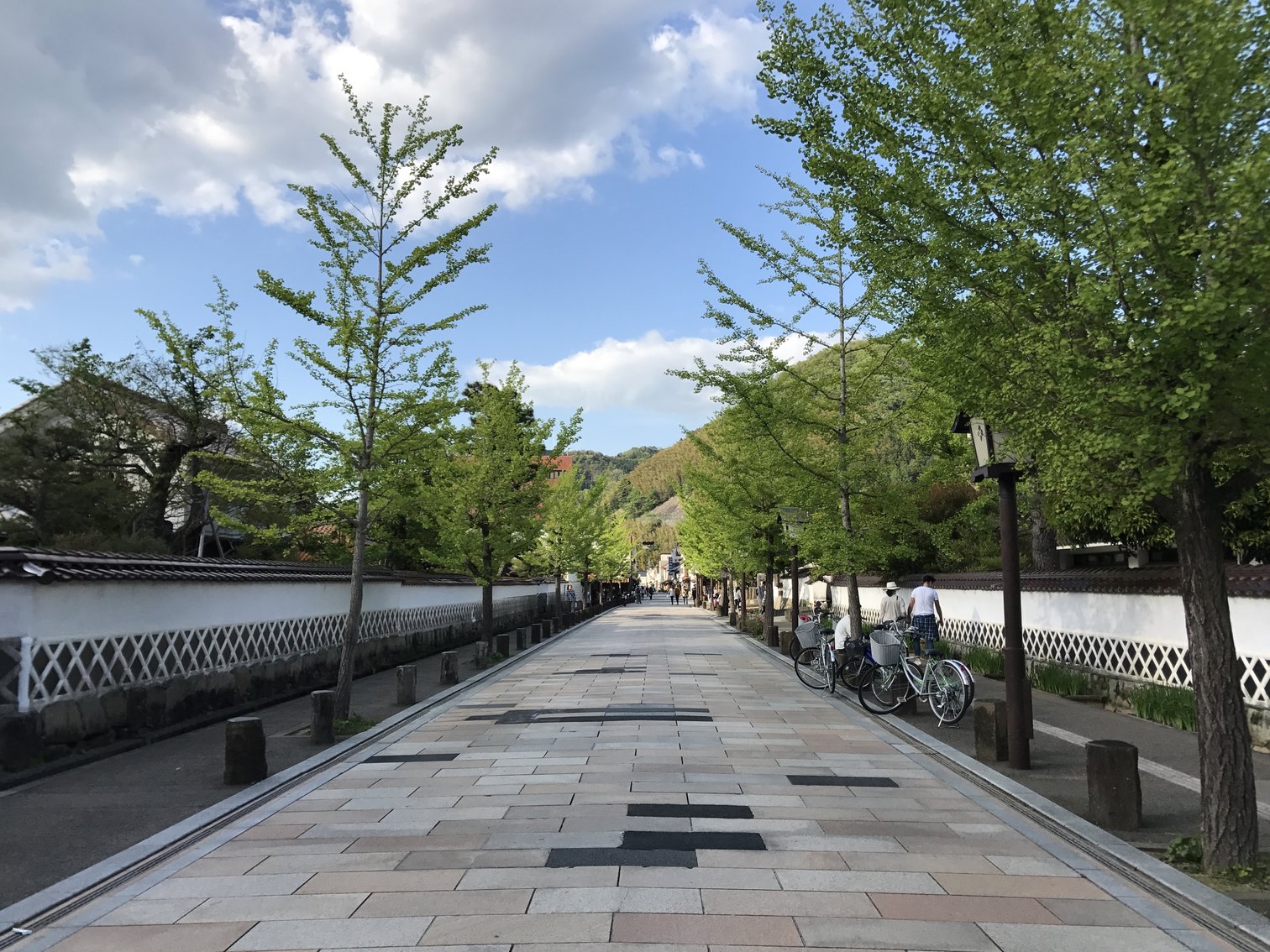
Tonomachi-dori is a 10-minute walk from Tsuwano Station. Leave your bags at the inn first, then walk. Tonomachi-dori keeps Tsuwano's oldest surviving streetscape: koi swim in the canal alongside the white earthen walls, and Tsuwano Catholic Church (with tatami matting inside) and the Yorokan domain school are gathered along it. From late May to mid-June, about 3,000 irises reportedly bloom in the canal. In the evening, the street is lit up.
If there is time, go on to Taikodani Inari Shrine. It stands partway up the mountain where the Tsuwano Castle ruins are, and you climb to it through a tunnel of about 1,000 vermilion torii gates. It is a 30-minute walk from the station, and it is said to be one of Japan's five great Inari shrines.
For the night, I chose Yutorelo Tsuwano. It is the only hot-spring inn in Tsuwano, an 8-minute walk from the station. It has a large bath and an open-air bath fed by its own hot spring. Dinner is reportedly a basic course centered on teppanyaki wagyu short rib and a local hotpot, and breakfast a Japanese meal including rolled omelet with dashi cooked on an iron griddle. When I checked a weekday in October 2026 for two people, a Western-style room without its own bath came to about ¥37,700–¥41,800 per night for two (varying with whether a coupon applied), and a Japanese-style twin room to about ¥39,800–¥44,000. A bathing tax of ¥150 per person is charged separately. Room-only plans were also listed from ¥12,100 for two.
Day 3: Ogai's house and the castle ruins in the sky, ending with uzume-meshi
In the morning, visit the Mori Ogai Memorial Museum. It stands next to the house where Ogai lived until he was 10. Admission is ¥600 for general visitors (including the former residence), and it is open 9:00–17:00.
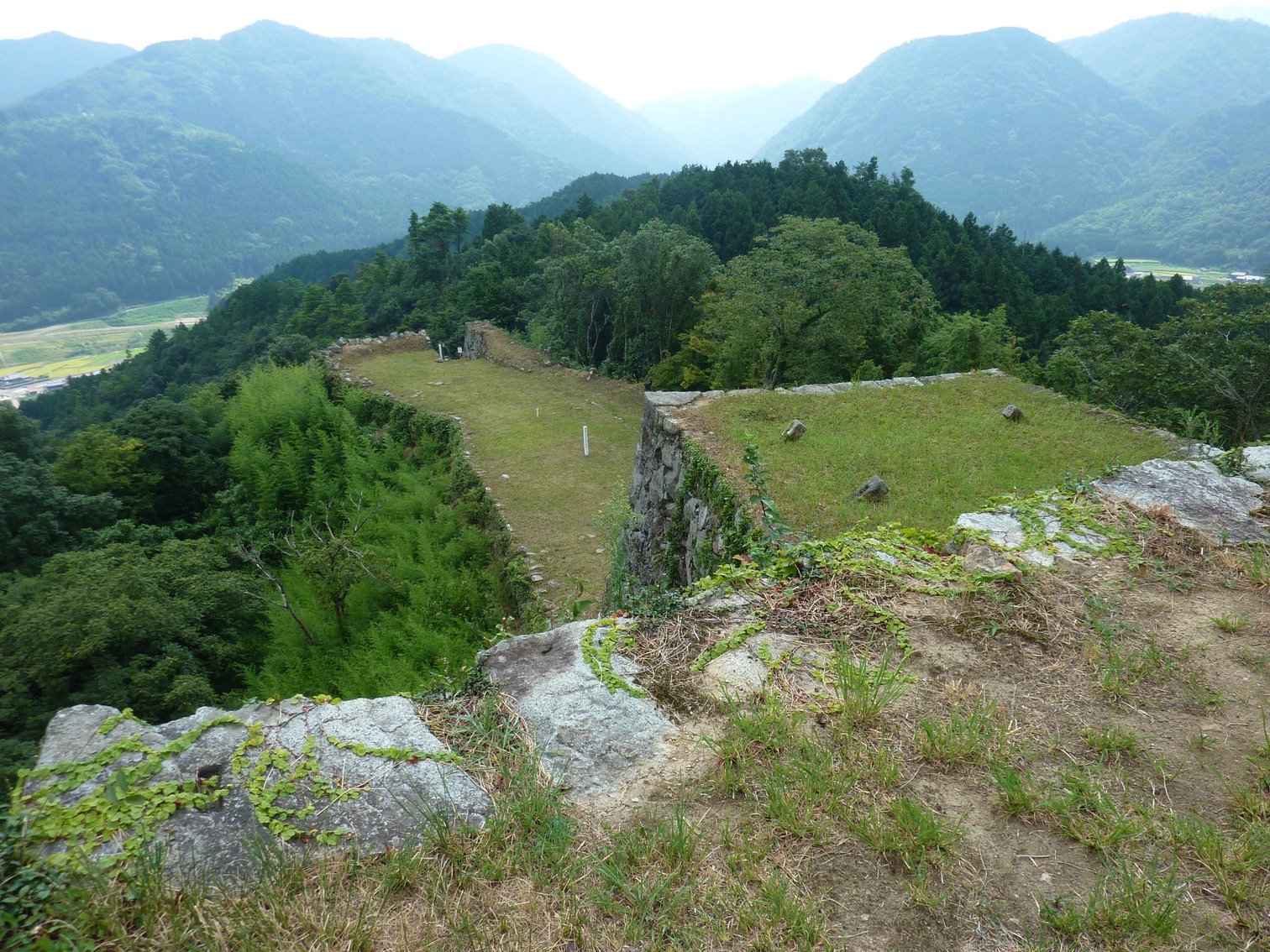
A few minutes' walk from the museum is the boarding point for the sightseeing chairlift to the Tsuwano Castle ruins. A round trip is ¥700, and the castle ruins are a 20-minute walk from the top of the lift. From the stone walls, you reportedly get a view over Mount Aono, the Tsuwano River and the town. From autumn into winter, the stone walls seem to float above the morning fog, and the site is called the "castle in the sky." The lift runs 9:00–16:30 (last descent 16:20), and does not run on weekdays from December to the end of February.
For lunch, try Tsuwano's local dish uzume-meshi. The toppings are buried (uzumeru) under the rice, and the dish is rather like ochazuke, rice with tea or broth poured over it. You can have it at restaurants around Tonomachi-dori. For a souvenir, Genji-maki, a Tsuwano specialty sweet.
For the 18:15 flight, the shared taxi leaves Tsuwano at around 16:35. That leaves about two hours after lunch, enough time to walk past the old merchant houses on Honmachi-dori or stop at the Anno Mitsumasa Art Museum (in front of the station). You arrive at Haneda at around 19:45.
Estimated cost (total for two, with per-person figures)
Two nights at hot-spring inns
- Flights: Haneda ⇔ Hagi-Iwami round trip, about ¥52,000 for two (assuming early-booking fares of ¥24,000–¥29,000 per person)
- Shared taxi, airport → Hagi: ¥5,600 for two
- Bocho bus, Higashi-Hagi → Tsuwano: ¥4,440 for two
- Shared taxi, Tsuwano → airport: ¥4,400 for two
- Night 1: Hagi Kanko Hotel, dinner and breakfast included, about ¥31,000 for two (a plan from ¥15,400 per person)
- Night 2: Yutorelo Tsuwano, basic course dinner and breakfast included, about ¥40,000 for two (Western-style room without its own bath; actual prices for a weekday in October 2026)
- Sightseeing: Hagi Castle ruins ¥220, Meirin Gakusha ¥300, Ogai museum ¥600, castle chairlift ¥700 → ¥3,640 for two. About ¥4,000 including local buses
- Three lunches and incidentals: about ¥12,000 for two
Total: about ¥150,000 for two (about ¥77,000 per person)
If you can get flights in the cheapest November–February range (about ¥48,000 for two), the total is ¥149,440 (about ¥149,000), just inside ¥150,000. Book closer to the date and it comes out a few thousand yen over.
Budget version: cut back on lodging
- Flights: about ¥48,000 for two (if you get the cheapest November–February range)
- Airport → Hagi: local bus + JR, ¥2,660 for two
- Bocho bus and shared taxi: ¥8,840 for two (same as above)
- Night 1: Hagi Royal Intelligent Hotel (1 minute on foot from Higashi-Hagi Station, free breakfast, large shared bath), from ¥5,050 per person with two sharing → about ¥10,100
- Night 2: Yutorelo Tsuwano, room only, from ¥12,100 for two
- Dinner out on both nights: about ¥10,000 for two
- Sightseeing, lunches and incidentals: about ¥16,000 for two
Total: about ¥105,000–¥110,000 for two (about ¥53,000–¥55,000 per person)
To bring it right down to ¥100,000, lighter lunches and fewer sights would get you within reach. Go that far, though, and you are cutting both the fish in Hagi and the hot spring in Tsuwano. That is why I think the honest way to write this trip is with a ¥150,000-for-two budget. The standard estimate, with two nights at hot-spring inns and a fish course dinner, is ¥153,440, which is ¥3,440 over ¥150,000.
Prices are based on information as of September 2026. Airfares vary greatly by season and by when you buy, and accommodation prices vary by date and plan.
Late May, or November
Two seasons stood out while I was researching.
One is late May to mid-June. About 3,000 irises bloom in the Tonomachi-dori canals, and the koi, the white walls and the irises come together in Tsuwano's most famous view. In Hagi it is the season when natsumikan oranges hang on the trees, with yellow fruit lining the tops of the earthen walls in the castle town.
The other is November. Taikodani Inari Shrine's annual grand festival is on November 15 and 16, and the autumn leaves are reportedly at their best. Autumn into winter is also the season when morning fog settles over the Tsuwano Castle ruins, and in some years the lift has run early-morning services during the fog season. November is also in the cheapest range for flights.
What I would avoid is weekdays from December to the end of February, when the castle chairlift does not run. Tsuwano and Hagi also get snow, so in winter the shared taxis may be affected too.
What I still do not know
This is a desk-researched plan, so here is what I could not fully confirm.
- I checked Yutorelo Tsuwano's dinner-and-breakfast price by entering a weekday in October 2026 for two people for one night on Rakuten Travel (about ¥38,000–¥42,000 per night for two). It changes with the season and day of the week, so check again for the dates you go
- The fare on Hagi's Maaru Bus, and the hours of Hagi Kanko Hotel's shuttle (departure times from Higashi-Hagi Station)
- The Mori Ogai Memorial Museum's closing days. It reportedly sometimes closes temporarily, for example to change exhibitions, so check the official website before you go
- Flight times at the Haneda end. I confirmed the 10:20 arrival and 18:15 departure at Hagi-Iwami Airport against the schedule for March 29 to October 24, 2026, but check the Haneda departure time and Haneda arrival time before you set off
- How to spend the two hours in Tsuwano on day 3, from after lunch until 16:35. The town is compact, so there may well be time to spare
- How the Tonomachi-dori koi are doing now. A report put them at about 200 as of February 2025, but I do not know how the recovery project has changed that since
This time I want to properly count the koi I must have seen 15 years ago, and come home with the number.
Conclusion
Hagi, the World Heritage castle town, and Tsuwano, the little Kyoto with koi in its canals. Two towns joined by a local bus over 3 days and 2 nights, for about ¥150,000 for two. Transport alone costs ¥60,000–¥70,000 for two, so to keep it within ¥100,000 you have to cut back on lodging. The standard estimate, with two nights at hot-spring inns and course dinners of fish and wagyu, comes to about ¥150,000, or about ¥149,000 if flights cost about ¥48,000 for two.
What I discovered in the research was this: the airport may have Hagi in its name, but Hagi is 70 minutes away. From the airport to Hagi it is about 70 minutes by shared taxi, and on the way back about 50 minutes from the Tsuwano side to the airport. Look at where the airport is before you plan the route, and these two towns form a neat single loop.
Photos from Wikimedia Commons: Gofukumachisuji Street in Hagi Castle Town 1 (そらみみ / CC BY-SA 4.0), Tonomachi-dori Street, Tsuwano, Shimane prefecture Wikivoyage banner (そらみみ / CC BY-SA 4.0), Tonomachi-dori Street in Tsuwano, Kanoashi, Shimane 5 (そらみみ / CC BY-SA 4.0), and TsuwanoJo (Mocchy / public domain). All resized and cropped only. Illustrations are for reference.


Estimated cost (total for two, two people sharing one room / per person)
- Flights Haneda ⇔ Hagi-Iwami round trip: about ¥52,000 (with early-booking fares) / about ¥26,000 per person
- Shared taxis and local bus (airport → Hagi, Hagi → Tsuwano, Tsuwano → airport): ¥14,440 / ¥7,220 per person
- Lodging, 2 nights with dinner and breakfast: about ¥71,000 / about ¥35,500 per person
- Sightseeing: about ¥4,000 / about ¥2,000 per person
- Three lunches and incidentals: about ¥12,000 / about ¥6,000 per person
- Total: about ¥150,000 for two (about ¥77,000 per person) (about ¥149,000 with flights in the cheapest range)
- Budget version with a business hotel with breakfast and a room-only night: about ¥105,000–¥110,000 for two