This is a desk-researched itinerary. I have never been to Daisen or Sakaiminato. It is a trip I would like to take, researched and planned as seriously as if I were actually going. Prices and transport service information were checked in September 2026, but please confirm the latest details on the official websites before you travel.
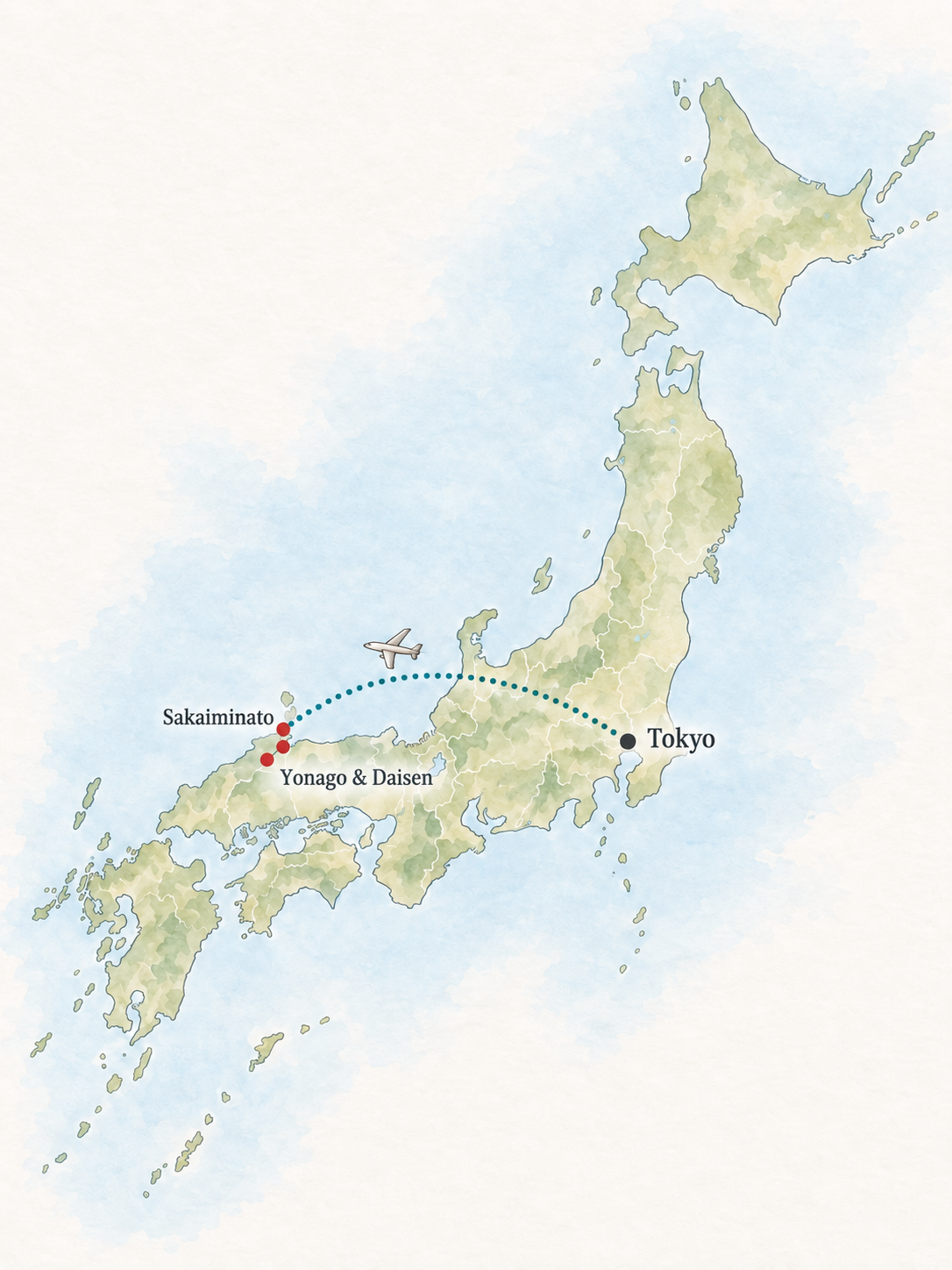
The plan at a glance
- Budget frame: ¥100,000 for two (¥50,000 per person), 2 days and 1 night, from Tokyo
- Destination: western Tottori Prefecture. The temple town at the foot of Daisen, Kaike Onsen, and Mizuki Shigeru Road in Sakaiminato
- Take the first flight of the morning, leaving Haneda at 6:50, to Yonago Kitaro Airport. Day 1 is a walk to Daisenji Temple and the Okunomiya of Ogamiyama Shrine, followed by a night at Kaike Onsen. On Day 2, take the Sakai Line to Sakaiminato, then ride the same line straight back to the airport and fly home to Tokyo. Going out, the Sakai Line takes you to Yonago Station; coming back, it takes you from Sakaiminato to the airport. The backbone of this plan is a route that never doubles back, getting on and off the Sakai Line at different stations each way
- The plan assumes the flights are booked at least 75 days ahead. Miss the early-booking discount and the round trip alone costs more than ¥70,000 per person, which breaks the budget
- Estimated cost: about ¥93,000 for two (about ¥47,000 per person). That leaves about ¥7,000 of the ¥100,000 budget
- Best season: late October to early November, when the leaves on Daisen change color
Why Daisen and Sakaiminato?
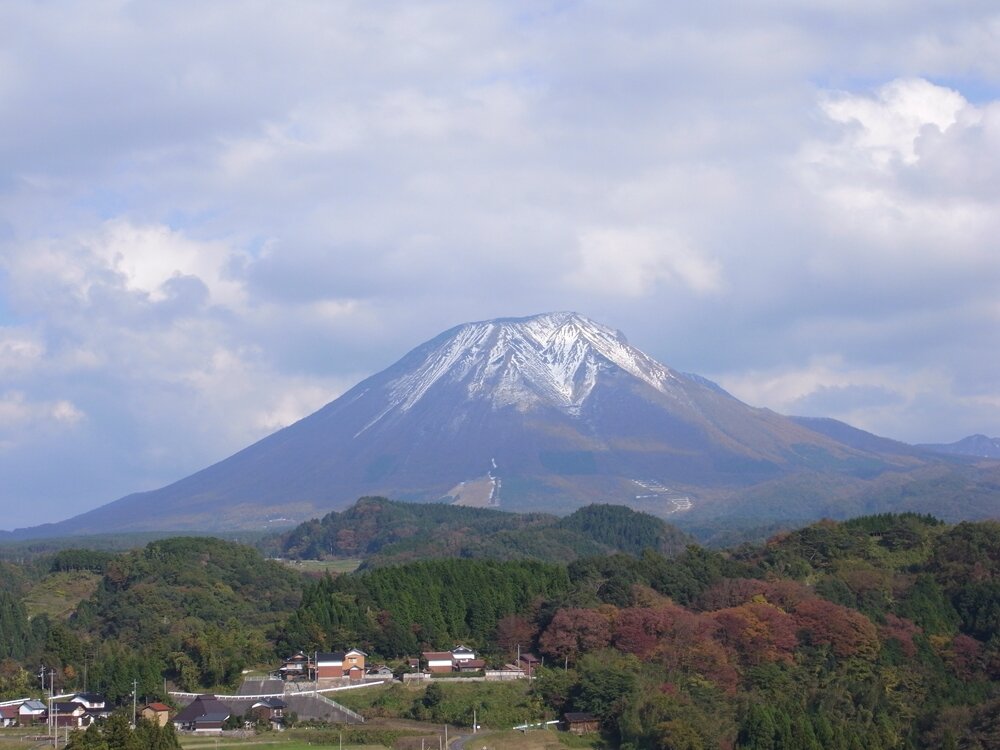
Daisen is the highest mountain in the Chugoku region, yet it is not especially well known in the Kanto region. Seen from the west, it has the neat, Fuji-like shape that earned it the name "Hoki Fuji." Seen from the north, it shows a steep north face like a wall. The same mountain looks completely different depending on the direction. At its foot lies the temple town of Daisenji, with a history going back to the Nara period, and an approach of natural stone, said to be among the longest in Japan, runs up to the Okunomiya of Ogamiyama Shrine. I can't think of a reason not to walk it.
Then there is the name of the airport: Yonago Kitaro Airport. Sakaiminato is the hometown of Shigeru Mizuki, and the Sakai Line, where Kitaro-wrapped trains run, connects the airport with Sakaiminato. Mountain, hot spring and a town of yokai: the layout fits neatly into 2 days and 1 night.
Working out how to get there
ANA flies six round trips a day between Tokyo and Yonago, taking about 1 hour 15 minutes to 1 hour 30 minutes. The first flight of the morning, NH381, leaves Haneda at 6:50 and arrives in Yonago at 8:15. Being able to use the whole first day is this route's strength.
The problem is the fare. At the time of research (about seven weeks before departure), the fares actually on offer for October 27–28 were ¥29,540 for NH381 outbound and ¥40,760 for NH388 on the return. The round trip alone comes to more than ¥140,000 for two. Rail, on the other hand, means the Shinkansen from Tokyo to Okayama and then the limited express Yakumo (Okayama ⇔ Yonago, ¥5,370 for a reserved seat), for about ¥23,000 and about five and a half hours one way. A round trip for two is more than ¥90,000, so that does not fit the budget either. In practice, if you want to keep the trip at around ¥100,000, an early-booking flight discount is the only option. The cost estimate in this article assumes a 75-day advance fare of ¥20,000 per person round trip.
Getting around locally is simple. Yonago Airport Station is partway along the Sakai Line: ¥240 to Yonago Station and ¥190 to Sakaiminato Station. From Yonago Station to Daisenji, a Nihon Kotsu route bus costs ¥730 and takes about 52 minutes, but there are only five round trips a day. The itinerary is worked out backward from this bus's timetable.
Sample itinerary (2 days, 1 night)
Day 1: Walk the Daisenji approach, then on to Kaike Onsen
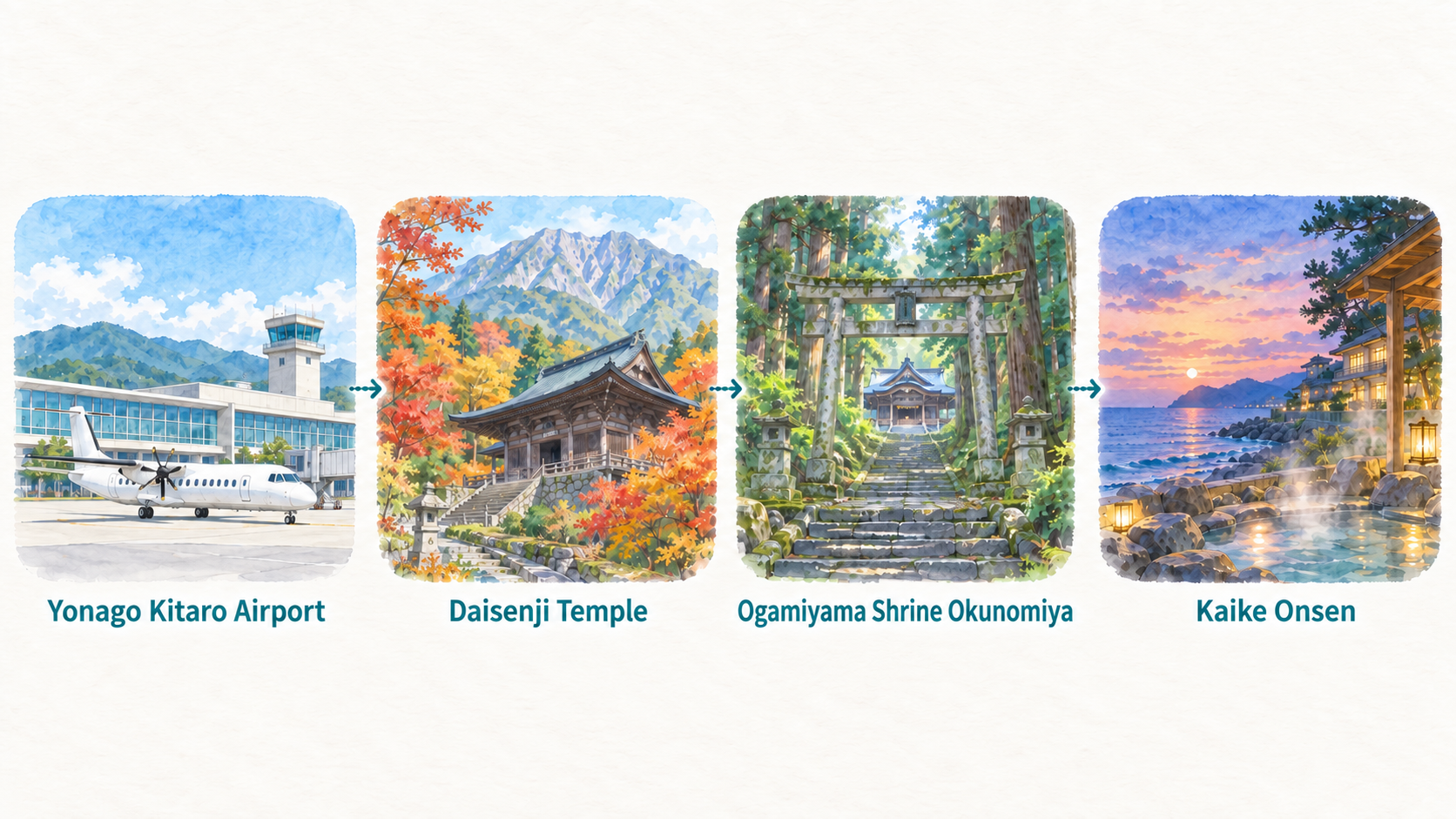
Take NH381 from Haneda at 6:50, arriving at Yonago Kitaro Airport at 8:15. From the airport station, take the Sakai Line to Yonago Station and board the 9:30 bus for Daisenji. It reaches the Daisenji bus stop at 10:22. This is a temple town at an elevation of 800 m.
Walk up the approach lined with inns and souvenir shops to the main hall of Daisenji. Beyond it, a stone-paved path continues to the Okunomiya of Ogamiyama Shrine. This approach, laid with natural stones, is about 700 m long. Cedars line both sides, and after rain the stones turn dark and shiny and become slippery, so wear shoes that are easy to walk in. Lunch is Daisen soba, the local specialty, at one of the shops along the approach.
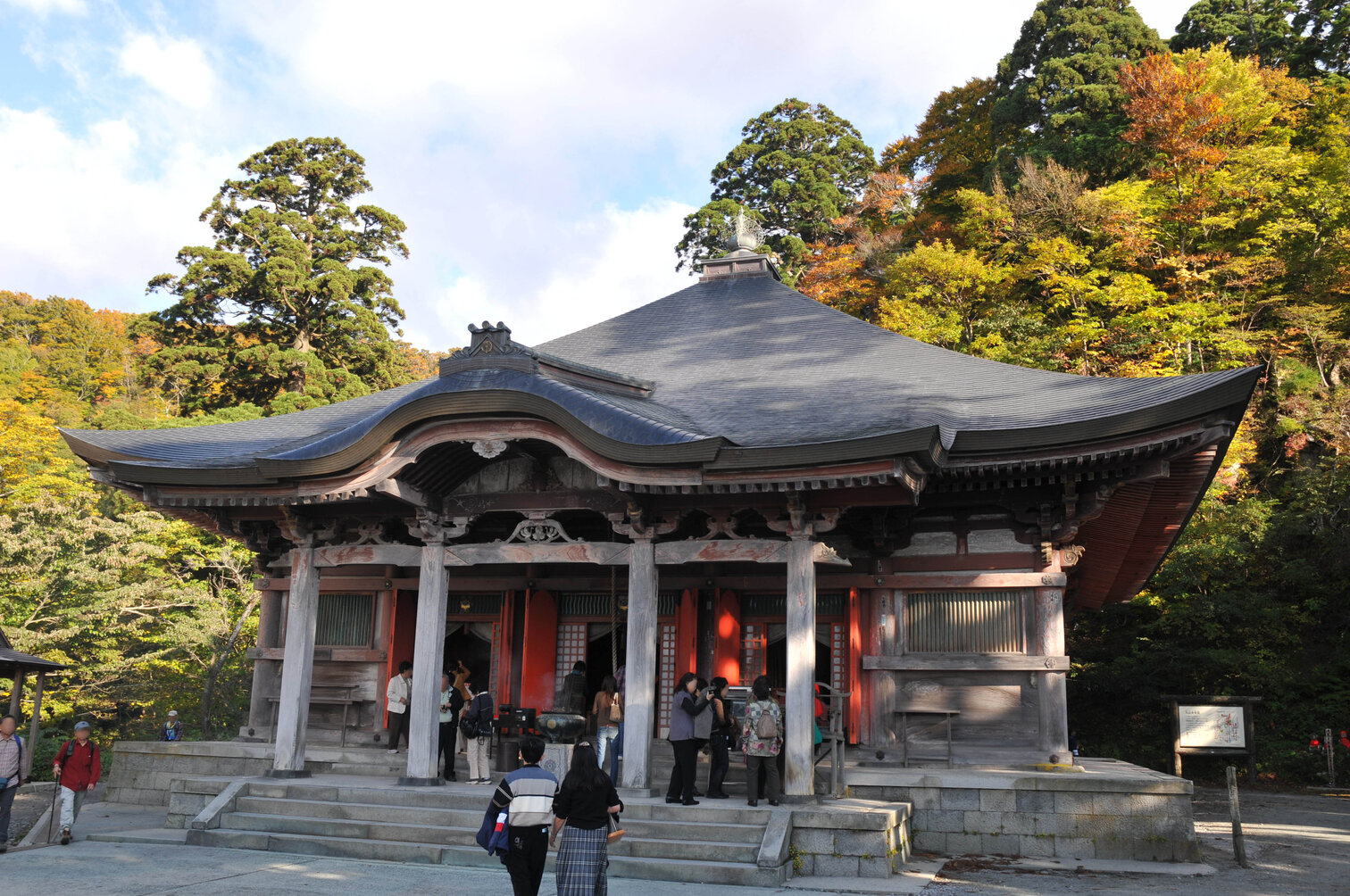
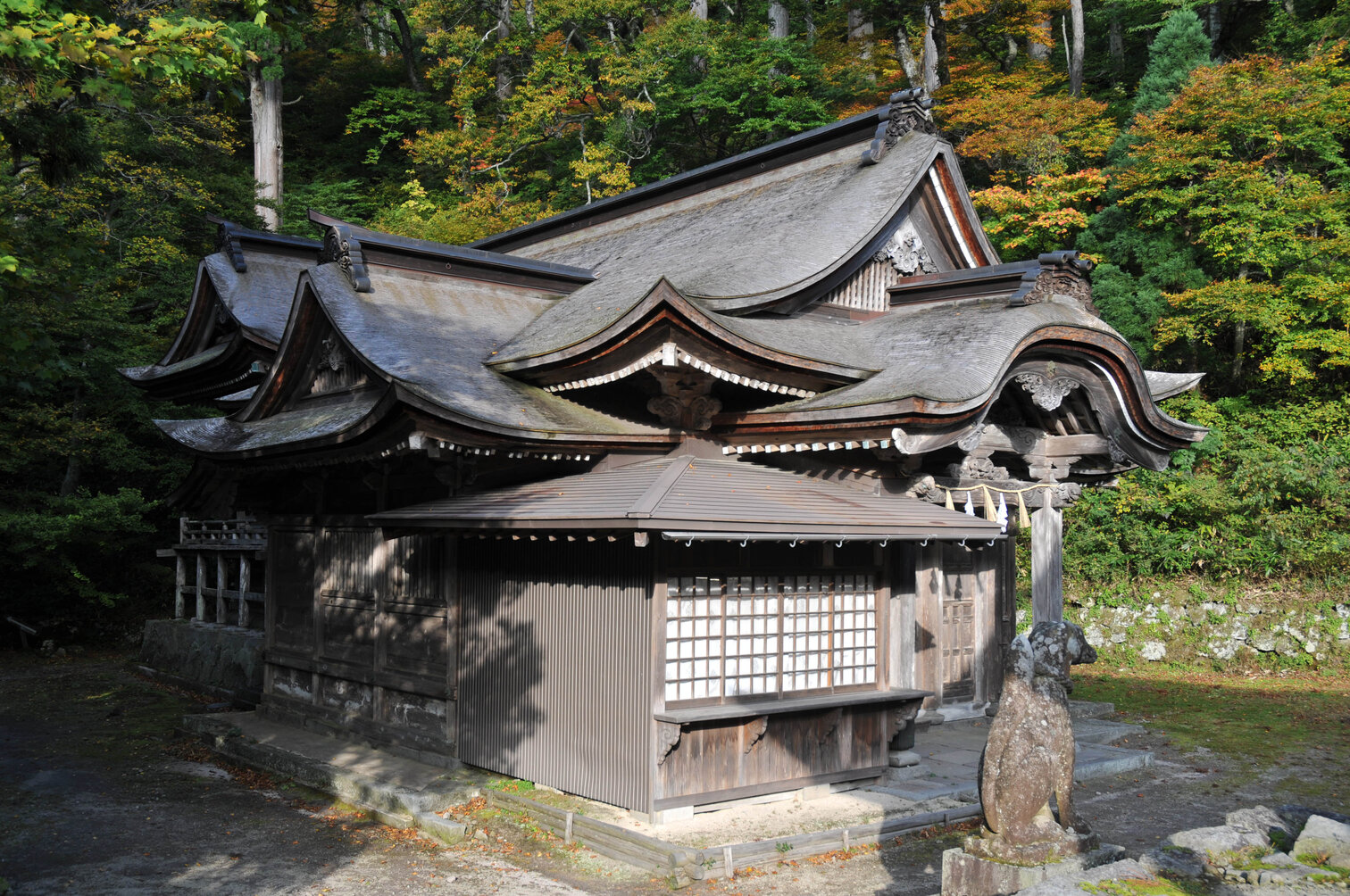
The return bus leaves Daisenji at 15:20. Miss it and there is nothing until 18:10. It arrives at Yonago Station at 16:12; from there, take a route bus to Kaike Onsen and check in.
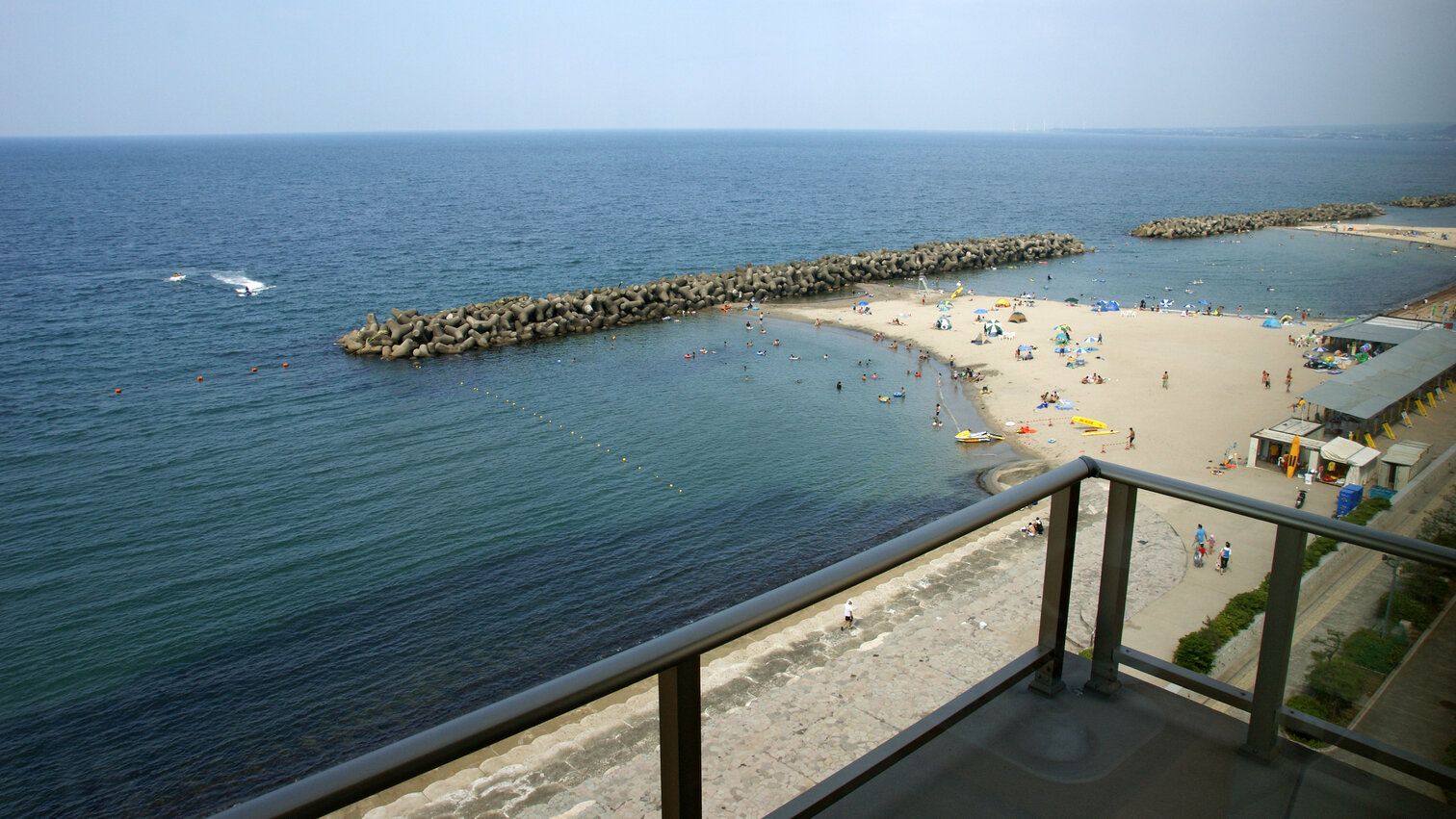
The place to stay is Kasuitei at Kaike Onsen, which faces the Sea of Japan and has its own hot-spring source. This plan uses its breakfast-only plan, without dinner. For dinner, either stay in the Kaike hot-spring town or go back to the area in front of Yonago Station for seafood sent straight from Sakaiminato. One of the good things about this place is that after your bath you can have a drink in the lobby lounge looking out over the Sea of Japan.
Day 2: The Sakai Line to Sakaiminato, then straight home from the airport
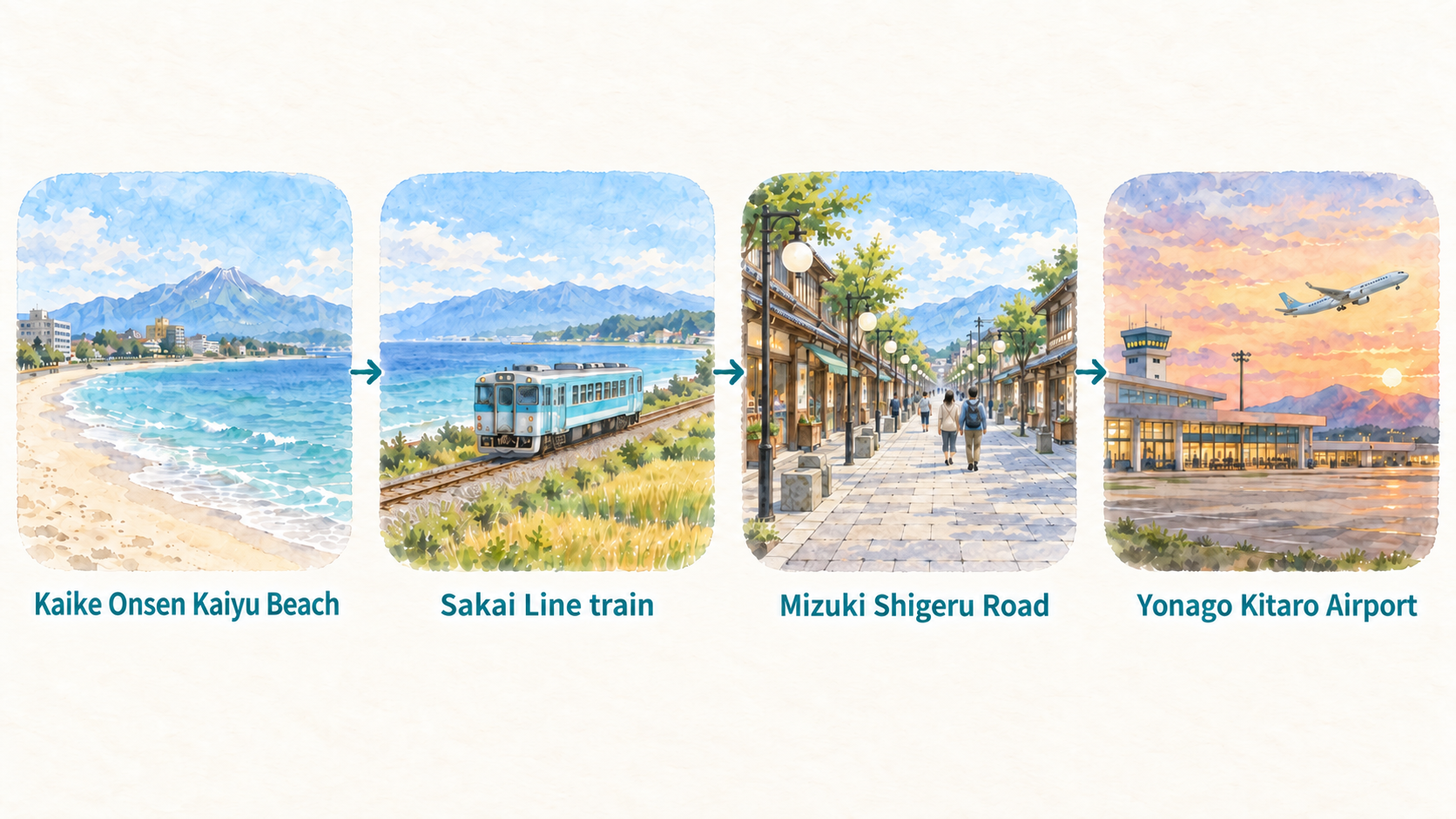
After a morning bath and a Japanese breakfast, walk five minutes from the lodging to Kaike Onsen Kaiyu Beach. In good weather, Daisen is visible beyond Yumigahama.
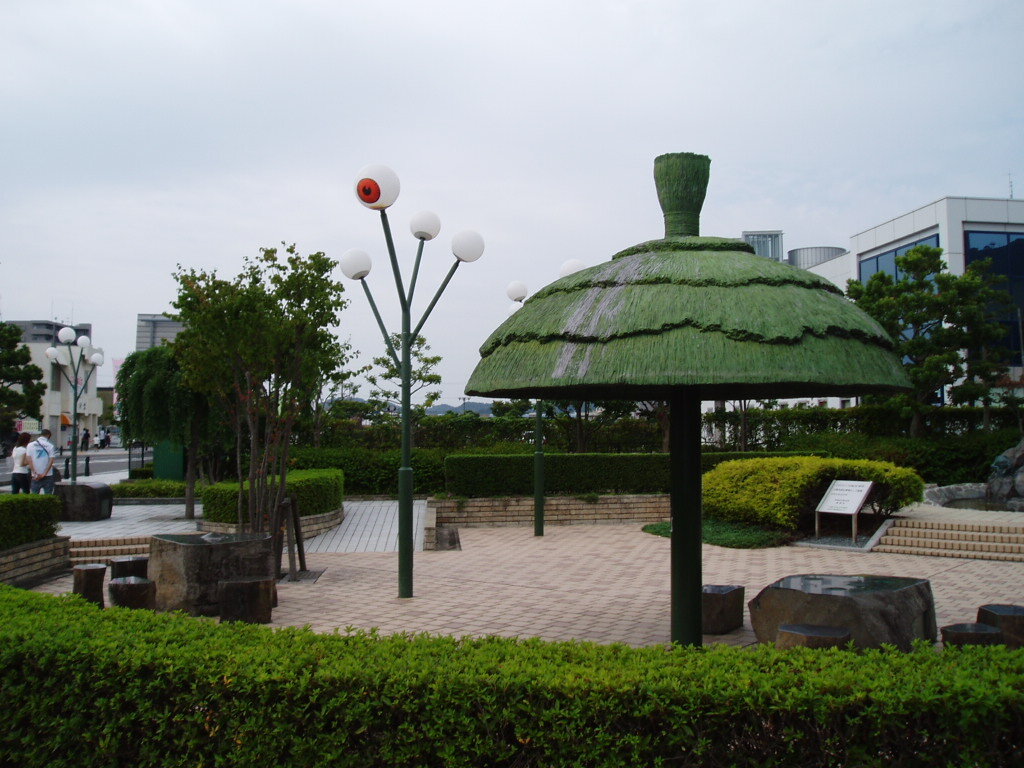
Go back to Yonago Station and take the Sakai Line to Sakaiminato. Kitaro-wrapped trains run on this line, and even the station name signs carry yokai nicknames. In Sakaiminato, walk Mizuki Shigeru Road: about 800 m from the station, along a street lined with bronze yokai statues, to Yokai Plaza at the far end. Lunch, fittingly for a port town, is a seafood rice bowl (kaisendon).
The return is the most satisfying part of this plan. Ride the Sakai Line back from Sakaiminato and you can get off at Yonago Airport Station (¥190) without going all the way to Yonago. Take NH388 at 17:30 and you reach Haneda at 18:50. If you hold out for the last flight at 19:50, you can take your time in Sakaiminato until evening.
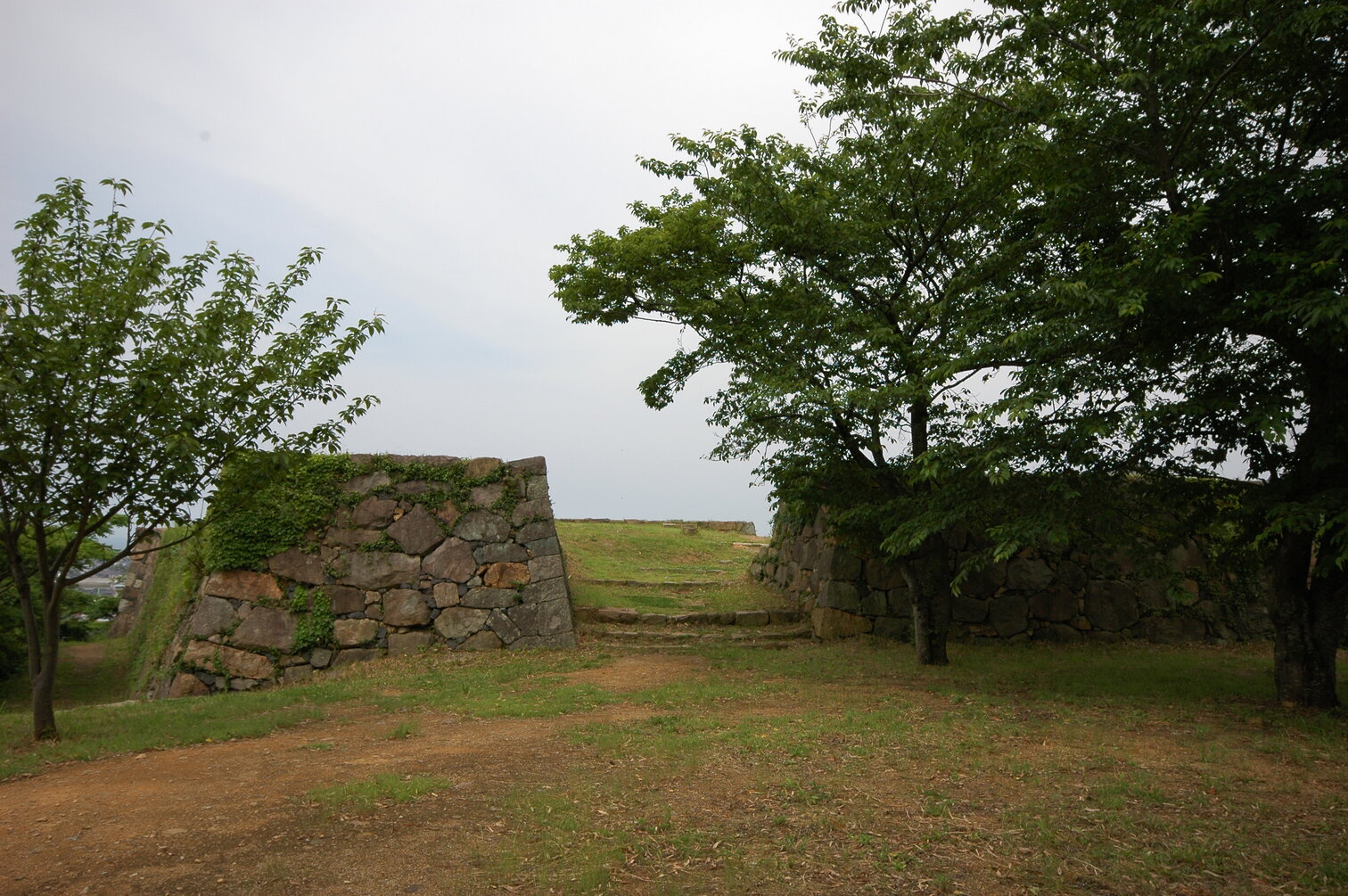
If you have time to spare, walk 15 minutes from Yonago Station to the Yonago Castle ruins. The keep no longer stands, but from the top of the stone walls on Minatoyama you can take in Daisen and Nakaumi in a single view.
Estimated cost (total for two, with per-person figures)
With an early-booking fare on the first morning flight
- Flights (Haneda ⇔ Yonago round trip, assuming a 75-day advance fare): ¥40,000 / ¥20,000 per person
- Lodging (Kasuitei, Kaike Onsen, 1 night with breakfast, Western-style room): ¥23,232 / ¥11,616 per person
- Local transport (Sakai Line and route buses): about ¥6,000 / about ¥3,000 per person
- Food (one dinner and two lunches), sightseeing and incidentals: about ¥24,000 / about ¥12,000 per person
Total: about ¥93,000 for two (about ¥47,000 per person)
This estimate applies if you can get the flights at a 75-day advance fare.
With the kaiseki dinner-and-breakfast plan
Kasuitei also has a plan with dinner and breakfast, in which a kaiseki course is served in a Japanese-style room on the Sea of Japan side (from ¥44,352 for two). That is about ¥21,000 more than this plan, bringing the total to about ¥114,000. It goes over ¥100,000, but while the breakfast-plan room faces the parking lot, this one looks out over the Sea of Japan through a pine grove. If the budget has room, this is the one to choose.
When to go
The main reason to go is the autumn leaves. At the foot of Daisen, the leaves change color from late October to early November, and the Daisenji approach becomes a tunnel of autumn color. Fresh greenery in May and June is refreshing too, and in summer Kaike Onsen is busy with families, since the swimming beach is right in front of it. In winter, Daisen becomes a snowy mountain and the temple town turns into a base for skiing, so it does not suit the walking itinerary in this article.
In the autumn-leaf season, both lodging and flights fill up early. Together with the early-booking assumption, the reliable approach is to book the flights first and then the lodging, as soon as you have decided where to go.
What I honestly still do not know
- The actual 75-day advance fare. At the time of research, departure was about seven weeks away, and the 75-day window had already closed. The "¥20,000 per person round trip" in the cost estimate is an assumption based on the route's fare trends
- The fares for the route buses and the Sakai Line between Yonago Station and Kaike Onsen and between Yonago Station and Sakaiminato. The local transport breakdown includes some rough figures
- The visitor contribution at Daisenji, and its visiting hours
- Admission to the Mizuki Shigeru Memorial Museum, and how crowded it gets. This itinerary assumes only walking the road; going inside would mean reallocating time
- The Kitaro train timetable. Which trains are the wrapped ones apparently changes from day to day
- How much availability usually remains on Kasuitei's breakfast plan. At the time of research, seven rooms were left
Conclusion
As long as you book the flights early, you can link a mountain, a hot spring and a yokai town in 2 days and 1 night from Tokyo. Walk the stone paving at Daisenji, soak in a hot spring by the Sea of Japan, and the next day ride a Kitaro train to the port town. About ¥93,000 for two. What makes the plan work is a rail layout that seems almost like a lucky accident: the Sakai Line happens to pass through the airport.
I have written up a three-day, two-night plan that goes further, to the Hiruzen Highlands south of Daisen, in a separate article on Daisen and the Hiruzen Highlands.
Photos from Wikimedia Commons: Daisen 01 (kobeoyaji / CC BY 2.1 JP), Daisenji 07 (Reggaeman / CC BY-SA 3.0), Ogamiyamajinja Okunomiya 13 (Reggaeman / CC BY-SA 3.0), Kaike onsen01n3200 (663highland / CC BY 2.5), Yokai space, Mizuki Shigeru Road (Motokoka / CC BY-SA 4.0), and Yonago Castle 11 (Reggaeman / CC BY-SA 3.0). Resized only. Illustrations are for reference.


Estimated cost (total for two, two people sharing one room / per person)
- Flights (Haneda ⇔ Yonago round trip, assuming an early-booking fare): ¥40,000 / ¥20,000 per person
- Lodging (Kasuitei, Kaike Onsen, 1 night with breakfast): ¥23,232 / ¥11,616 per person
- Local transport (Sakai Line and route buses): about ¥6,000 / about ¥3,000 per person
- Food, sightseeing and incidentals: about ¥24,000 / about ¥12,000 per person
- Total: about ¥93,000 for two (about ¥47,000 per person) (about ¥194,000 for two if the flights are booked about seven weeks ahead)