This trip took place in November 2024. The experiences, accommodation prices and approximate trip total are from that visit. Current fares, transport services and opening conditions were checked in September 2026; please check the relevant official websites for updates before travelling.
Our trip at a glance
- Length: three days and two nights, on weekdays in mid-November 2024
- Base: two consecutive nights at Lake Biwa Otsu Prince Hotel, in a Sky Floor room with a lake view
- Day 1: Arashiyama in Kyoto, including Tenryuji, the bamboo grove and the area around Togetsukyo Bridge
- Day 2: by rental car to Enryakuji on Mount Hiei, visiting Todo, Saito and Yokawa, then Fushimi Inari
- Day 3: Kinkakuji and Ryoanji, then Osaka and the Umeda Sky Building before returning to Tokyo
- Accommodation: about ¥110,000 for two people for two nights, including one night with dinner and breakfast at ¥57,240
- Whole trip: about ¥200,000 for two, or about ¥100,000 per person
Kyoto to Otsu takes about 10 minutes by Special Rapid train, with some variation between services. Kyoto hotel prices felt high when we travelled, and staying by Lake Biwa while visiting Kyoto and Osaka turned out to be more comfortable than I had expected.
I took this trip with my mother, partly as a way of thanking her for all she does.
We set off from Tokyo Station in the morning and reached Kyoto by Shinkansen about two and a half hours later. After leaving our bags in station lockers, we headed out to explore. Our hotel also offered a baggage service to and from the Prince Hotel Welcome Counter at Kyoto Station, which we used on the third day.
The hotel-to-station baggage delivery we used in 2024 was free. Since April 1, 2025, delivery between the hotel and the counter costs ¥500 per item, including tax. Temporary storage at the Kyoto Station counter is a separate service, and official materials disagree on its fee. Check the official information before using it, including opening hours and drop-off and collection times.
Day 1: Arashiyama
We spent most of the first day around Arashiyama, taking the JR Sagano Line to Saga-Arashiyama Station. Our train took about 16 minutes from Kyoto; roughly 16–17 minutes is a guide, depending on the train and route.
We could see Toei Kyoto Studio Park from the train along the way. It could be a detour if it interests you.
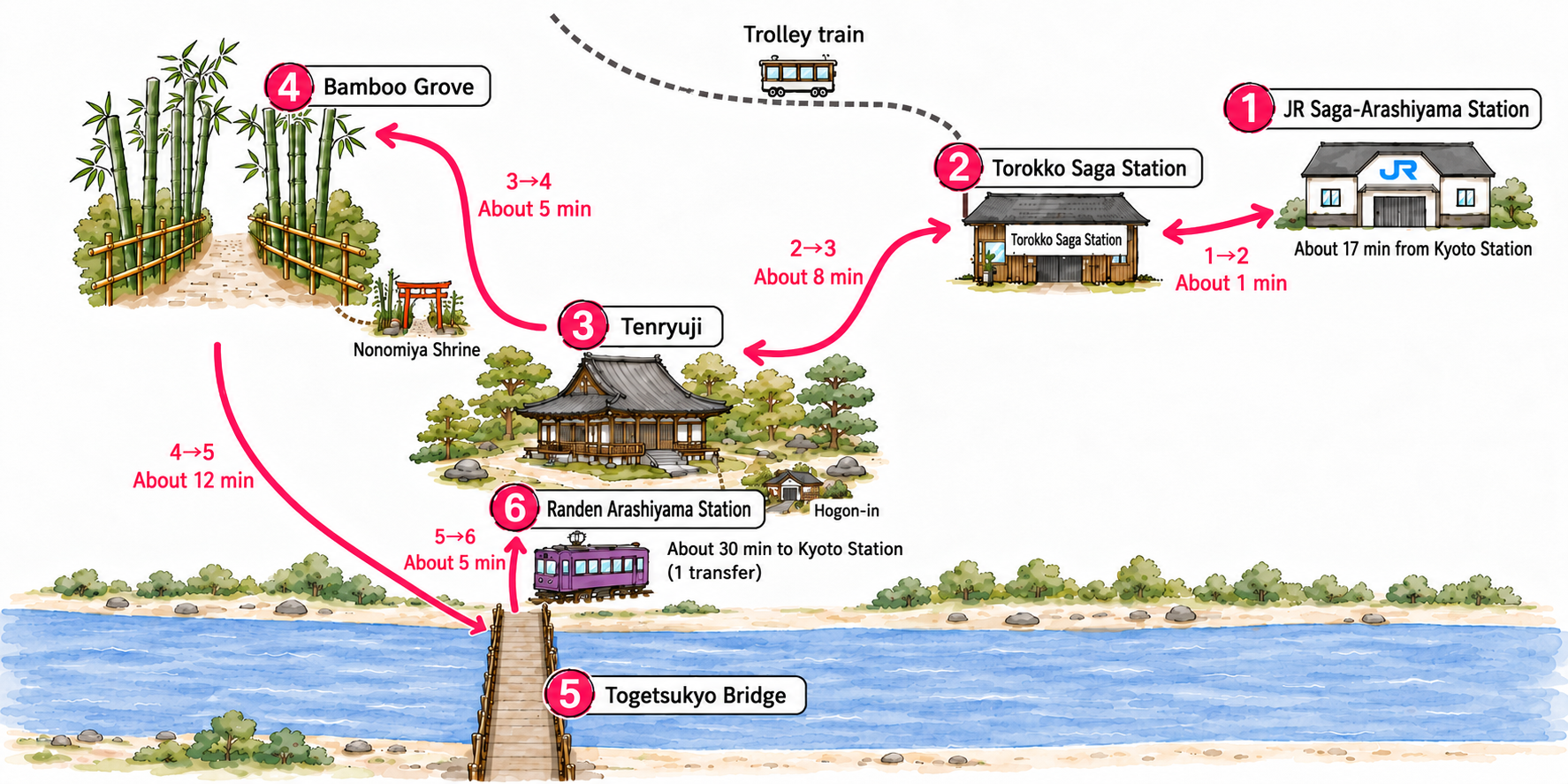
Torokko Saga Station, the departure point for the Sagano Scenic Railway, was right next to Saga-Arashiyama. We had no reservation but went over to see what was available. The nearby departures were full, apart from what seemed to be standing places, so we went for a walk instead.
The views from the train are said to be lovely. Advance tickets are available, but popular departures can sell out and availability is not guaranteed. If a particular time matters, check and book early. We had tried to book on the Shinkansen on our way to Kyoto, but none of the times that suited us were available.
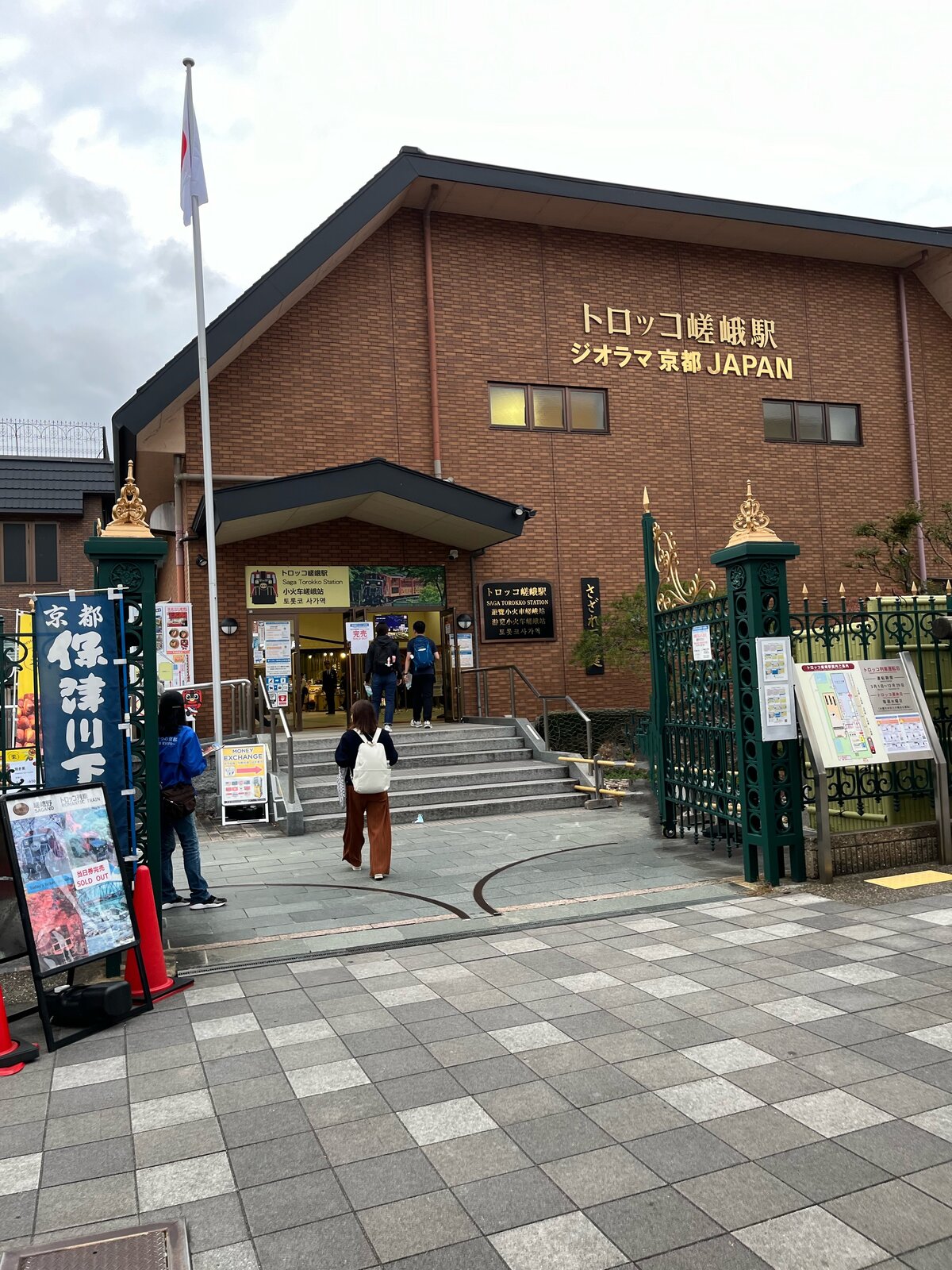
The “SOLD OUT” sign reflects what we found on our visit.
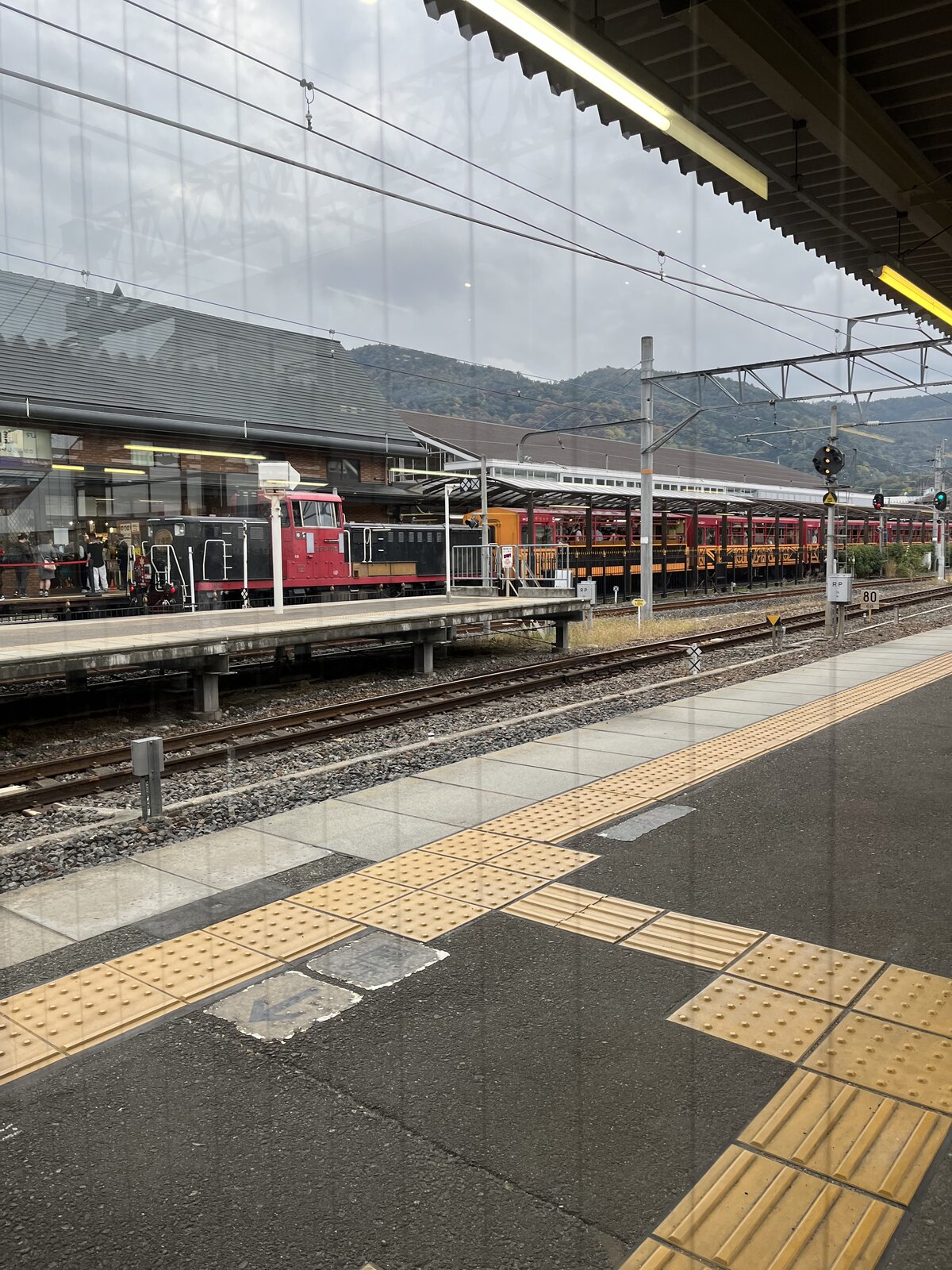
We did not ride the scenic train. I did manage a photograph of it standing beside the JR Saga-Arashiyama platform.
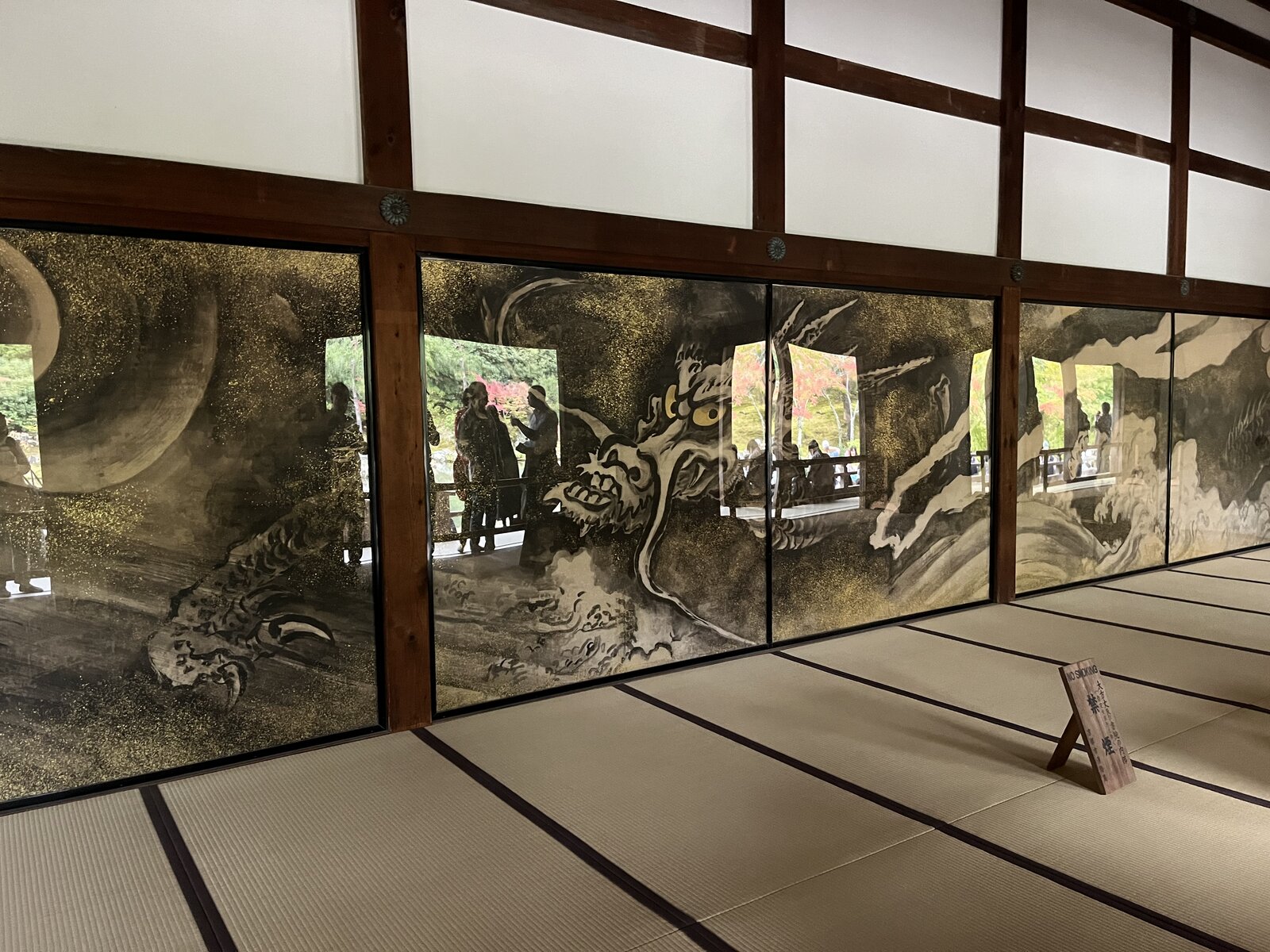
Our first sightseeing stop was Tenryuji, which my mother had wanted to see. We were able to enter the Hatto, or Dharma Hall. The dragon painted on its ceiling had an extraordinary presence. Its eyes seem to follow you wherever you stand, which is why it is known as the dragon that gazes in every direction.
The Hatto normally opens on Saturdays, Sundays and public holidays, and may open daily during special viewing periods. Check the official dates and any closures before visiting. We happened to catch the autumn opening in November. Photography inside the Hatto was prohibited, so I have no picture of the ceiling dragon. Instead, I photographed a dragon painted on sliding doors.
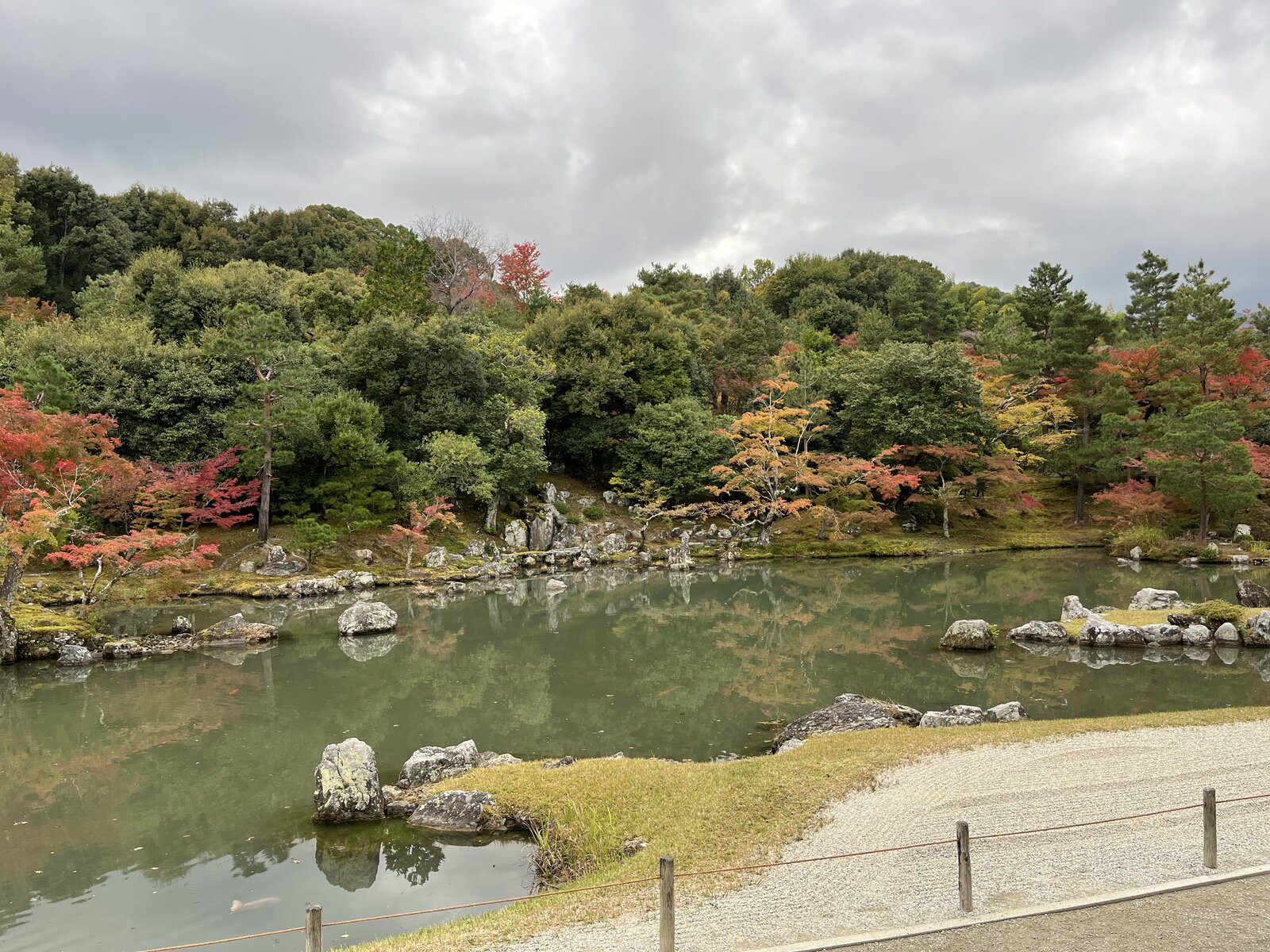
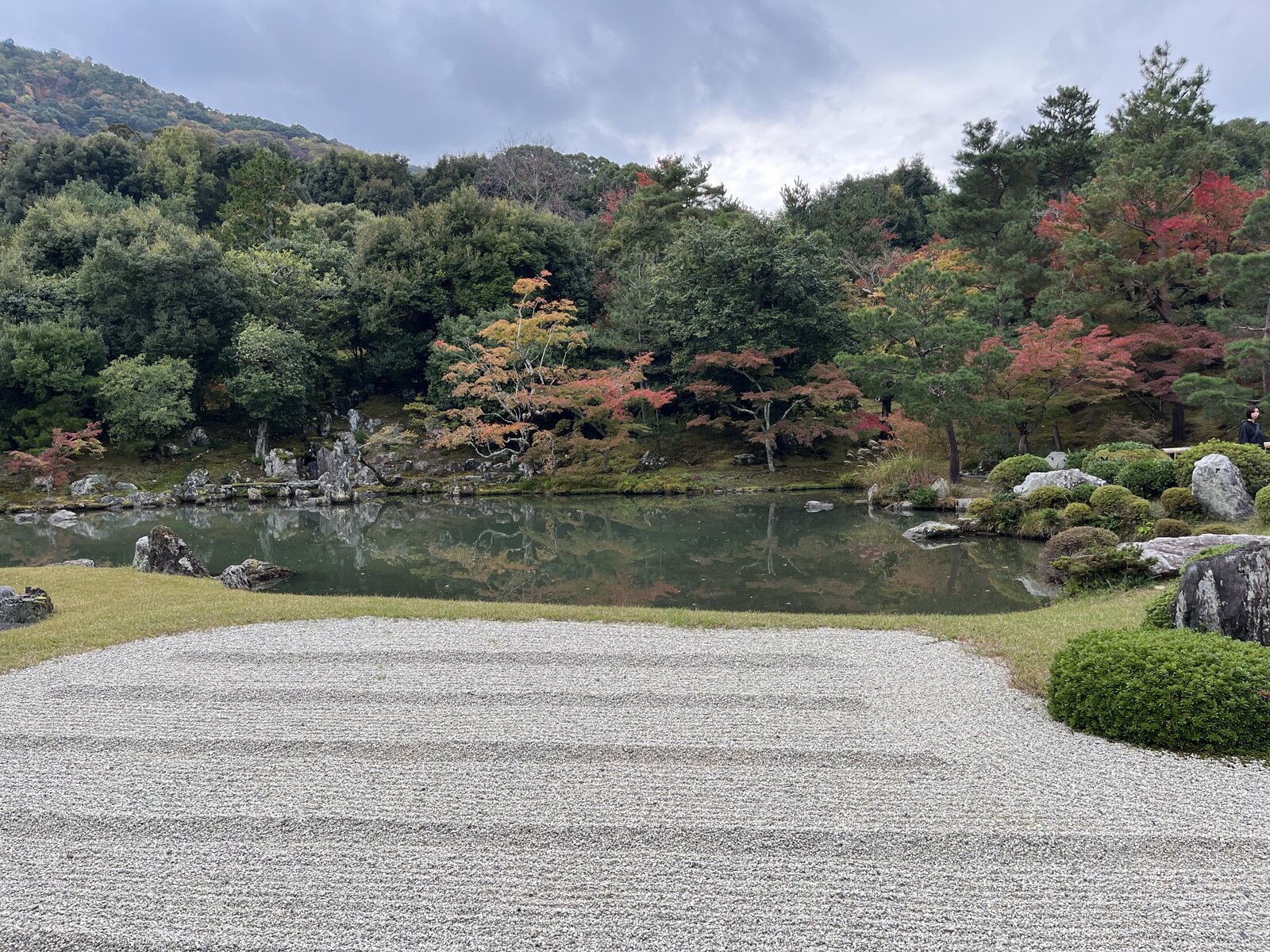
We also walked around the Sogenchi Garden.
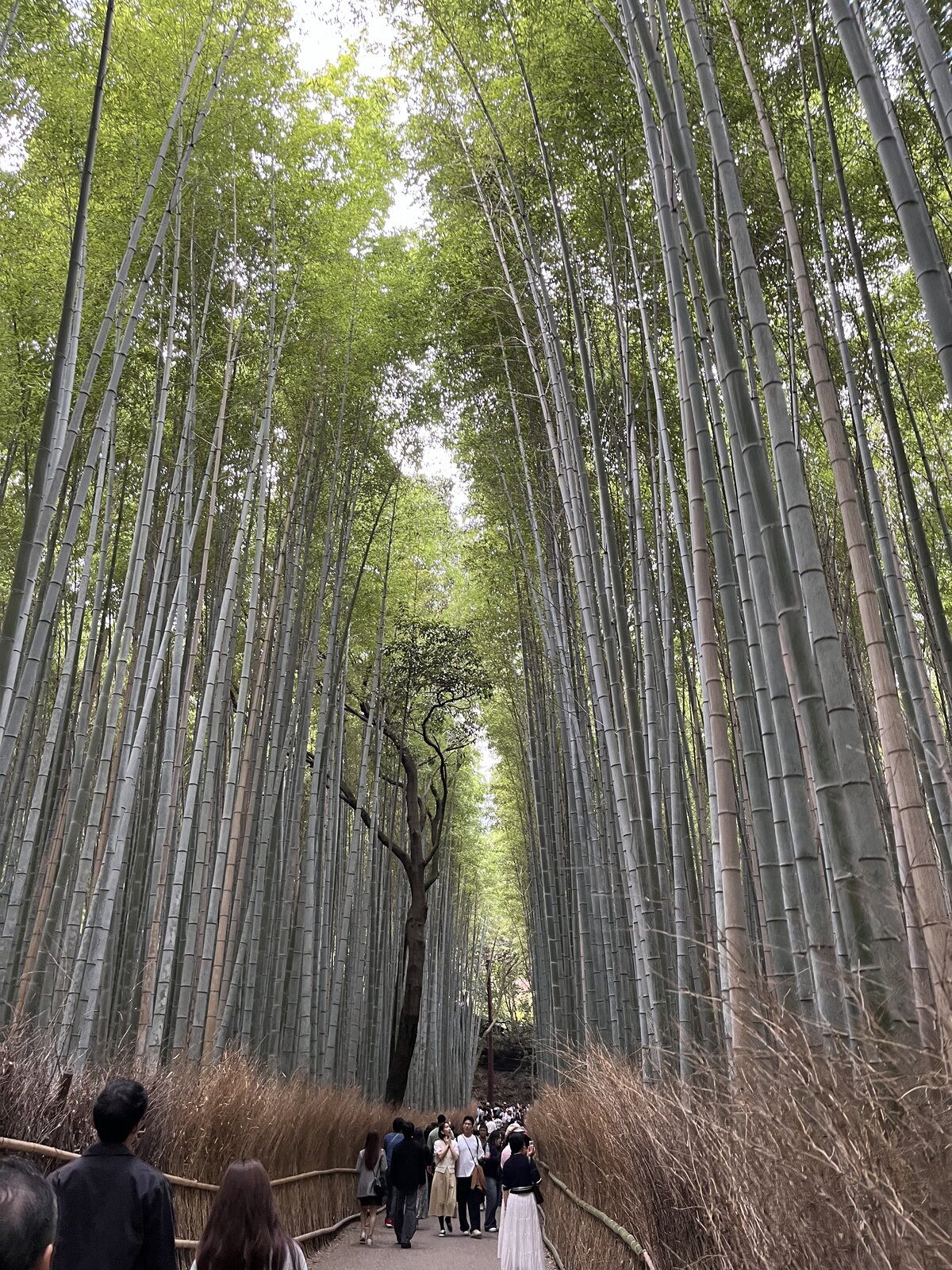
From there, we walked to the nearby bamboo grove. Tall bamboo filled the view in every direction, giving the place an almost otherworldly feel. I had never seen scenery quite like it, and loved the walk.
After walking on for about half an hour, we came out beside the river. A little way off was a large bridge busy with visitors: Togetsukyo Bridge. There is a story that a couple will break up if they look back while crossing it together.
We did not see the bamboo grove illuminated at night. Some years have limited-time lighting events around the grove, but these are not permanent. For an evening visit, check official announcements for the relevant year's event dates and whether anything is being held.
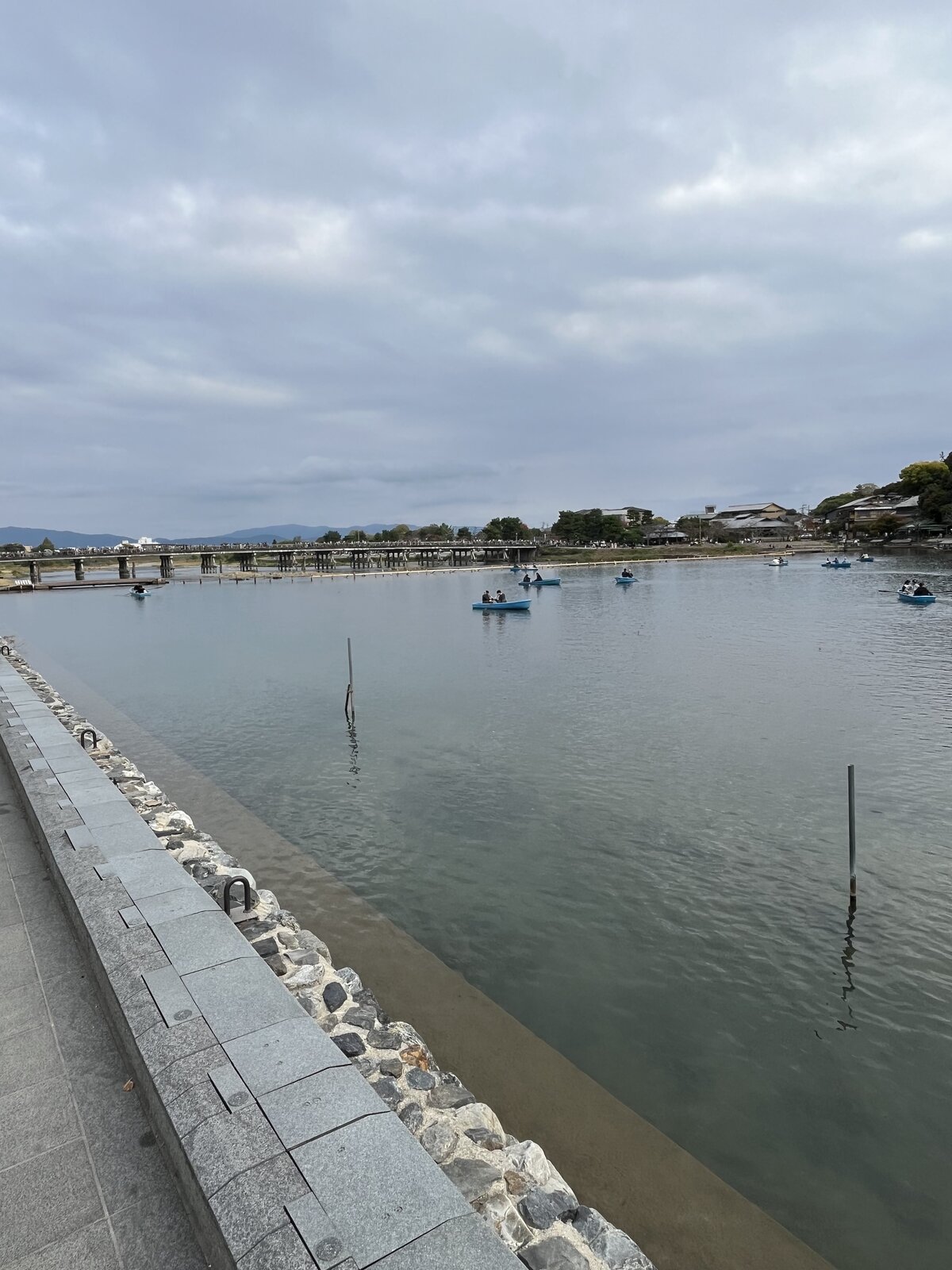
We had already walked quite a lot, so we did not cross the bridge. Instead, we browsed the souvenir shops nearby.
At one shop there was a queue. We were a little hungry and joined it without even knowing what the shop sold. About five minutes later, we had bought something to eat. It tasted unlike anything I had eaten before, and was delicious. I regret not writing down the shop's name. Based on that experience, I would be tempted to join a queue near Togetsukyo again.
We continued along the street of souvenir shops to Arashiyama Station on the Randen, operated by Keifuku Electric Railroad. Then we made our way back to Kyoto Station. It was getting late enough to head for Otsu, where we would be staying by Lake Biwa.
I had not realised how close it was. Our Special Rapid train reached Otsu in about 10 minutes from Kyoto, though the journey time varies a little by service.
From Otsu Station, we took the hotel's shuttle bus. It ran every 30 minutes when we used it in November 2024. The current timetable has longer gaps at some times of day, so check the hotel's official schedule before travelling.
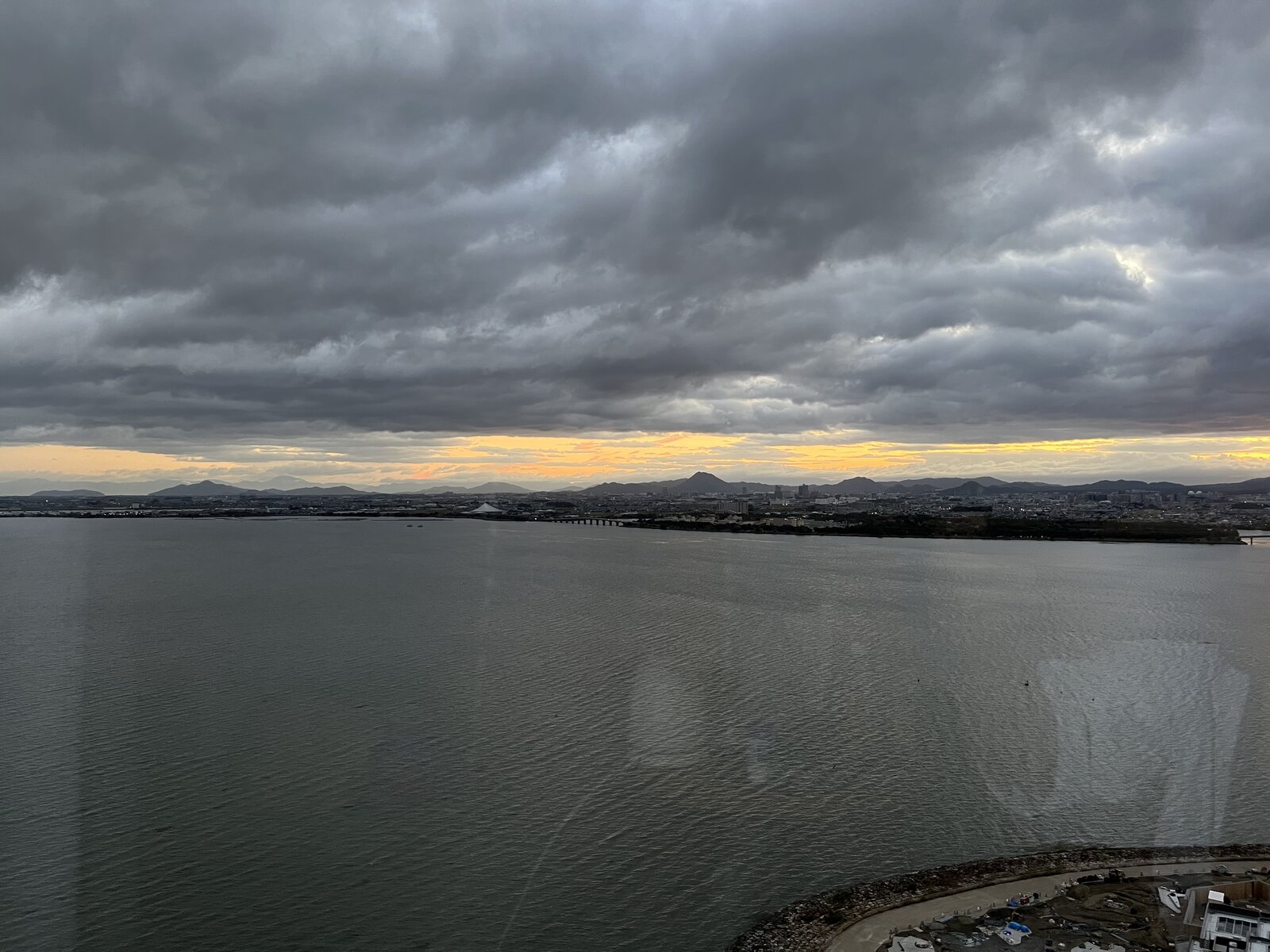
Lake Biwa Otsu Prince Hotel is a 38-storey building on the lakeshore. We had booked a Sky Floor room between floors 21 and 30, and I was looking forward to the view. After checking in, the first thing I did in the room was look out of the window. Lake Biwa spread out below us, and the view was wonderful. For a stay by the lake, I felt we had made a very good choice.
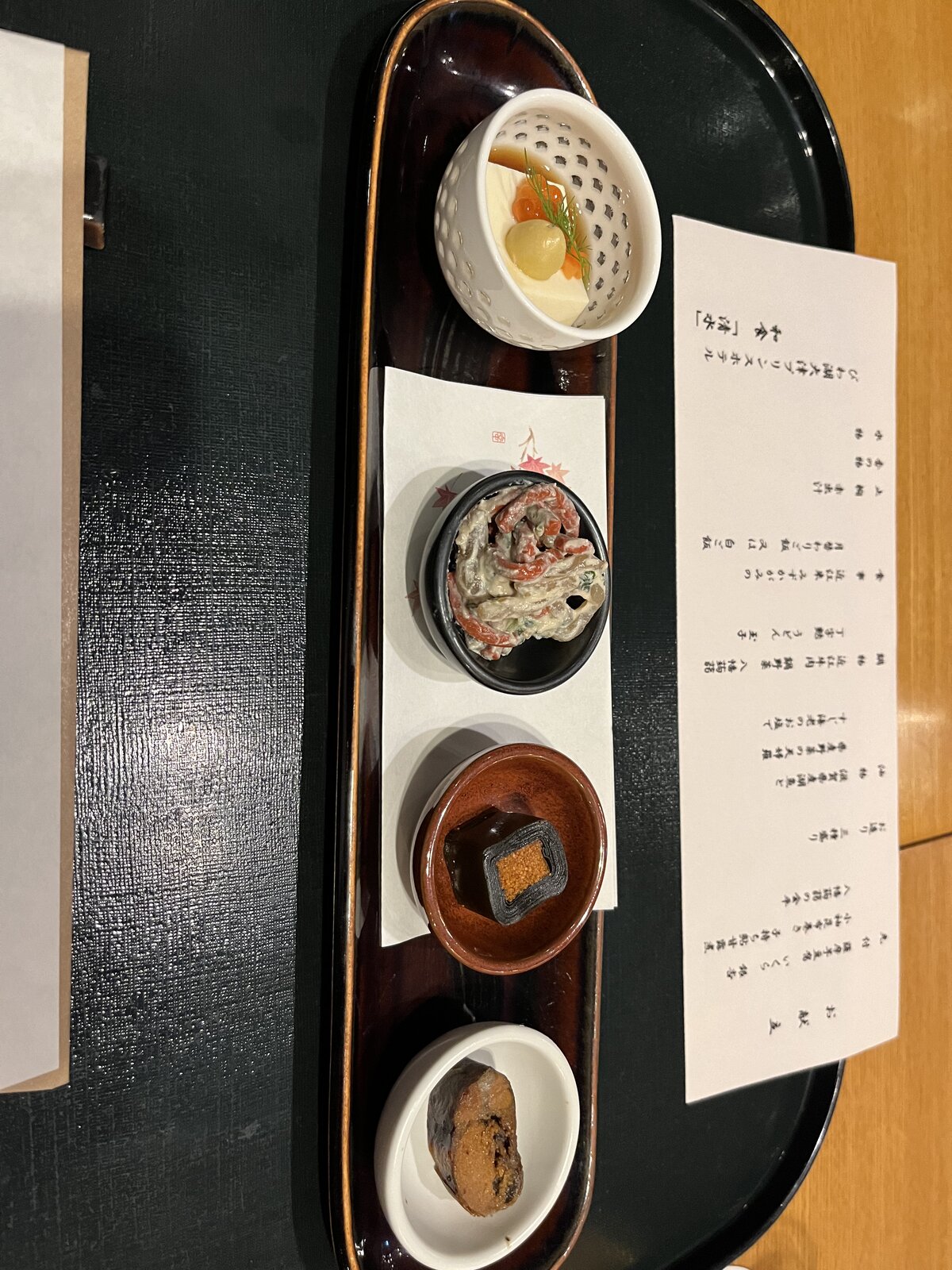
Dinner was a Japanese course meal at the hotel's Shimizu restaurant. Our package included tempura made with fish from Lake Biwa and Omi beef junjun. Everything was delicious, and the portions were generous enough that finishing it all took some effort.
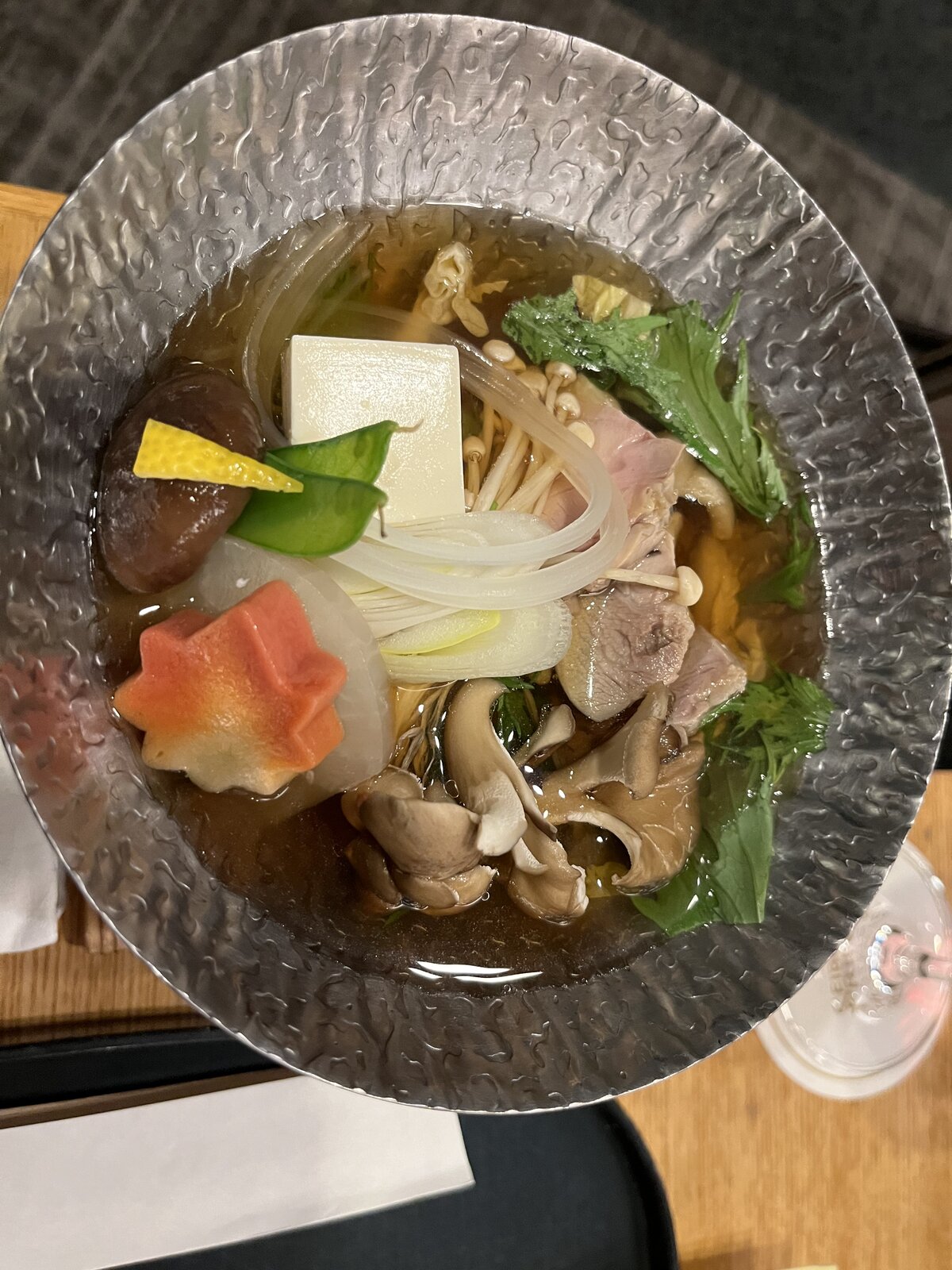
One thing the hotel did not have was an onsen. If a hot spring bath is an essential part of your trip, accommodation in another area may suit you better.
Day 2: Mount Hiei and Fushimi Inari
In the morning, we rented a car from Niconico Rent a Car beside the hotel and set off for Mount Hiei. After about half an hour of driving, including the Hieizan Driveway, we reached Enryakuji's Todo area.
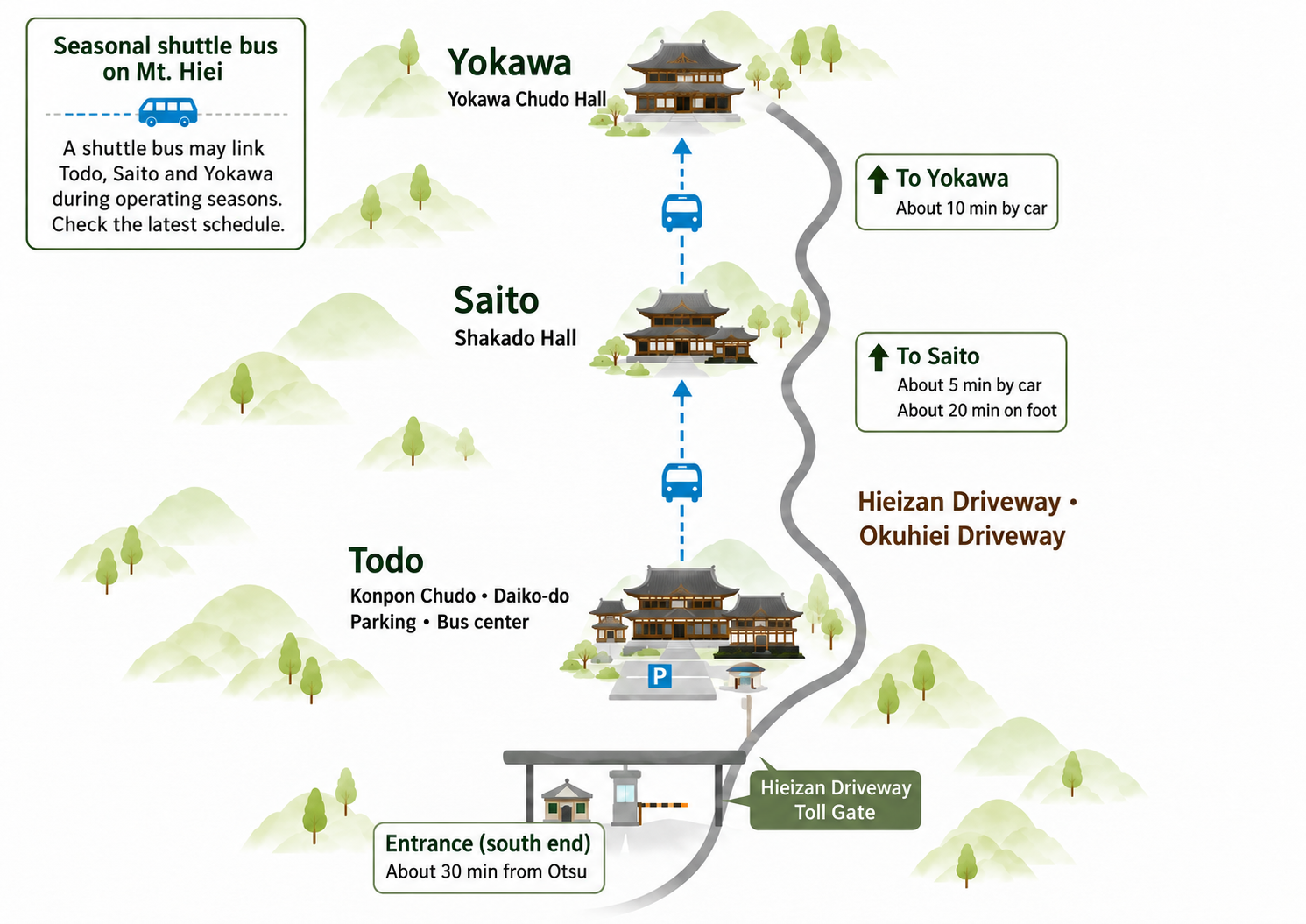
Enryakuji is spread across three areas: Todo, Saito and Yokawa. Even within Todo, walking around Konpon Chudo, the Great Lecture Hall and the Hokke Soji-in East Pagoda takes about an hour.
We parked and went to see Konpon Chudo. During our November 2024 visit, the whole building was covered for major renovation work, but we were able to go inside. There was also a study stage from which visitors could see the roof close up.
Interior worship at Konpon Chudo has been suspended since January 6, 2026, with reopening planned for around January 2028 in the current notice. The study stage is a separate way to view the work; check the latest Enryakuji official information for its availability and end date.
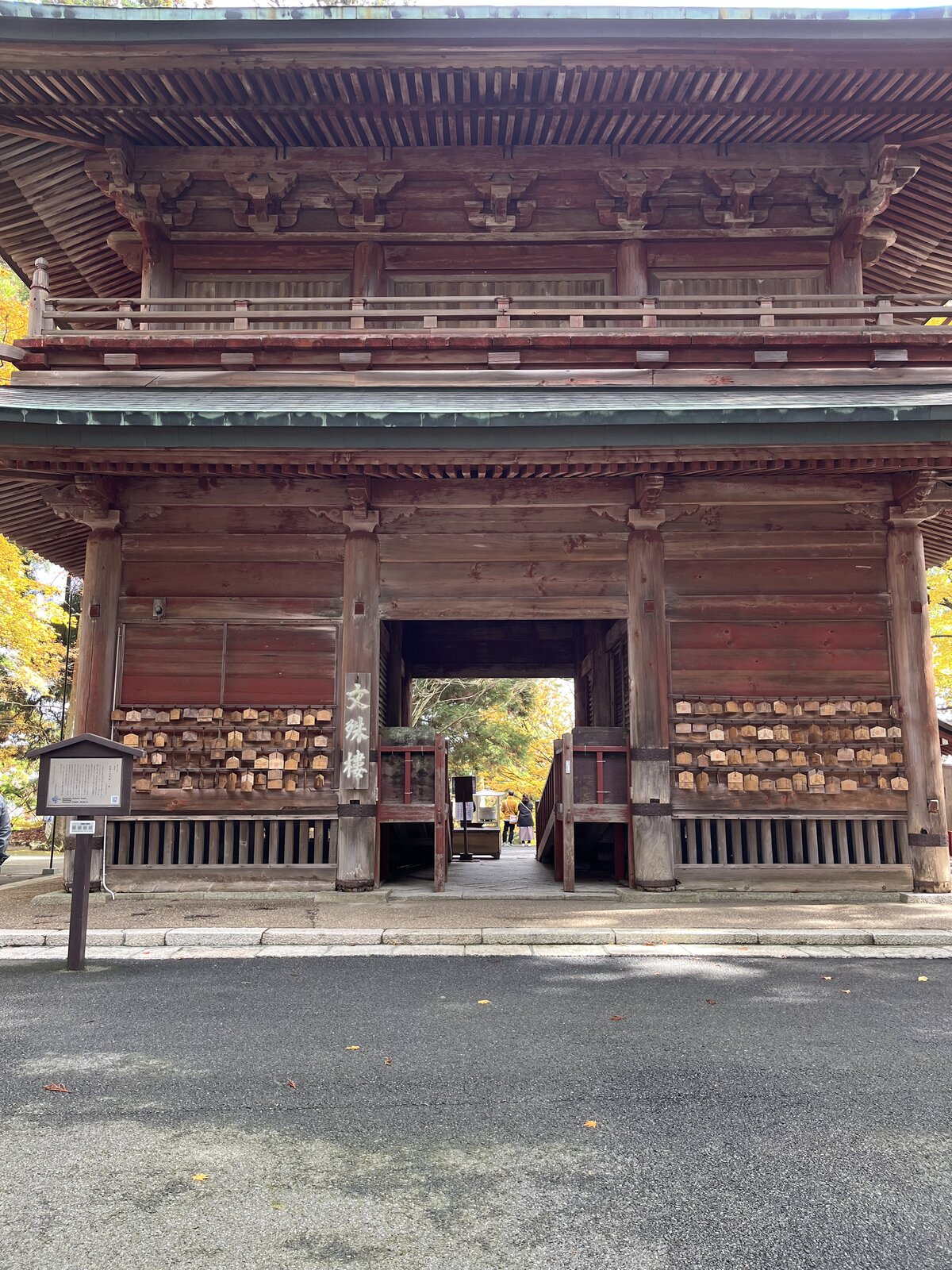
We stopped at a soba restaurant along the way for lunch. The views from the mountain were lovely, and I was glad the weather was good.
After lunch, we visited Saito, then continued further to Yokawa. The drive from Todo to Saito took about five minutes, followed by another ten minutes to Yokawa. The further in we went, the fewer people there were; Yokawa felt noticeably quieter.
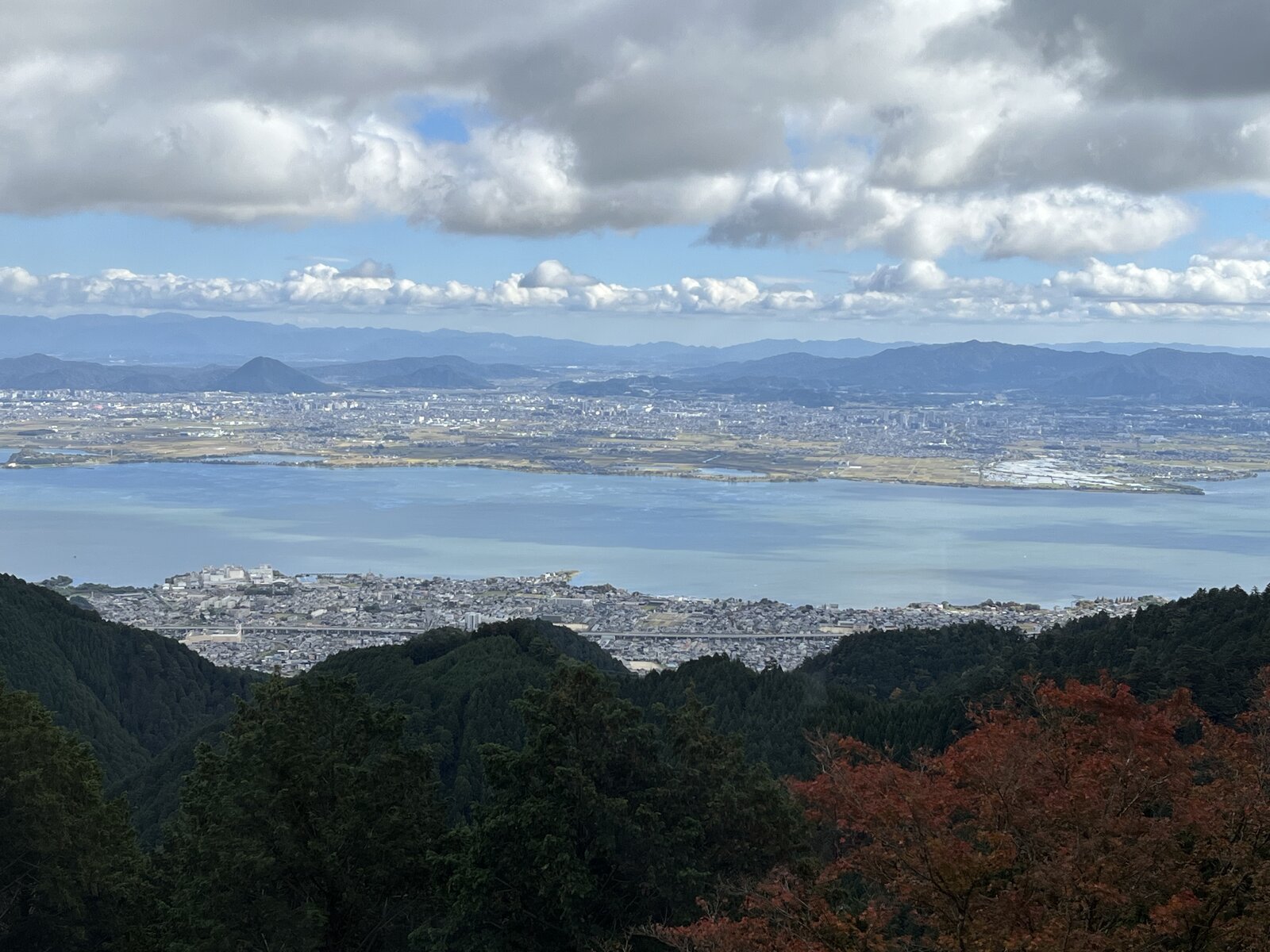
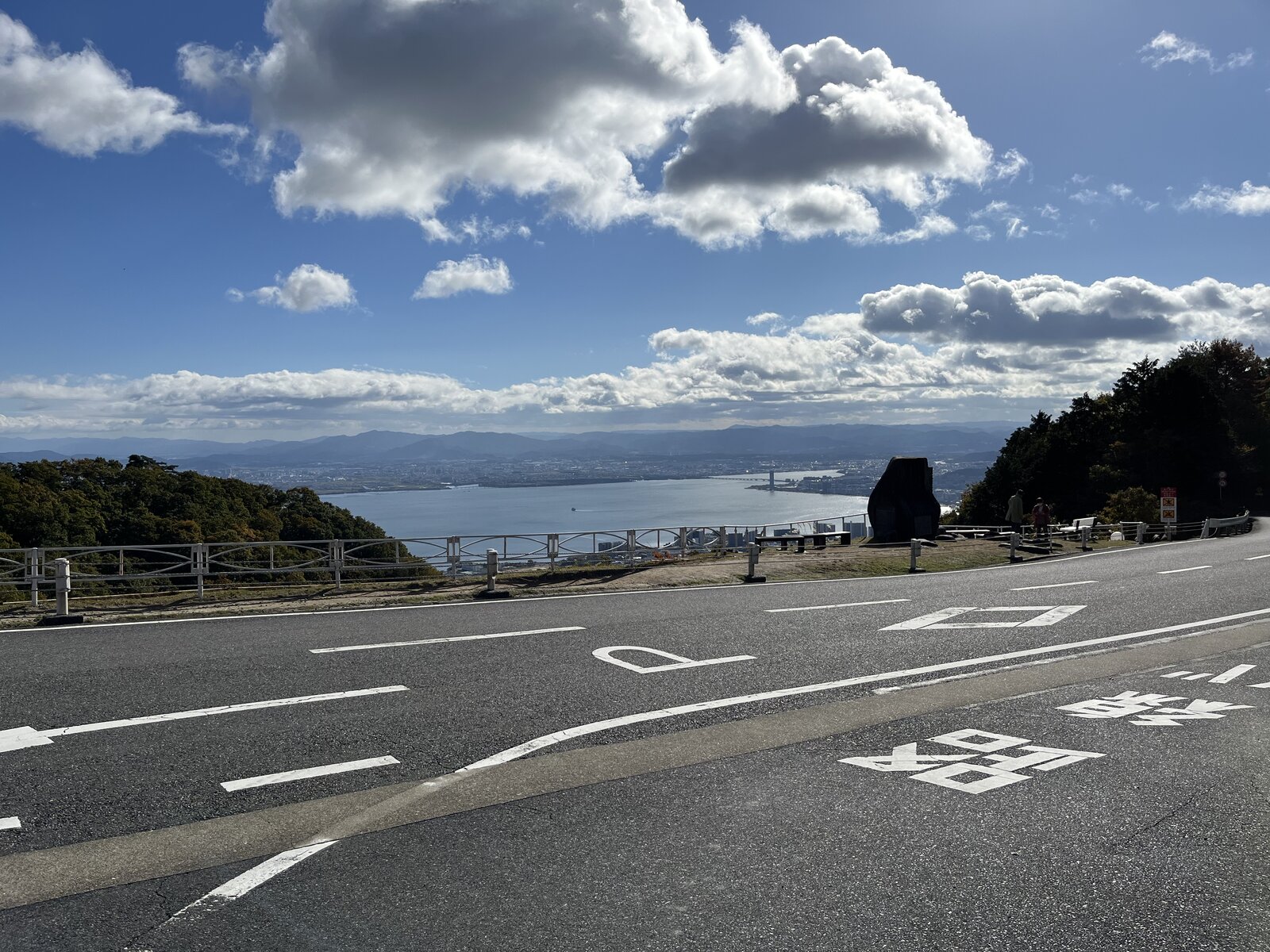
We used our rental car between Todo, Saito and Yokawa. The areas are some distance apart, but walking is possible on some sections. The shuttle bus on the mountain runs seasonally, so check the official timetable if you intend to use it.
Once we had finished looking around, it felt a little early to return to the hotel. We decided to fit in another stop and went to Fushimi Inari. Walking through the Senbon Torii, the rows of torii gates, brought back memories of coming here on a school trip.
Then it was time to head back. We returned the rental car and spent the evening at the hotel. Dinner was at the buffet on the 37th floor, with food a little different from the previous night's meal and just as enjoyable.
Day 3: Kinkakuji, Ryoanji and Osaka
After checking out, we headed to Kyoto Station. The hotel sent our bags to its station counter for us, leaving us free to visit Kinkakuji and Ryoanji that morning. It had been a long time since I had visited either, and both felt nostalgic.
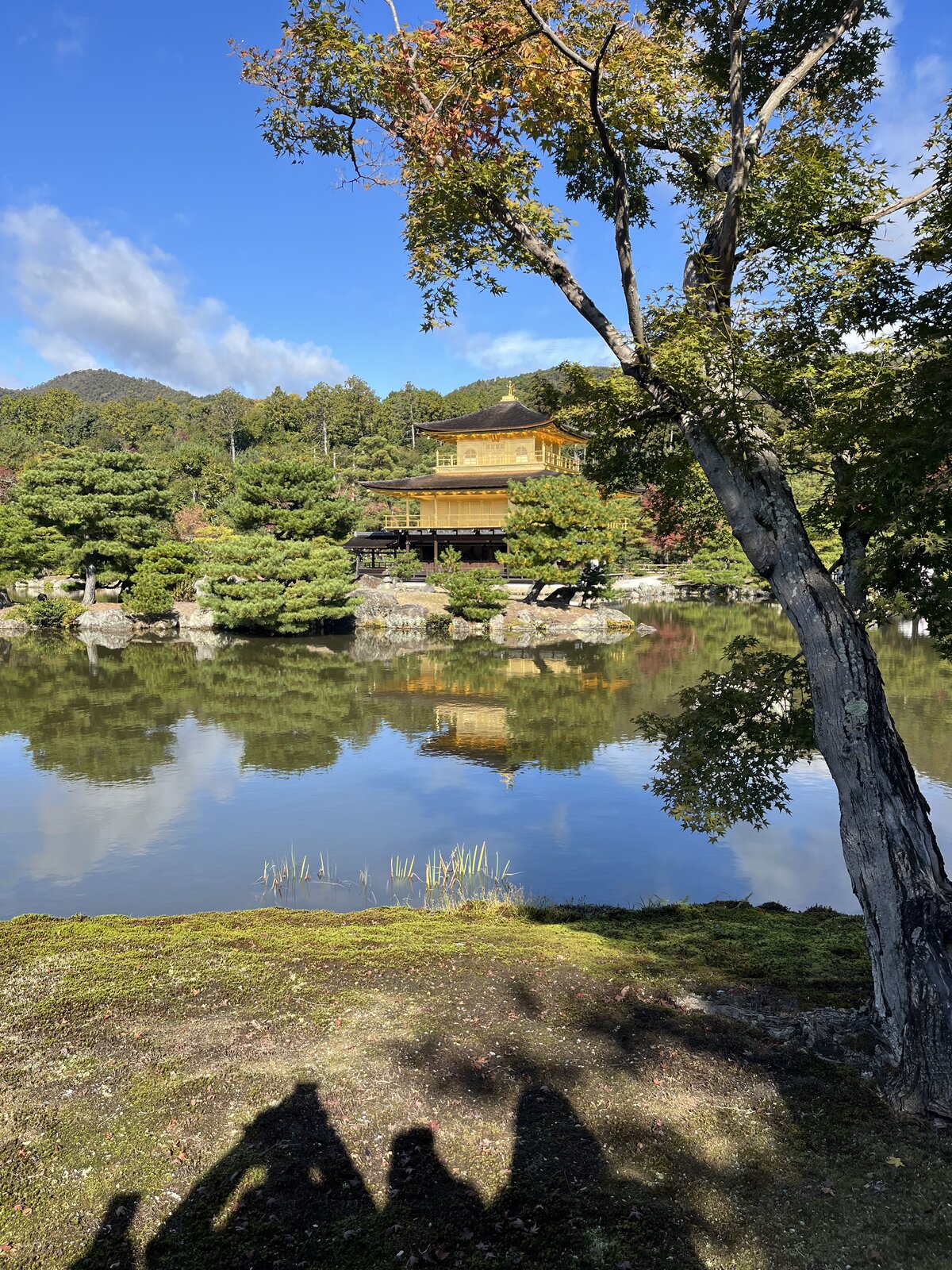
We had made no particular plans for the afternoon and decided to go to Osaka. Our Special Rapid train from Kyoto took about 30 minutes; times vary a little between services. We spent the afternoon enjoying the food and visiting the Kuchu Teien Observatory at the Umeda Sky Building.
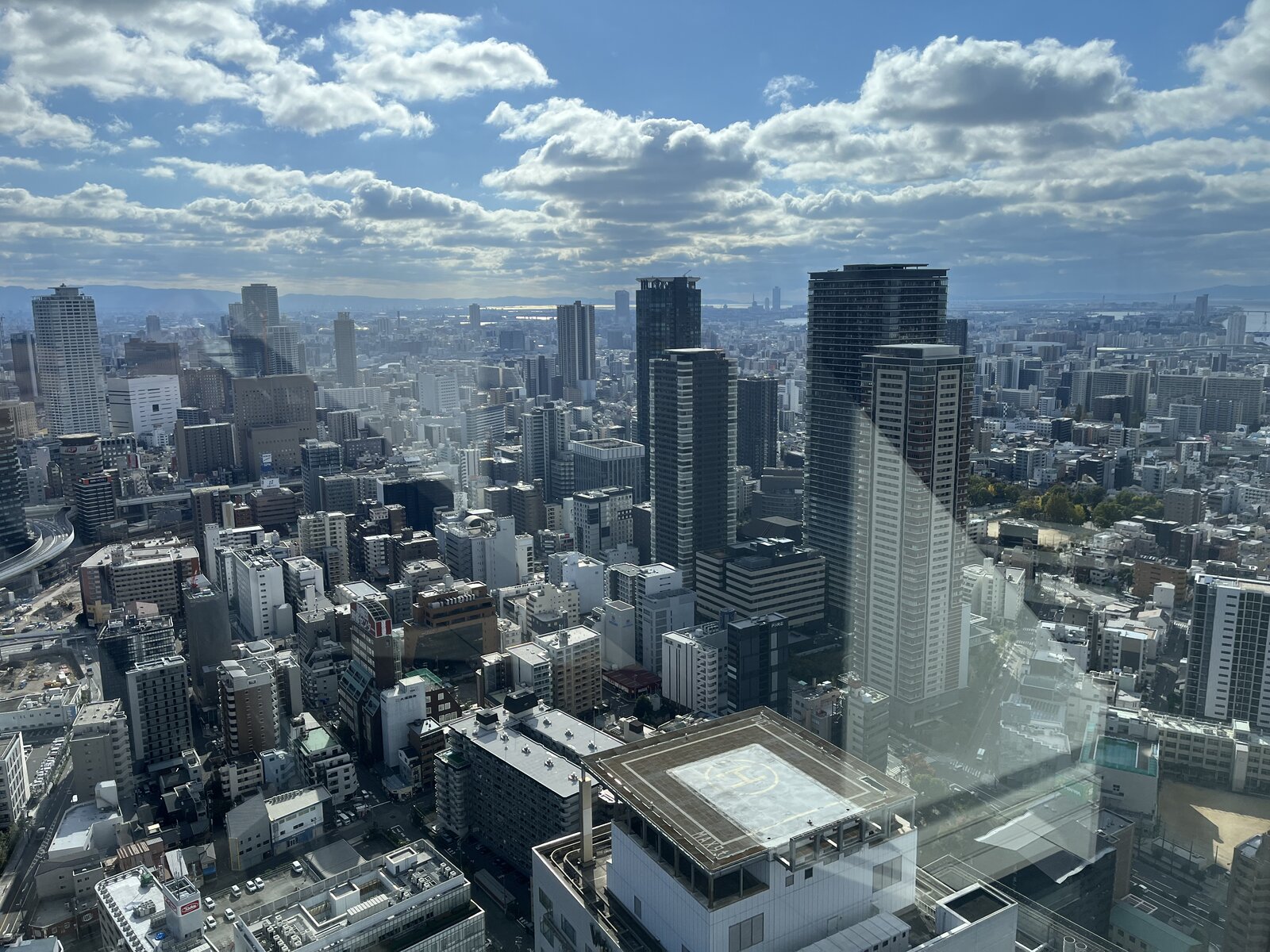
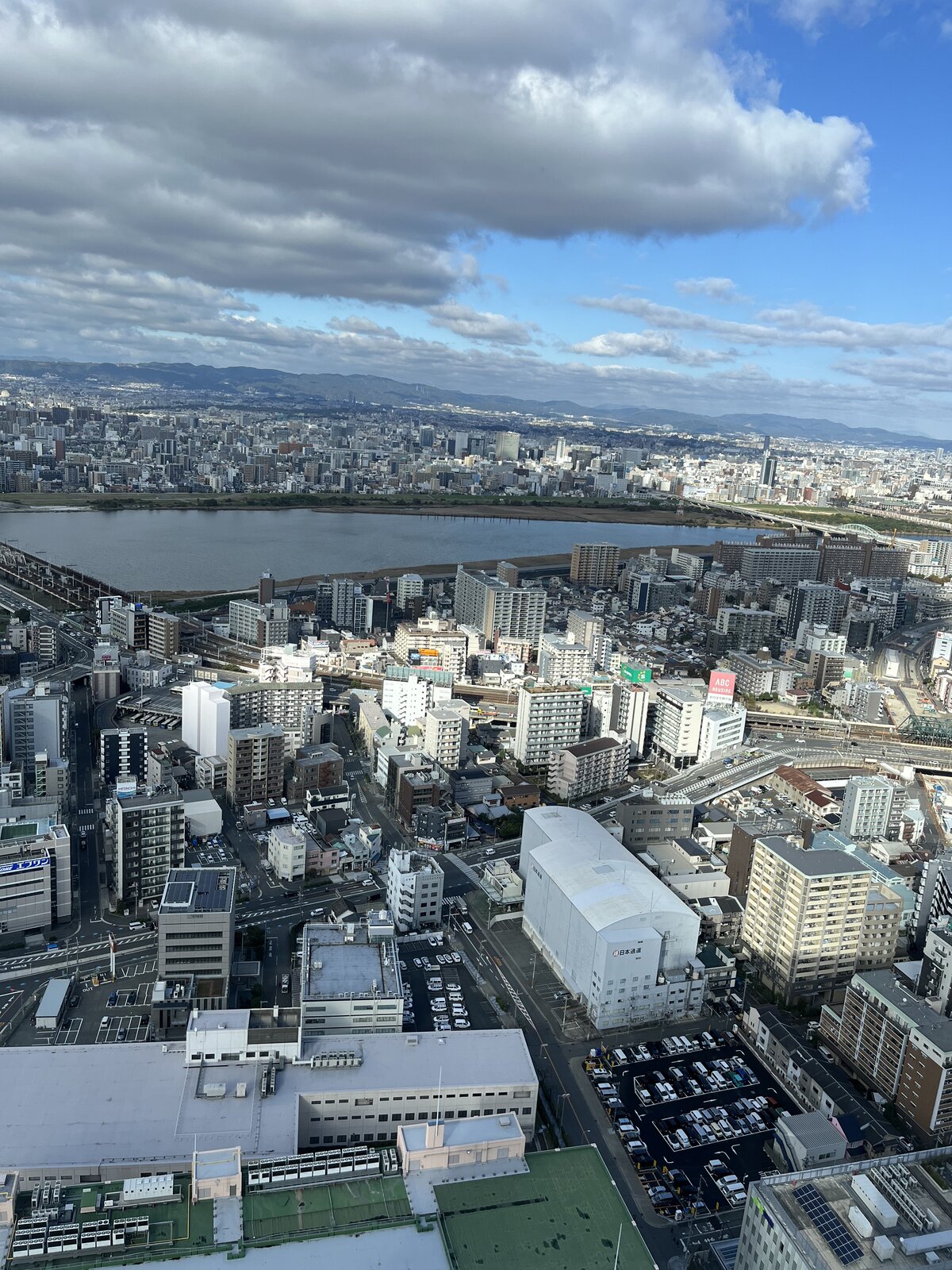
We returned to Kyoto Station in time for our Shinkansen home.
Tenryuji and Mount Hiei were the only places we had firmly decided to visit before the trip. We chose much of the rest while talking on the outward Shinkansen or as the days unfolded.
With more time, I would have liked to explore around Lake Biwa too. Nionohama sightseeing harbour, near the hotel, is separate from Otsu Port. The Michigan cruise can be an option there when the sailing dates and conditions for calling at that harbour line up. We did not take the cruise on this trip, and I would check the latest sailing information before considering it next time.
We did manage a short walk along the lakeshore at night. There are far more places around Kyoto than we could cover in one visit, but I hope our route is useful for thinking about a trip of your own.
What the trip cost
Our accommodation bill and approximate overall total below are from our weekday trip in November 2024. The Shinkansen figure is a reference fare, not a record of what we paid.
- Accommodation: about ¥110,000 for two people for two nights in a Sky Floor twin room at Lake Biwa Otsu Prince Hotel. One night cost ¥57,240 with breakfast and a dinner course that included Lake Biwa fish tempura and Omi beef junjun. That ¥57,240 is included in the approximately ¥110,000 accommodation total.
- Shinkansen reference fare, Tokyo ⇔ Kyoto: ¥14,170 one way or ¥28,340 return per adult for a Nozomi ordinary-class reserved seat in the regular season, making ¥56,680 for two. This is not a confirmed amount paid on our 2024 trip. Unreserved seats, peak and off-peak dates, and discounted products have different prices.
- Whole trip, including the Shinkansen, rental car, meals and admissions: about ¥200,000 for two, or about ¥100,000 per person.
Under the hotel package we used in 2024, the Japanese course dinner required a reserved time, and the hotel contacted us after booking to confirm it. For a stay now, check the conditions of the accommodation package and restaurant reservation.
The accommodation price and approximate trip total reflect our November 2024 visit, rather than a current budget or guaranteed room rate. Room prices vary considerably by season and room type; the rail figure above is a regular-season reference fare.
This article is part of Doko10, a travel service being developed to help people find destinations by budget. Browse the latest English travel articles on the Doko10 English home page.