This is a researched itinerary, not a first-hand trip report. I have not visited Izu Oshima. I planned it as if I were actually going, using fares and operating information checked in September 2026. Please confirm the latest details on official websites before you travel.
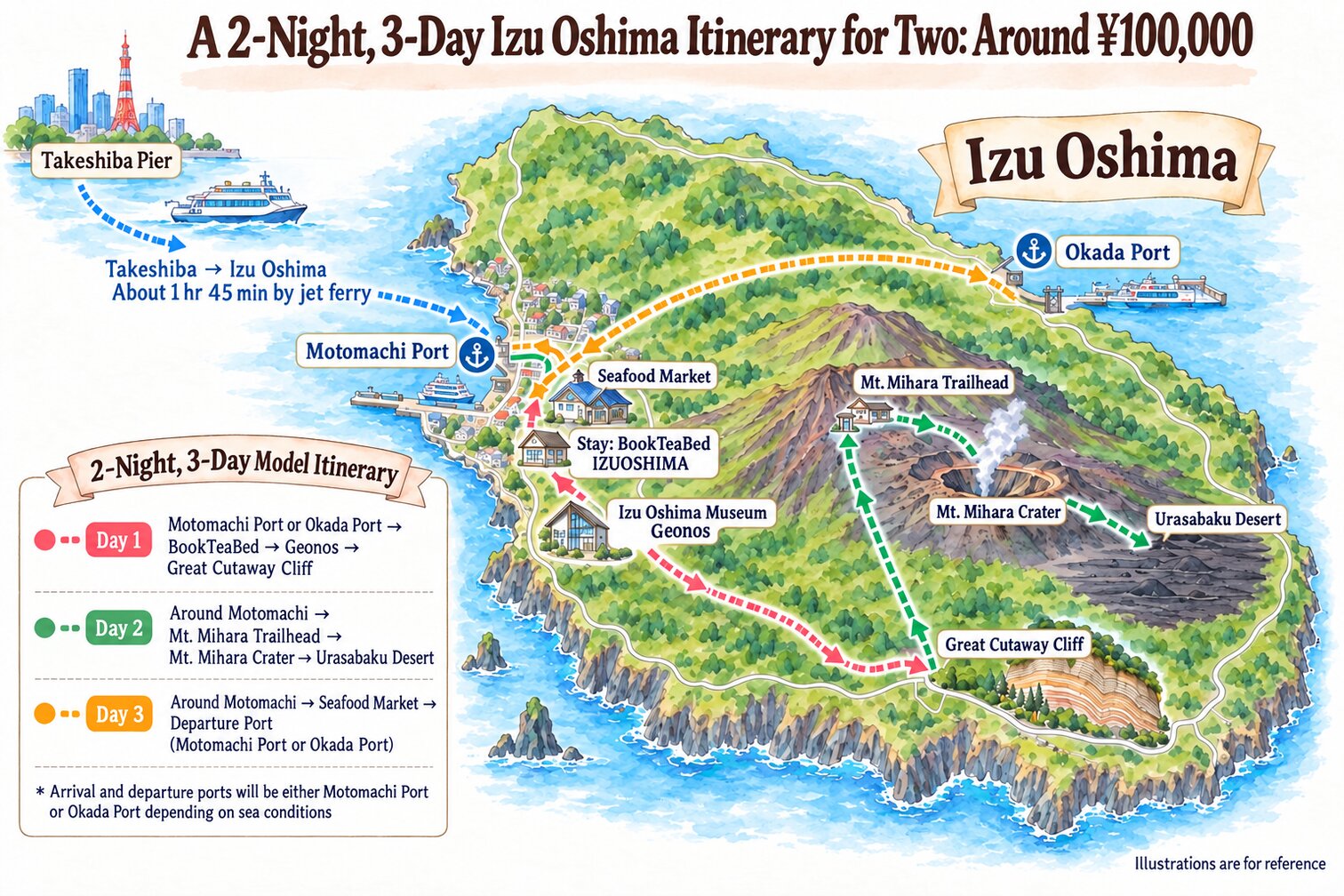
Trip at a glance
- Budget frame: ¥100,000 for two (¥50,000 per person), 2 nights and 3 days, departing from Tokyo
- Destination: Izu Oshima. The high-speed jet ferry takes about 1 hour 45 minutes from Takeshiba, and Motomachi is the base for both nights
- Day 1 covers Geonos and the Great Cutaway Cliff; Day 2 goes from Mt. Mihara’s crater to the Urasabaku Desert; Day 3 stays around Motomachi so the plan can absorb a last-minute port change
- The trip is built around not overcommitting to either Motomachi Port or Okada Port, because the operating port is decided by sea conditions on the day
- Estimated cost: about ¥100,000 for two, or about ¥50,000 per person. If the final-day departure is from Okada Port, add ¥880 in bus fares
- Best timing: late November to early December. Autumn and winter can bring striking evening light to the exposed strata, while February to March is another option for camellia season
Why Izu Oshima?
Because it is part of Tokyo, I expected the transport cost to be modest. It is not. For November 2026, the high-speed jet ferry between Tokyo and Oshima is ¥9,980 per adult each way. A round trip for two comes to ¥39,920, so the ferry alone uses about 40% of a ¥100,000 budget.
What makes a 2-night trip workable is that many of the island’s main sights are not ticketed attractions but the volcano itself: Mt. Mihara’s crater, the black scoria landscape of the Urasabaku Desert, and the Great Cutaway Cliff, where roughly 18,000 years of eruption history are exposed beside the road. You can spend three days with the island’s geology without stacking up large admission fees.
Izu Oshima also comes with a constraint that ordinary city trips do not. Even when the ferry is operating to Oshima, the arrival port may be Motomachi or Okada depending on sea conditions. The return port may not be the same one you arrived at.
Rather than trying to eliminate that uncertainty, this itinerary treats it as part of the plan. Stay two nights in Motomachi, leave Day 1 and Day 3 relatively loose, and make Day 2 the one big excursion to Mt. Mihara. That gives the trip more room to adapt if the port changes.
Getting there
The main option is the high-speed jet ferry from Takeshiba in Tokyo. For the dates used in this plan, November 22, 2026 has a Tokyo departure at 8:35 and an Oshima arrival at 10:20. On November 24, the return departs Oshima at 14:40 and reaches Tokyo at 16:25. Each crossing takes about 1 hour 45 minutes.
The November 2026 regular fare is ¥9,980 per adult each way, or ¥39,920 round trip for two. The fare includes a fuel-oil price adjustment, so I would recalculate it for a trip in another month.
On the Oshima route, “the ferry is running” and “the ferry can dock at the port you expected” are two different questions. Tokai Kisen states that during conditional operations, a ship may turn back if it cannot berth, or may call at another island instead of reaching the planned destination.
Oshima’s arrival and departure port is also decided on the day according to sea conditions and related factors. Motomachi and Okada can even be used on different legs of the same trip. The assumption here is that you check Tokai Kisen’s operating status on the morning you arrive and again on the morning you leave.
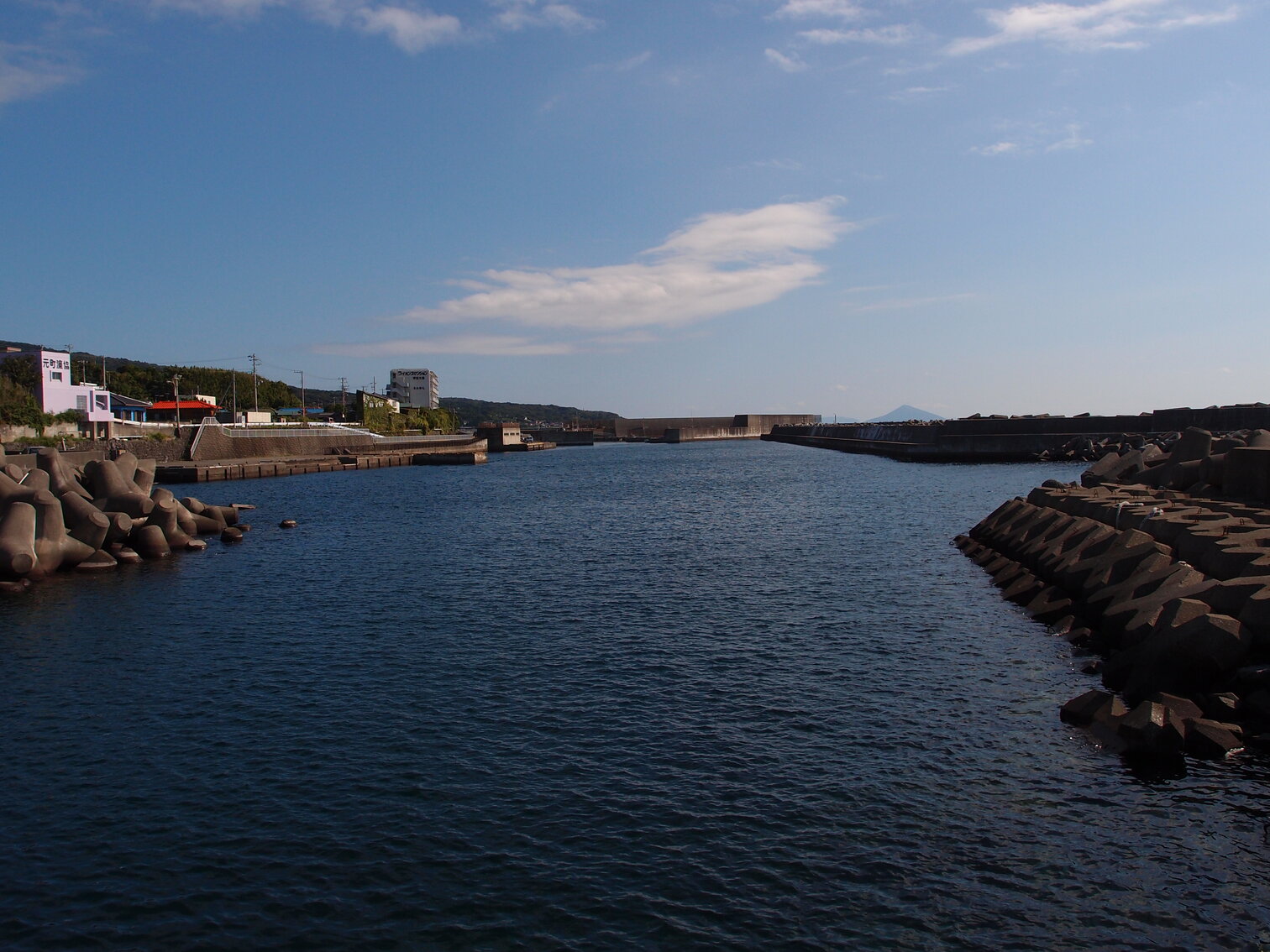
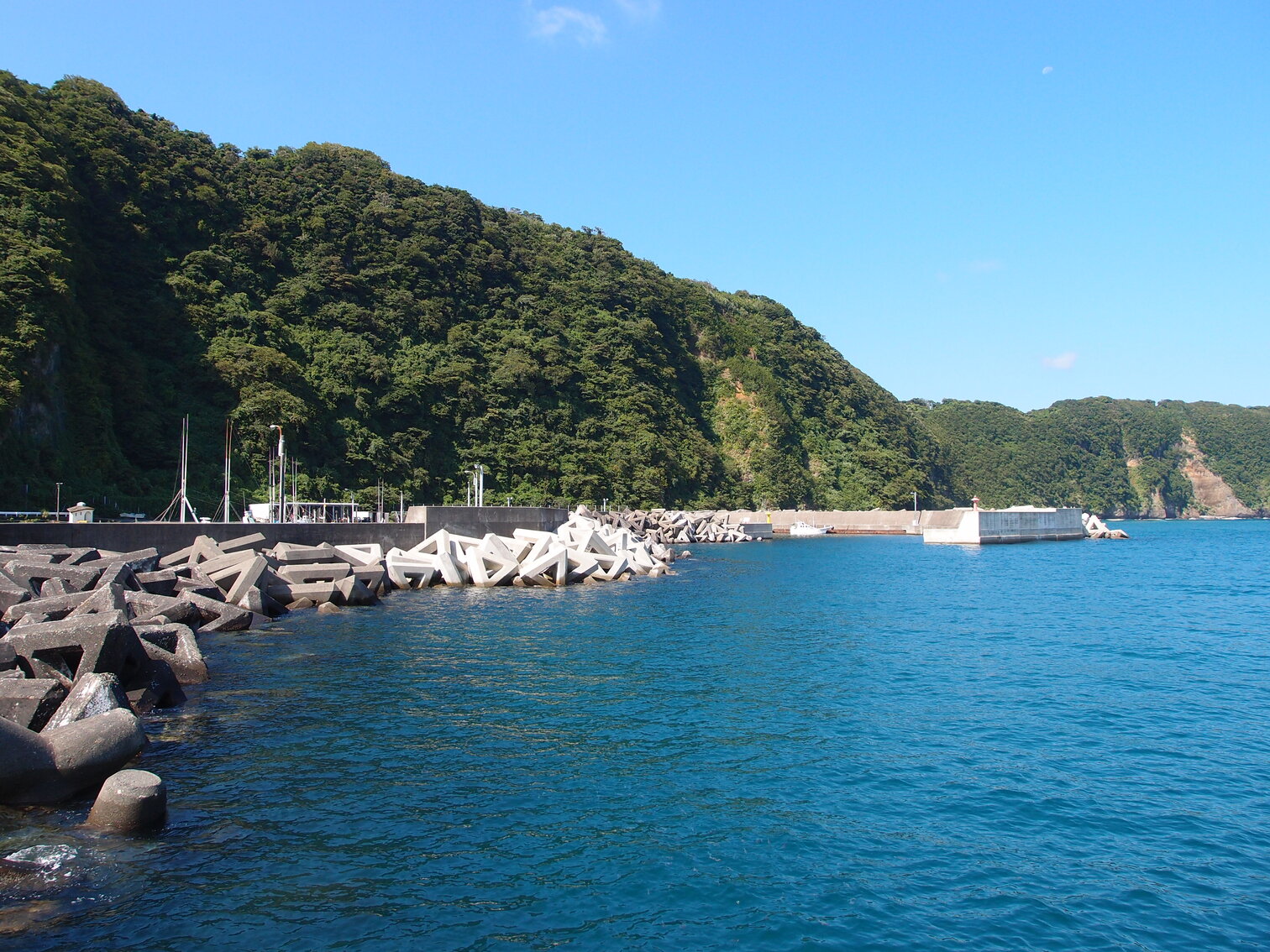
I could not find official statistics that directly compare cancellation rates for the high-speed jet ferry and the large overnight ferry. Tokai Kisen’s safety management rules do, however, list different suspension thresholds for the Oshima route: 18 m/s winds and 3 m waves for the jetfoil, versus 23 m/s winds and 5 m waves for the large passenger ferry. At least by those formal thresholds, the jet ferry is operated under stricter weather and sea limits.
The overnight large ferry is another option. In November, second class is ¥6,160 per adult each way, and there is a service leaving Tokyo at 22:00 and arriving at Oshima at 6:00 the next morning. I am keeping the jet ferry as the main plan so that an overnight crossing does not blur the trip’s “2 nights” framing. The overnight ferry appears later as a cost alternative.
2-night, 3-day itinerary
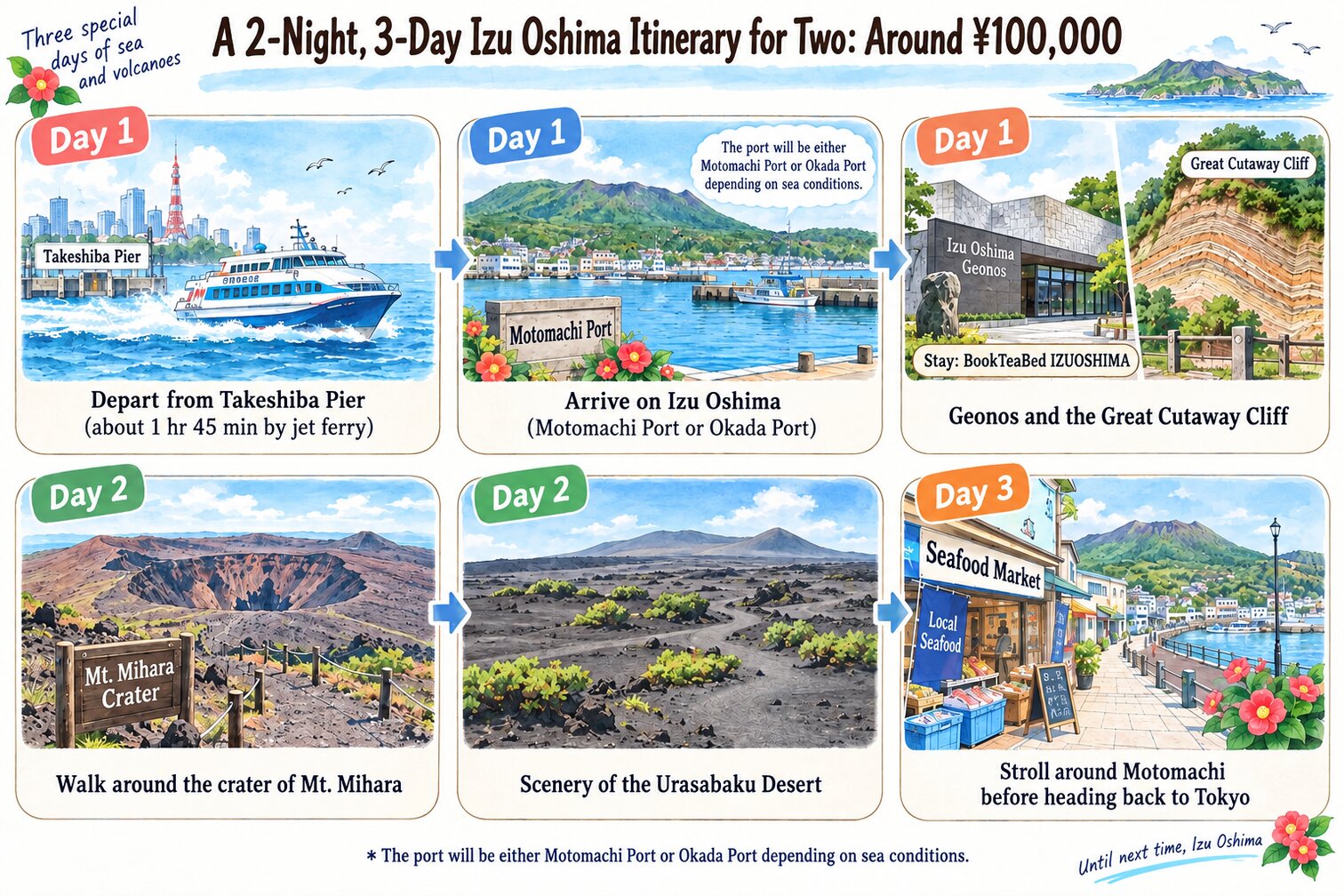
Day 1: Learn how the island was formed, then see 18,000 years of volcanic layers
Leave Takeshiba at 8:35 and arrive on Oshima at 10:20. If the ferry uses Motomachi Port, you are already in town. If it uses Okada Port, take the Oshima bus to Motomachi.
For accommodation, I used BookTeaBed IZUOSHIMA in the Motomachi area. A Rakuten Travel search for two adults sharing one room for November 22–24, 2026 showed a semi-double room without meals at a pre-discount price of ¥30,000 for two nights. The displayed price was ¥29,700 after a 1% discount, but the budget here uses the undiscounted amount.
After dropping off your luggage and having lunch, head to the Izu Oshima Museum “Geonos.” It is about a 15-minute walk from Motomachi Port, is open from 10:00 to 16:30, and general admission to the permanent exhibition is ¥820 per adult. The sequence matters: learn about the island’s volcanic activity first, then go out to see the real strata.
At about 14:54, take the Habu Port Line from the Geonos-mae stop and get off at the Great Cutaway Cliff stop at about 15:04. The exposed layers were formed by deposits from more than 100 major eruptions over roughly 18,000 years. It turns the eruption history you just saw in the museum into something physically visible along the roadside.
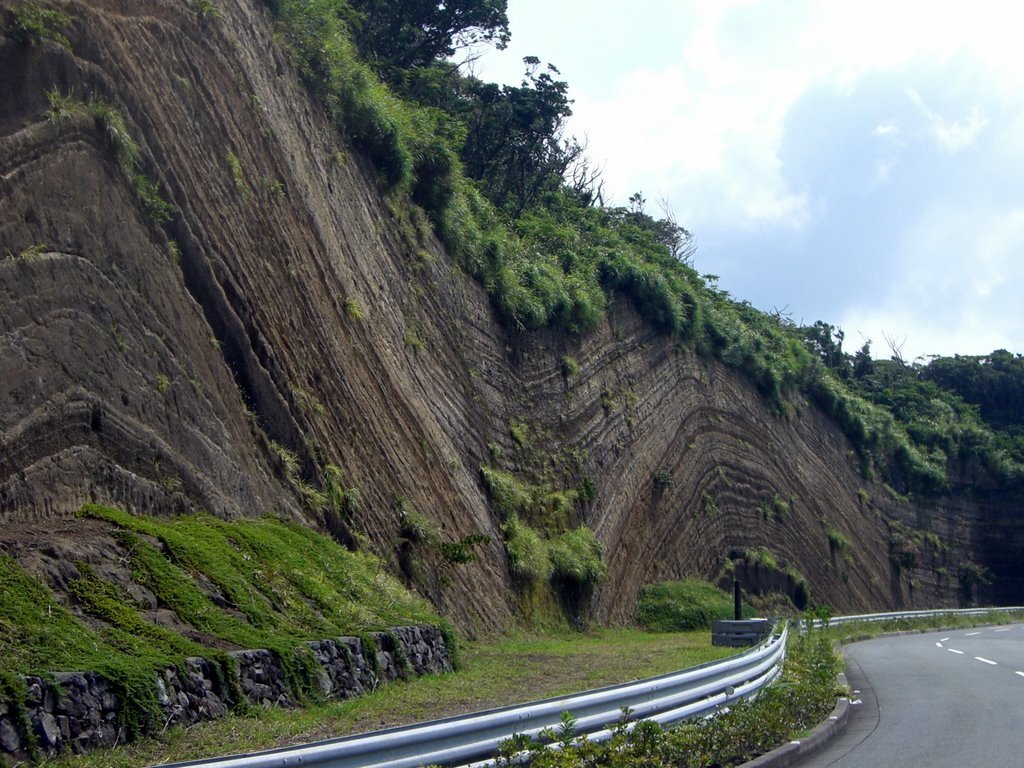
For the return, take the bus leaving the cliff stop at about 16:05 back toward Motomachi. The official geopark highlights the strata glowing in evening light during autumn and winter, but this itinerary does not stay until sunset. I would rather avoid waiting for the next bus after dark.
Day 2: Walk from Mt. Mihara’s crater into the Urasabaku Desert
Day 2 is the centerpiece of the trip. During this period, the Mt. Mihara Line runs on weekends, public holidays, and over the New Year period, so I placed the mountain day on Monday, November 23, 2026, which is a public holiday.
If that day’s departure port is Motomachi, the bus leaves there at 8:20. If the operating port is Okada, the plan is to leave Motomachi earlier, transfer to Okada, and board the same Mt. Mihara Line from there. Arrival at the Mt. Mihara trailhead is around 8:45.
From there, follow the Izu Oshima Geopark’s official “Mt. Mihara & Urasabaku Full Course.” It circles the central crater, crosses the Urasabaku Desert, and exits on the Oshima Onsen Hotel side. The route takes about 3 hours 30 minutes. Because the start and finish are in different places, connecting the two ends by scheduled bus is what makes the full traverse practical.
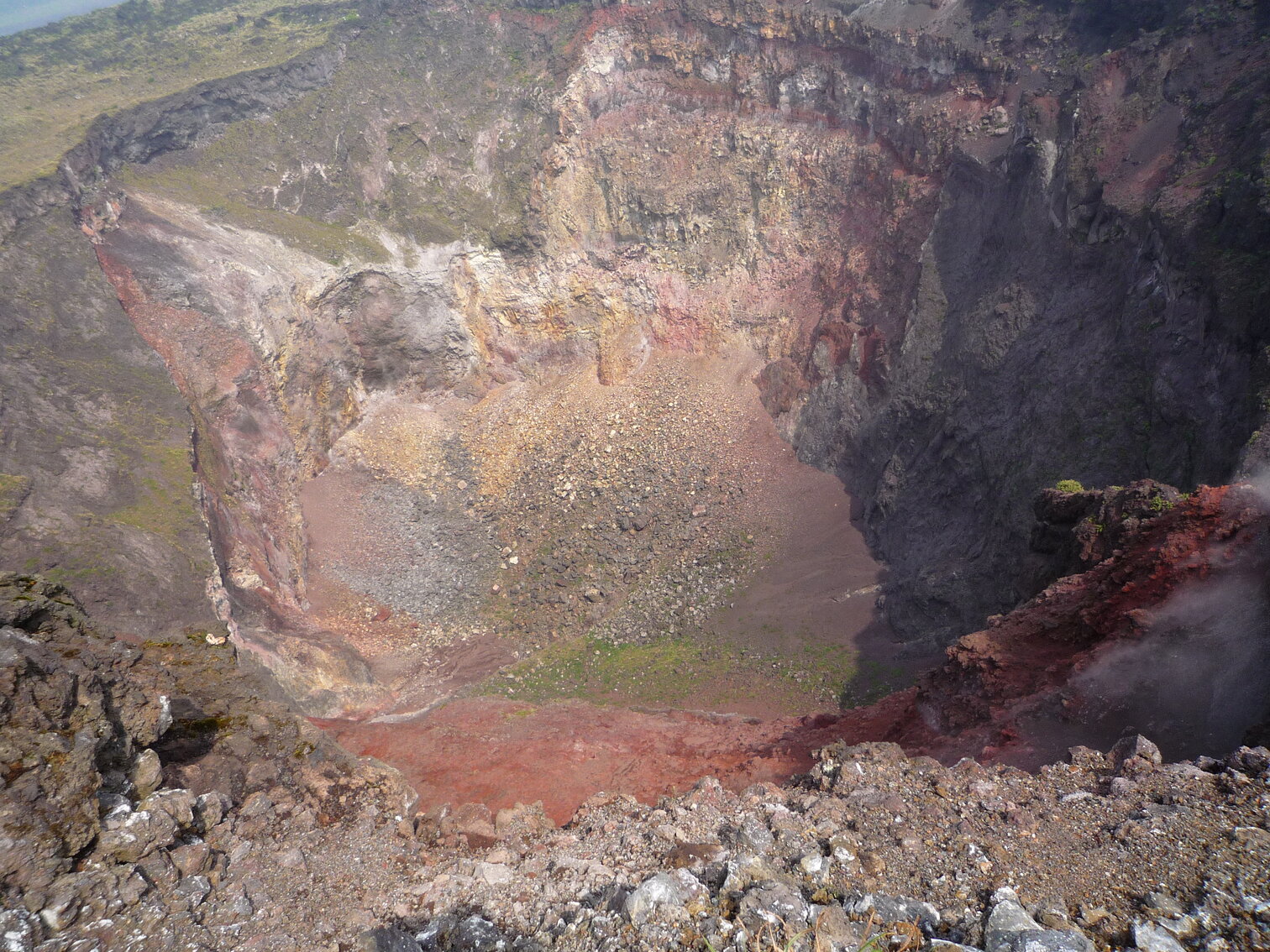
The Urasabaku Desert spreads across the northeastern side of Mt. Mihara, a landscape of black volcanic ash and scoria. According to the Izu Oshima Geopark, days with a maximum wind speed of 10 m/s or more account for about one third of the year. Strong wind and rain continually move the surface, making it difficult for plants to establish themselves.
A ferry reaching the island does not mean the mountain is safe to walk. If the wind is strong or volcanic conditions are a concern, the fallback is to shorten the walk or stop around the trailhead rather than commit to the full course.
If you reach the Oshima Onsen Hotel side around noon, a bus leaves Mihara-yama Onsen at about 13:39 for that day’s departure port. If you get back to Motomachi early, you could add a hot-spring stop near Motomachi Port, but that admission is not included in the ¥100,000 baseline budget.
Day 3: Keep the schedule light, then move to the day’s departure port
Day 3 stays close to Motomachi. The seafood market is about a 5-minute walk from Motomachi Port, opens from 9:00 to 16:00, and is closed on Wednesdays. It sells local seafood as well as products such as kusaya and natural salt.
Spend the morning around Motomachi, have lunch, and only then move once you have confirmed the day’s departure port. If the ferry is using Motomachi Port, board the 14:40 jet ferry there. If it is using Okada Port, leave Motomachi by bus at about 13:00 and arrive at Okada with time to spare.
The reason Day 3 is deliberately light is that the itinerary needs room for the port to change. The planned arrival back in Tokyo is 16:25.
Cost estimate for two
High-speed jet ferry round trip, staying two nights at BookTeaBed IZUOSHIMA
- High-speed jet ferry, Tokyo ⇔ Oshima, regular fare: ¥39,920 total / ¥19,960 per person
- Two nights at BookTeaBed IZUOSHIMA, room only, pre-discount price: ¥30,000 total / ¥15,000 per person
- Oshima Bus 2-day passes: ¥7,600 total / ¥3,800 per person
- Geonos: ¥1,640 total / ¥820 per person
- Meals and incidentals, 7 meals × 2 people × ¥1,500: ¥21,000 total / ¥10,500 per person
- Total: about ¥100,000 for two, or about ¥50,000 per person
The first two days assume the 2-day Oshima Bus pass, which also gives the itinerary some flexibility if the operating port changes between Motomachi and Okada. If the departure on Day 3 is from Okada Port, add ¥440 per adult for the bus from Motomachi to Okada, or ¥880 for two. That brings the trip total to ¥101,040.
Taking the overnight large ferry outbound
- Outbound large ferry, second class, plus return by high-speed jet ferry: ¥32,280 total / ¥16,140 per person
- Two nights at BookTeaBed IZUOSHIMA, room only, pre-discount price: ¥30,000 total / ¥15,000 per person
- Oshima Bus 2-day passes: ¥7,600 total / ¥3,800 per person
- Geonos: ¥1,640 total / ¥820 per person
- Meals and incidentals, 8 meals × 2 people × ¥1,500: ¥24,000 total / ¥12,000 per person
- Total: about ¥96,000 for two, or about ¥48,000 per person
Using second class on the large ferry for the outbound leg costs ¥6,160 per person. Keeping the return jet ferry at ¥9,980 brings the ferry total for two to ¥32,280, which is ¥7,640 less than taking the jet ferry both ways. You leave Takeshiba at 22:00 the night before and reach Oshima at 6:00, so this version assumes one extra breakfast compared with the jet-ferry plan. It gives you an early start on the island, but you also spend a night in transit.
Choosing a hot-spring hotel or prioritizing room facilities
For the same November 22–24 dates, Rakuten Travel showed a pre-discount price of ¥39,600 for a two-night room-only stay at SANDBOX, ¥36,000 for the standard room-only plan at Hotel Akamon, and ¥50,600 before discount for a room-only twin at Hotel Shiraiwa.
- High-speed jet ferry, Tokyo ⇔ Oshima, regular fare: ¥39,920 total / ¥19,960 per person
- Two nights at Hotel Shiraiwa, room-only twin, pre-discount price: ¥50,600 total / ¥25,300 per person
- Oshima Bus 2-day passes: ¥7,600 total / ¥3,800 per person
- Geonos: ¥1,640 total / ¥820 per person
- Meals and incidentals, 7 meals × 2 people × ¥1,500: ¥21,000 total / ¥10,500 per person
- Total: about ¥121,000 for two, or about ¥60,000 per person
Keeping the trip under ¥100,000 is not the only sensible way to choose a hotel. If you can add roughly ¥10,000–¥30,000 to the budget, you have room to prioritize location, a hot spring, or room facilities instead.
Best timing: late November to early December
This estimate uses late November. Mt. Mihara is cooler than in summer, and the official geopark describes the Great Cutaway Cliff in autumn and winter as a place to see the strata lit by the evening sun.
The wind cannot be treated as a footnote. Late autumn and winter are a time to weigh the appeal of the scenery together with weather risks at sea and on the mountain. Check both ferry operations and the Mt. Mihara forecast, and scale back the walking plan if conditions are poor.
February to March is another option if camellias are the priority. Izu Oshima holds its camellia festival around this period. The dates change from year to year, so I would confirm that year’s schedule before planning around it.
What I still could not confirm
- The port cannot be fixed when you book. Motomachi or Okada is decided according to sea conditions and related factors on the day, and the outbound and return ports may differ
- A conditional sailing may still fail to reach Oshima. Tokai Kisen notes that a vessel may turn back if it cannot berth, or may call at another island instead
- The full Mt. Mihara route depends on the weather. It includes about 3 hours 30 minutes of walking, so the assumption is that you shorten or cancel it in strong winds
- I have not confirmed whether BookTeaBed IZUOSHIMA stores luggage after checkout. If it does not, another storage option such as a locker around Motomachi will need to be checked
- The 2027 Camellia Festival dates are not confirmed in this article. If you travel in February or March, check the latest event dates first
Summary
The high-speed jet ferry gets from Takeshiba to Izu Oshima in about 1 hour 45 minutes. That sounds close, but the ferry alone costs about ¥40,000 for two, and the port you use can change on the day.
Even so, a modest room-only stay and a trip centered on Mt. Mihara, the Urasabaku Desert, and the Great Cutaway Cliff keep the plan to about ¥100,000 for two for 2 nights and 3 days.
On an island trip, a more detailed schedule is not always a safer one. Leave enough room for the port to change, and make Day 2 the one day with a major excursion to Mt. Mihara. For Izu Oshima, that amount of flexibility seems like the right fit.
Photos from Wikimedia Commons: Motomachi Port (9612842894) (Guilhem Vellut / CC BY 2.0), Okata Port @ Oshima (9612777112) (Guilhem Vellut / CC BY 2.0), Volcanic Ash Fall Layers Izu Oshima Japan 2 (Stanisław Raczyński / CC BY 3.0), and 三原山火口-Mt.Mihara Volcano - panoramio (yano@mama.akari.ne.jp / CC BY-SA 3.0). All four photos were resized only. Illustrations are for reference.


Estimated cost (two adults sharing one room / per person)
- High-speed jet ferry: ¥39,920 / ¥19,960 per person
- Two nights’ accommodation: ¥30,000 / ¥15,000 per person
- Oshima Bus 2-day passes: ¥7,600 / ¥3,800 per person
- Geonos: ¥1,640 / ¥820 per person
- Meals and incidentals: ¥21,000 / ¥10,500 per person
- Total: about ¥100,000 for two / about ¥50,000 per person
Checked in September 2026. Ferry fares are for November 2026, and the accommodation price is the pre-discount rate observed for November 22–24, 2026. If the final-day departure is from Okada Port, add ¥880 for the bus from Motomachi.