This is a desk-researched itinerary. I have never been to Hachinohe or the Tanesashi Coast. It is a trip I would like to take, planned as seriously as if I were actually going. Prices and operating information were checked in September 2026, but please confirm the latest details on official websites before you travel.
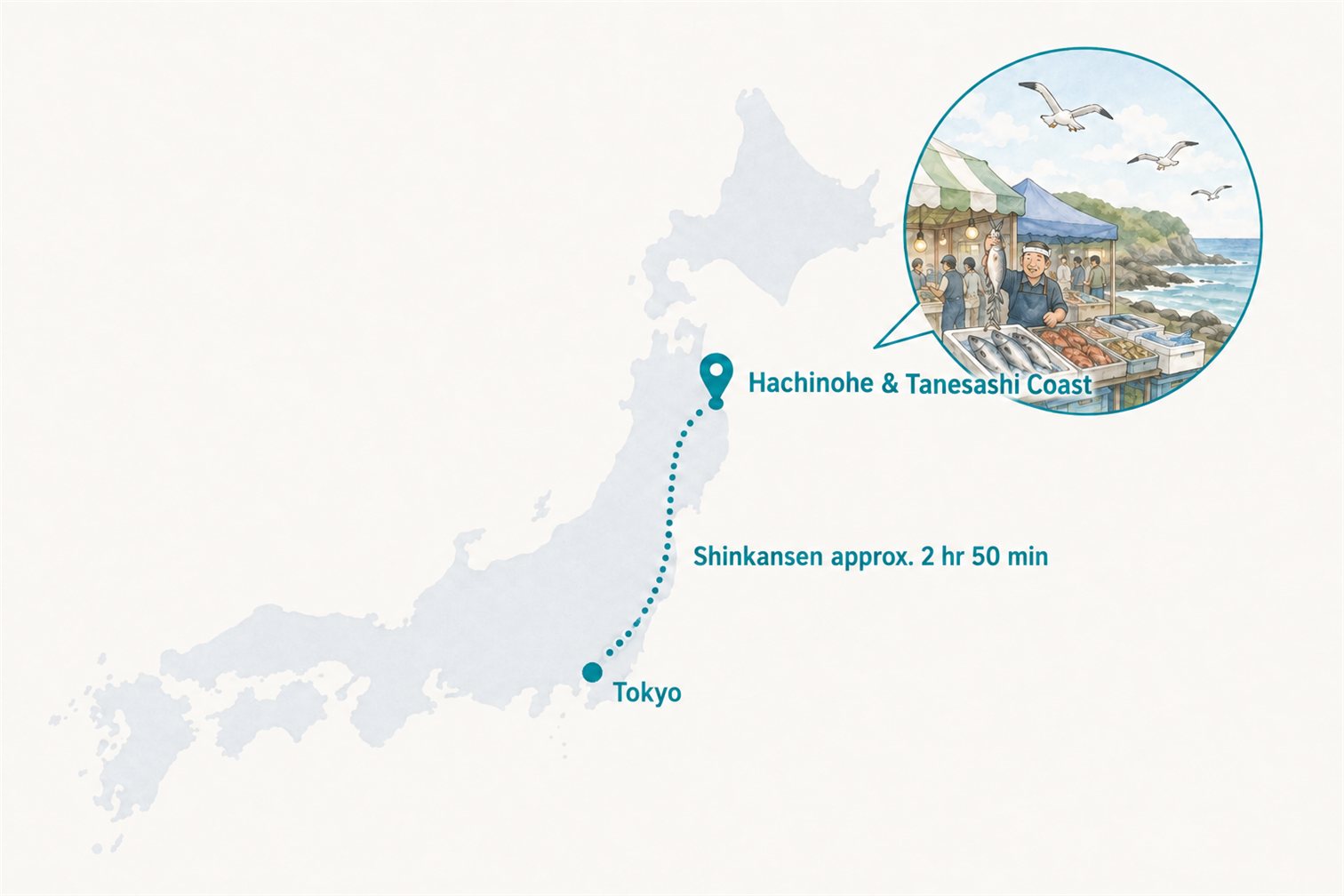
The plan at a glance
- Length: 2 days, 1 night, Saturday to Sunday, from Tokyo on the Tohoku Shinkansen.
- Destination: central Hachinohe, plus Kabushima and the Tanesashi Coast (Hachinohe, Aomori Prefecture).
- Day 1 (Saturday): Tokyo → Hachinohe → lunch at Hasshoku Center → the black-tailed gulls on Kabushima → a walk along the Tanesashi Coast → a hotel with a hot-spring bath in the city center → an evening at the yokocho food stalls.
- Day 2 (Sunday): breakfast at the Tatehana Wharf Morning Market at dawn → a hot-spring bath at the hotel → an early-afternoon Shinkansen home.
- Estimated cost: about ¥54,000 per person (about ¥44,000 with a Shinkansen package).
- Bottom line: admission is close to zero. Most of the budget goes on the Shinkansen and food, which makes this a trip for eating.
Why Hachinohe?
I chose Hachinohe, in Aomori Prefecture, for a huge market that appears only on Sunday mornings. The Tatehana Wharf Morning Market (Tatehana Ganpeki Asaichi) sets up on a fishing-port quay that is normally empty. As I understand it, around 300 stalls appear there with the Sunday dawn, lined up over 800 meters, tens of thousands of people come, and by around 9:00 every trace of it is gone. It is said to be one of the largest in Japan. That is nothing like the scale the words "morning market" bring to mind, so I have wanted to see it for myself.
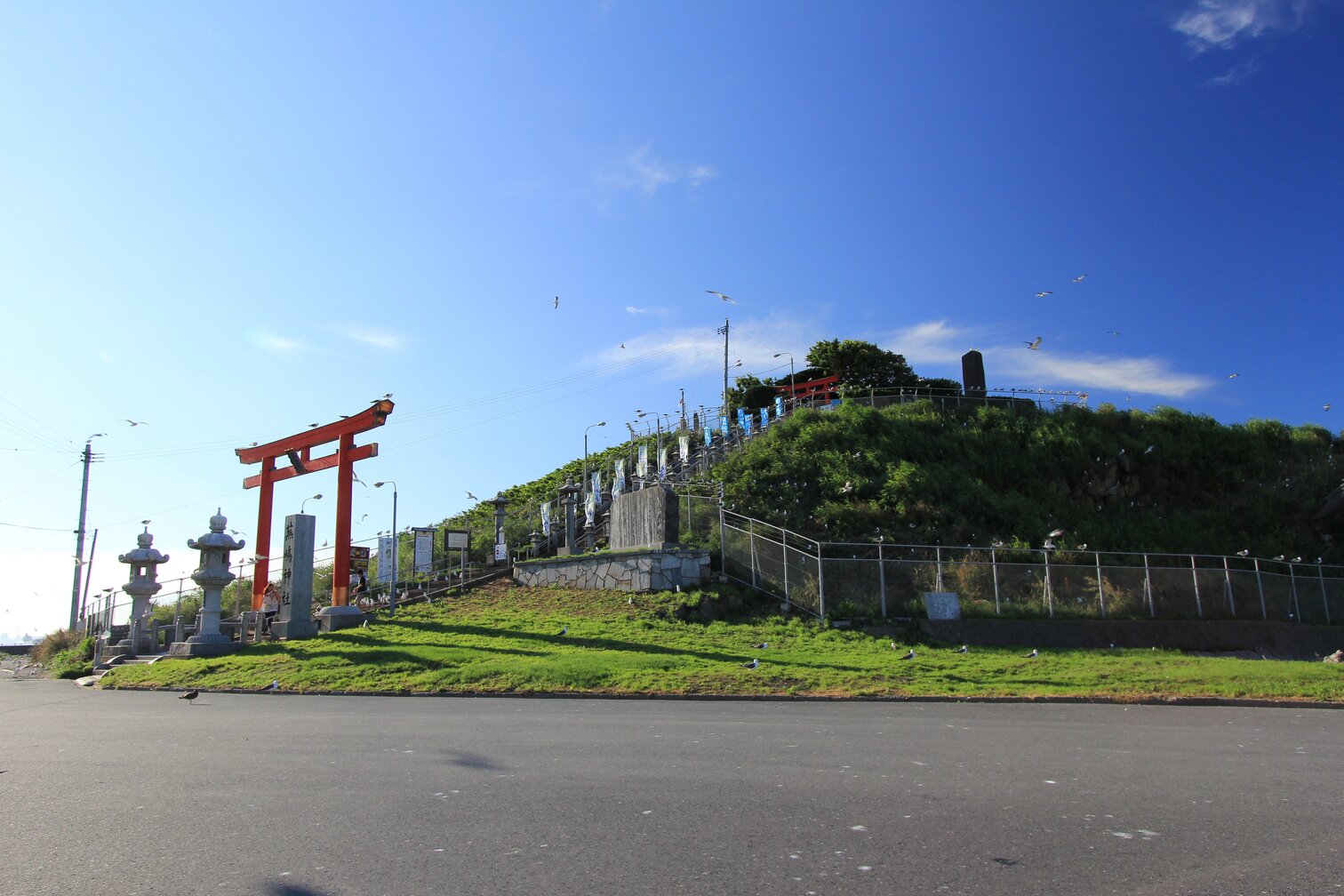
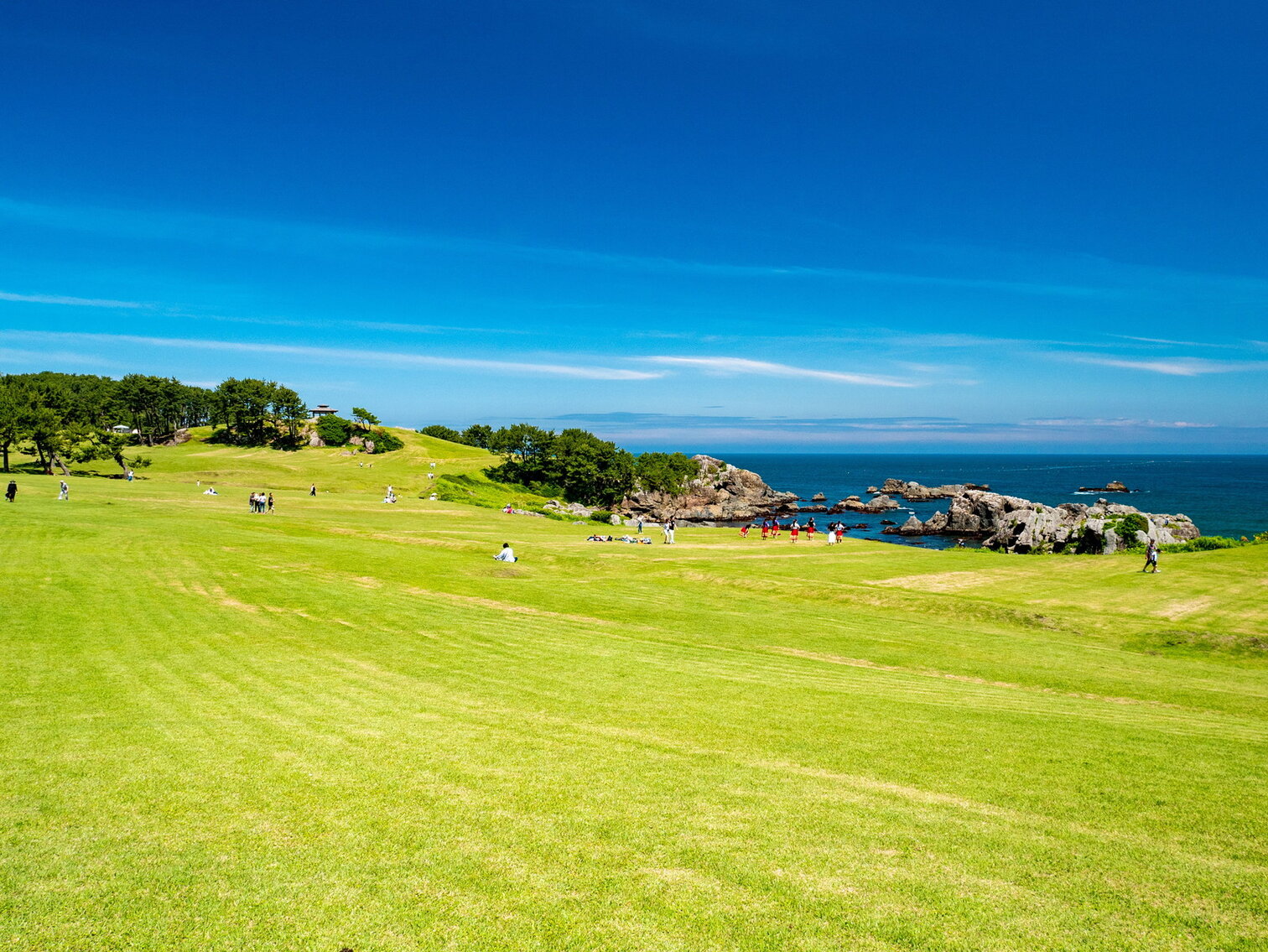
The other draw is Kabushima. It is an island where 30,000 to 40,000 black-tailed gulls breed, and it is reportedly the only place in Japan where you can see their chicks up close. South of there runs the Tanesashi Coast, where natural lawns are said to spread right down to the sea.
What I noticed while researching is that none of these three places charges admission. The budget looks set to go almost entirely on getting around and on eating.
Getting there
- Tokyo → Hachinohe: about 2 hours 50 minutes on a Hayabusa on the Tohoku Shinkansen, ¥17,030 for a reserved seat.
- Hachinohe Station → the city center: this is the catch. The Shinkansen's Hachinohe Station is some distance from central Hachinohe (about 20 minutes by car). The closest station to the center is Hon-Hachinohe, on the JR Hachinohe Line, so I will stay near Hon-Hachinohe.
- Kabushima: a 15-minute walk from Same Station on the Hachinohe Line.
- Tatehana Wharf Morning Market: a 20-minute walk from Mutsu-Minato Station on the Hachinohe Line. Early on Sunday mornings, a special train just for the market, the Tatehana Ganpeki Asaichi-go, reportedly also runs from Hachinohe Station.
The Shinkansen round-trip discount has been discontinued, so buying tickets the straightforward way costs ¥34,060 round trip. Eki-net's Tokudane 14 fare brings it to about ¥13,900 one way, and a Shinkansen package, which bundles the round trip with a place to stay, appears to bring it down to effectively the low ¥10,000s one way. Lodging in Hachinohe is cheap, so the package discount makes a relatively large difference.
When to go
This plan depends on the time of year.
- Tatehana Wharf Morning Market: Sundays only, from mid-March to late December.
- The black-tailed gulls on Kabushima: they arrive in March and leave in early August. The best time is mid-May, which coincides with the rapeseed blossoms.
To catch both, go on a weekend between mid-May and July. In January and February there is no market and there are no gulls. This article assumes a Saturday and Sunday in early summer.
Model itinerary: 2 days, 1 night
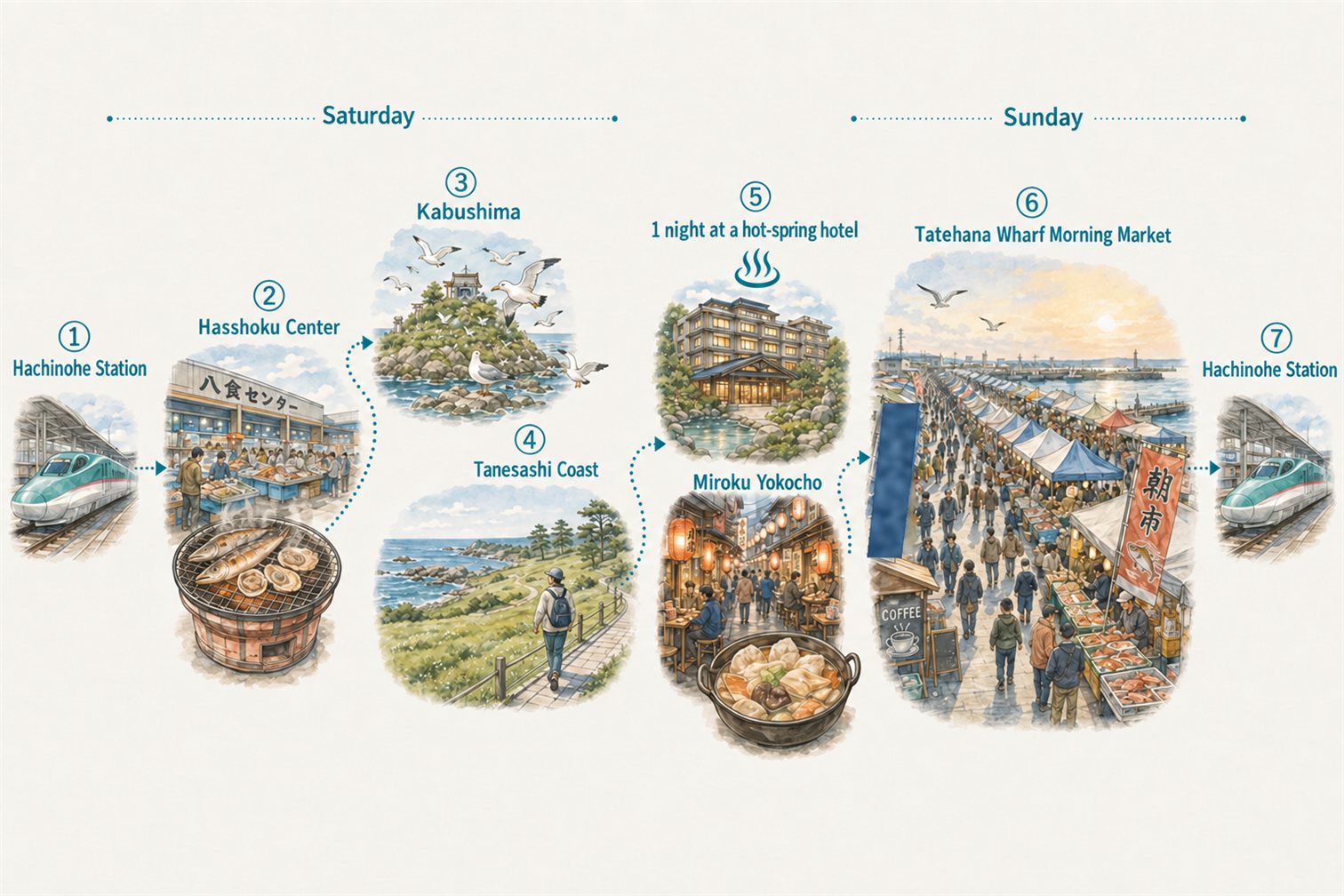
Day 1 (Saturday): Arrive by midday, then head for the sea
Take a Hayabusa leaving Tokyo sometime from 8:00 to just before 9:00 and you reach Hachinohe before 11:30.
First, take the bus from Hachinohe Station to Hasshoku Center. It is a large complex that combines a market and places to eat, and it reportedly has Shichirin-mura, where you can grill the seafood you buy and eat it on the spot. That settles lunch.
In the afternoon, take the Hachinohe Line to the sea. Get off at Same Station and walk 15 minutes to Kabushima to watch the flocks of black-tailed gulls (free). From there, head south to the Tanesashi Coast on the Umineko-go Tanesashi Coast sightseeing bus or on the Hachinohe Line.
The standard walk seems to be the footpath (the Michinoku Shiokaze Trail) that links the Ashigezaki Observation Deck with the natural lawns. I want to see with my own eyes what grass running right down to the sea actually looks like.
In the early evening, go back to Hon-Hachinohe and check in to a hotel in the city center. Hachinohe's downtown entertainment district has several business hotels with large natural hot-spring baths, and Rakuten Travel routinely lists room-only plans in the ¥5,000s to ¥8,000s. (These are hotels, not hot-spring ryokan, which keeps prices down.)
In the evening, head to Miroku Yokocho, a food-stall village in the city center. I plan to eat senbei-jiru, a Hachinohe specialty (a local dish in which Nanbu senbei crackers go into a hotpot), and Hachinohe Maeoki saba, mackerel from the waters off Hachinohe.
Day 2 (Sunday): The market at dawn
I have read that the market peaks between 6:00 and 7:00, and that after 8:00 some stalls sell out and start packing up, so I will get moving sometime from 5:00 to just before 6:00. Whether I take the Hachinohe Line to Mutsu-Minato Station or the Asaichi-go from Hachinohe Station depends on where I stay.
Breakfast means grazing my way around the market. Reportedly, many stalls have space to sit and eat, and there is a bit of everything, from coffee to ramen, soba and seafood. For a first visit, it also looks worth joining a guided tour by the Hachinohe Sanpo Meister guides (every Sunday from 6:30, 90 minutes, ¥2,000) and letting them point out the stalls they recommend.
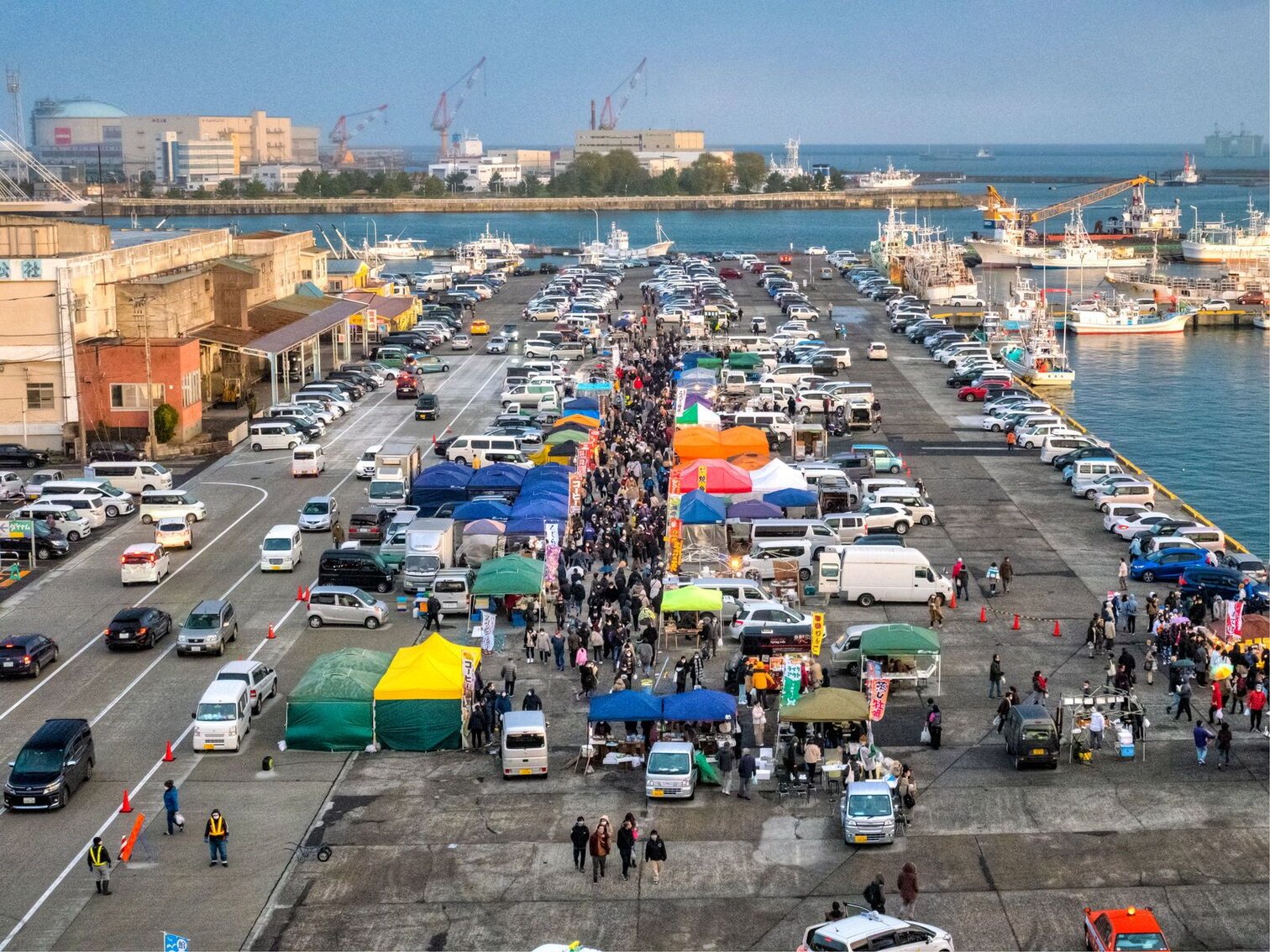
When the market closes at 9:00, go back to the hotel, have a hot-spring bath and check out. Spend a little of the morning walking around the city center, then return to Hachinohe Station. Take a Hayabusa leaving sometime from 13:00 to just before 15:00 and you are back in Tokyo by evening.
Estimated cost per person
Assuming two people share one room:
- Shinkansen: Tokyo ⇔ Hachinohe round trip, ¥34,060 (Hayabusa reserved seat, regular season).
- Local trains and buses: about ¥2,000 (the Hachinohe Line, the bus to Hasshoku Center and the Umineko-go).
- Lodging: a business hotel with a hot-spring bath, room only, about ¥7,000 (a rough Saturday rate).
- Food: lunch at Hasshoku Center ¥2,000 + dinner at the yokocho ¥4,000 + breakfast at the morning market ¥1,500 + lunch on day 2 ¥1,500 = ¥9,000.
- Admission: ¥0 (Kabushima, the Tanesashi Coast and the market are all free).
- Incidentals: ¥2,000.
Total: about ¥54,000 (¥54,060 per person by the numbers, or ¥108,120 for two)
With a Shinkansen package (the round trip and a night's stay bundled together), the Shinkansen portion drops by about ¥10,000, bringing the total down to about ¥44,000.
The Shinkansen accounts for 60% of the total, but in exchange, lodging and admission cost next to nothing. Even with ¥9,000 set aside for food, it stays in the ¥50,000s. The standard estimate for two is about ¥108,000: a trip of around ¥100,000.
Prices are based on information checked in September 2026. Accommodation prices vary by day of the week and plan.
What I still do not know
This is a desk-researched itinerary, so I want to be honest about what I could not fully confirm.
- I have not been able to confirm the fare for the bus to Hasshoku Center, or the operating days and fares of the Umineko-go Tanesashi Coast sightseeing bus. The figure of about ¥2,000 for local transport is only a rough guide.
- I have not confirmed whether the Asaichi-go runs every Sunday or only for a limited period. If it is not available, I will take a regular Hachinohe Line train to Mutsu-Minato.
- I have not got a feel for which section of the Tanesashi Coast to walk to see the grass running right down to the sea, or how far that is.
- Hachinohe Maeoki saba must have a season (I have heard it is best in autumn), so I do not know whether I will be able to eat it at the yokocho in early summer.
Conclusion
Just under three hours by Shinkansen: a 300-stall market that appears only on Sunday mornings, 30,000 black-tailed gulls, and grass that runs to the water's edge. Admission is zero, and the cost is about ¥54,000 per person.
Hachinohe turned out to be a trip for eating rather than a trip for sightseeing. Looking at the breakdown, half of the ¥20,000 left after the Shinkansen fare goes on food. The standard estimate for two is about ¥108,000, which is around ¥100,000.
Photos from Wikimedia Commons: 蕪島 - panoramio (2) (くろふね / CC BY 3.0), 種差海岸の風景20200724-P1100549 (くろふね / CC BY 4.0), and 八戸館鼻岸壁朝市20221127-P1007148 (くろふね / CC BY 4.0). Resized only. Illustrations are for reference.


Estimated cost per person, based on two people sharing one room
- Shinkansen Tokyo ⇔ Hachinohe round trip: ¥34,060 (about ¥24,000 with a Shinkansen package)
- Local trains and buses: about ¥2,000
- Lodging (business hotel with a hot-spring bath, room only): about ¥7,000
- Food (two lunches, dinner and the morning market): ¥9,000
- Admission: ¥0
- Incidentals: ¥2,000
- Total: about ¥54,000 (about ¥44,000 with a package)